Thick Curly Hair Routine: Complete Guide to Healthy, Defined Curls
Discover a thick curly hair routine that tackles frizz prevention, waves between washes, and more. Achieve healthy, defined curls with expert tips.

Estimated reading time: 6 minutes
Key Takeaways
- Understand the four pillars: cleansing, conditioning, moisturizing, and styling.
- Prevent frizz with moisture management and protective practices.
- Refresh waves between washes using water, creams, and gels.
- Seek specialized curly hair salons for cuts and color services.
- Fix common issues like color dullness and uneven layers.
Table of Contents
- Understanding Your Thick Curly Hair Routine
- Frizz Prevention Techniques
- Finding and Utilizing Curly Hair Salons
- Managing Waves Between Washes
- Fixing Color Challenges
- Correcting Haircut Disappointments
- Conclusion
- FAQ
1. Understanding Your Thick Curly Hair Routine
Your thick curly hair routine rests on four foundational steps that work together to maintain elasticity, moisture, and definition. Customization—based on porosity, density, and curl pattern—is essential for resilience and shine.
- Cleansing
Remove product buildup and environmental debris without stripping natural oils. Use sulfate-free or gentle shampoos designed for high-porosity, dense coils. - Conditioning
Apply rich conditioners that penetrate thick strands to restore moisture. Focus on mid-lengths to ends, sealing the cuticle and smoothing fibers. - Moisturizing
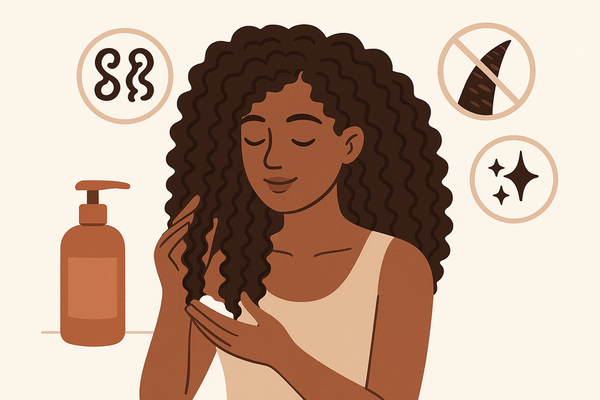
Work a creamy leave-in treatment through damp hair for lasting hydration. Use ingredients like glycerin, aloe vera, or hyaluronic acid to lock in moisture. - Styling
Define curls with lightweight gels or mousses that offer hold without crunch. Seal styles with oils like argan or jojoba to lock moisture and shine.
Customization Tips
- High vs. low porosity: High porosity needs intense hydration and sealants. Low porosity benefits from heat or steam to open the cuticle.
- Density matters: Thicker sections may require section-by-section product application.
- Curl pattern (waves vs. coils): Wavy hair may use lighter creams; very tight coils need richer butters.
2. Frizz Prevention Techniques
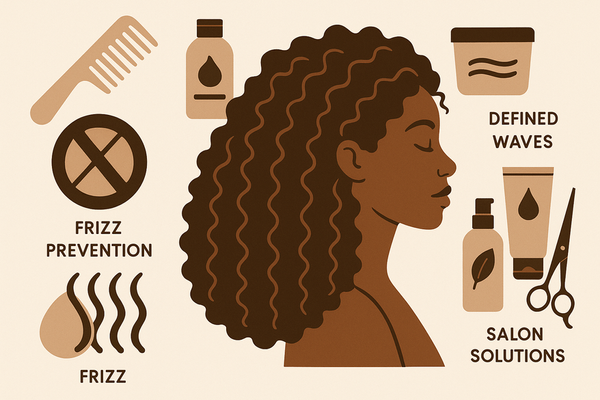
Frizz happens when moisture escapes the hair cuticle or when humidity invades dry strands, causing shafts to swell and lose shape. For thick, high-porosity curls, sealing the cuticle and managing hydration are vital for frizz prevention.
A. Moisture Management
- Deep-condition weekly or bi-weekly to maintain elasticity and prevent breakage.
- Apply creamy leave-in conditioner on damp hair, section by section, focusing on the ends to smooth and seal cuticles.
B. Product Layering & Application
- Clarify monthly with a sulfate-free shampoo, then follow with a deep-conditioning mask to remove buildup and replenish moisture.
- Layer products from lightest to heaviest: start with leave-in cream, then mousse or foam, and finish with gel for hold.
- Scrunch upward—from ends to roots—to promote curl formation and seal the cuticle.
C. Protective Practices
- Seal with a lightweight oil post-styling to lock in hydration and prevent moisture loss.
- Sleep on satin pillowcases or wear a satin bonnet to preserve curl definition and dramatically reduce overnight frizz.
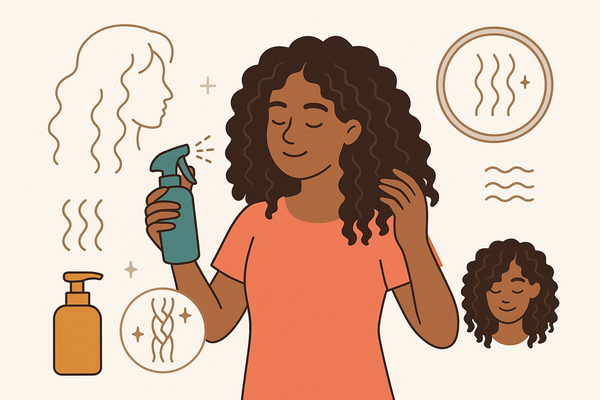
- Refresh mid-week by misting with water and leave-in conditioner mix, then scrunch and diffuse on low heat.
3. Finding and Utilizing Curly Hair Salons
Specialized curly hair salons matter because stylists trained in porosity, density, and curl-pattern cutting create shapes that enhance your natural coils and waves. Proper technique prevents excess frizz and preserves definition.
What to Look for in a Curly Hair Salon
- Stylists with curly-hair certifications or branded training (e.g., DevaCurl, Ouidad)
- Portfolio showcasing work on clients with hair textures similar to yours
- Pre-appointment consultations to discuss your routine, goals, and product preferences
- Knowledge of color-safe practices for high-porosity curls to prevent unexpected fading or patchiness
4. Managing Waves Between Washes
Waves between washes occur when styling products settle and lose hold, allowing curls to relax. High-porosity hair continues to shift moisture after styling, causing waves to loosen into undefined patterns.
- Method A – Water & Cream Refresh
Lightly mist hair with water to rehydrate strands. Apply a leave-in conditioner or detangler on sections that have lost clump. Scrunch from ends to roots to reactivate curl pattern. Diffuse briefly on low heat or let air-dry to set refreshed waves. - Method B – Gel Cast Reactivation
Mist water thoroughly over hair. Flip head upside-down and scrunch in gel to rebuild clumps. Add mousse at the roots for lift and volume. Let the gel cast dry before gently breaking it to avoid frizz. - Method C – Lightweight Boost Options
Apply a few drops of lightweight serum or foam for renewed definition without heaviness. Use a spritzable, smoothie-textured leave-in for quick clump renewal and frizz control.
5. Fixing Color Challenges
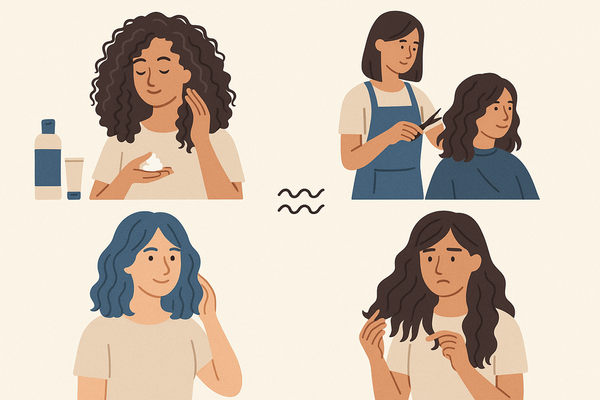
Blue Hair Not Showing Fix
Blue hair not showing vibrantly on thick curls is often due to uneven absorption and density variations. High-porosity areas may rinse out color faster, leaving dull or patchy hues.
- Inspect hair in natural light to pinpoint under-saturated sections.
- Consult a professional colorist experienced with curly hair before at-home tweaks.
- Pre-lighten high-density curls evenly to a uniform base so blue pigments adhere properly.
- Use color-safe, sulfate-free shampoos and conditioners, and deep-condition weekly to lock in vibrancy.
- Schedule gloss treatments between full color sessions to refresh tone and boost shine.
6. Correcting Haircut Disappointments
A bad layers haircut fix is essential when uneven cuts disrupt curl clumps and amplify frizz. Properly aligned layers harmonize with your curl pattern for a cohesive look.
- Apply volumizing mousse at roots and scrunch upward to blend choppy layers.
- Work curl-defining cream through ends to unify lengths and enhance clumps.
- Wear half-updos or loose low ponytails to disguise uneven sections without stretching curls.
Conclusion
A successful thick curly hair routine relies on four pillars—cleansing, conditioning, moisturizing, and styling—to address frizz prevention, waves between washes, color maintenance, and haircut fixes. Customization based on porosity, density, and curl pattern ensures optimal hydration and definition.
Professional support from specialized curly hair salons and experienced colorists elevates your regimen, preventing DIY mishaps like blue hair not showing fix or bad layers haircut fix. Experiment with different products and refresh methods, track what works best for your coils, and adjust your routine as your hair evolves.
Share your thick curly hair routine experiences or questions in the comments or on social media. Let’s celebrate and empower every dense, high-porosity curl together!
FAQ
- Q: How often should I clarify my high-porosity curls?
A: Clarify once a month with a sulfate-free shampoo to remove buildup, then follow with a deep-conditioning mask to restore moisture. - Q: Can I refresh my curls without heat?
A: Yes. Use a water and leave-in conditioner mist, scrunch to reactivate clumps, and let air-dry for soft, defined curls. - Q: What products work best for low-porosity thick curls?
A: Lightweight creams and heat-activated treatments help open the cuticle, while oils like jojoba seal in hydration without weighing hair down. - Q: How do I fix uneven layers in my curls?
A: Blend layers with volumizing mousse and curl creams, or opt for a half-up style to camouflage discrepancies until you can see a specialist.