Thick Curly Hair Routine: Ultimate Guide for Healthy, Defined Spirals
Master the thick curly hair routine with this step-by-step guide. Discover frizz prevention, salon tips, and fixing common issues like blue hair not showing.

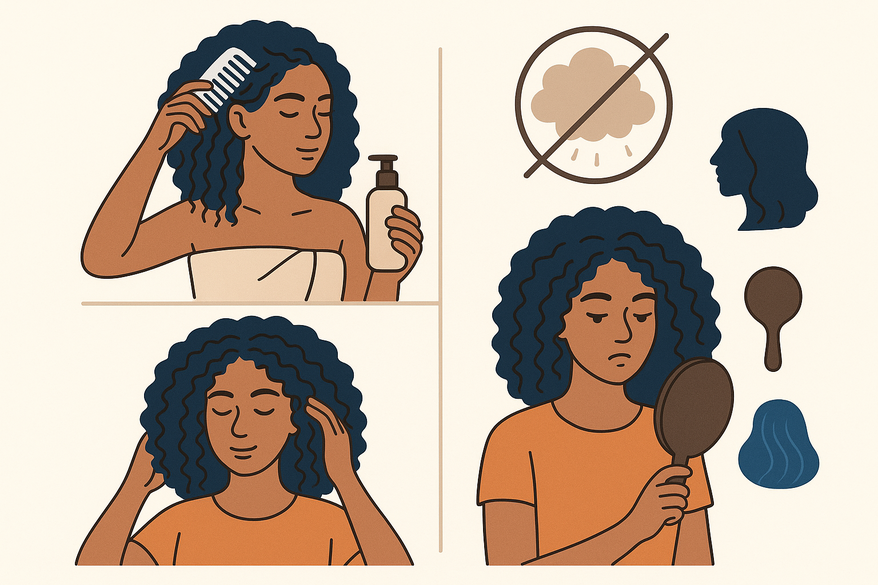
Estimated reading time: 7 minutes
Key Takeaways
- Comprehensive routine to tackle frizz, dryness, and definition for thick curls.
- Effective LOC method locks in moisture and prevents frizz.
- Salon guidance helps you choose stylists specializing in dense coils.
- Color maintenance tips ensure vibrant blue hues in curly hair.
- Haircut recovery strategies fix uneven layers and promote healthy growth.
Table of Contents
- I. Introduction
- II. Understanding the Thick Curly Hair Routine
- III. Frizz Prevention
- IV. Choosing and What to Expect from Curly Hair Salons
- V. Managing Waves Between Washes
- VI. Tackling Color Issues: Blue Hair Not Showing Fix
- VII. Fixing a Bad Layers Haircut
- VIII. Conclusion
- FAQ
I. Introduction
Your roadmap to conquering five core challenges—persistent frizz, maintaining waves between washes, selecting the right curly hair salons, fixing vibrant blue color, and correcting bad layers haircuts. Follow this research-backed guide to transform dense coils into defined, healthy spirals.
No fluff—only concise, clear steps you can use today.
II. Understanding the Thick Curly Hair Routine
A thick curly hair routine combines cleansing, conditioning, and styling to maximize moisture retention and curl definition. Dense coils trap humidity but lose oils quickly, leading to dryness, frizz, and breakage if not managed.
Daily Care Steps
- Refresh: Spritz with water or a water-based leave-in mist; gently scrunch to reset clumps.
- Nighttime Protect: Wrap hair in a silk bonnet or use a silk pillowcase to reduce friction and preserve curl shape.
Weekly Care Steps
- Shampoo 2–3 times: use a sulfate-free, pH-balanced cleanser to avoid stripping oils.
- Condition & Detangle: apply a rich conditioner and detangle with fingers or a wide-tooth comb from ends to roots.
- Deep Condition: once a week, mask for 20–30 minutes under a heat cap to boost hydration.
- Clarify: every fourth or fifth wash, use a clarifying shampoo to remove buildup and restore bounce.
Why It Works
- Moisture balance: frequent conditioning plus weekly masks restore lipids.
- Definition & slip: generous product application prevents friction and encourages clumping.
- Scalp health: clarifying removes residue that weighs down curls.
III. Frizz Prevention
Root causes include moisture loss through porous cuticles, friction, humidity changes, and product buildup blocking even distribution.
The LOC Method
- Liquid: apply water or a hydrating leave-in on damp hair.
- Oil: seal moisture with light oils like argan or rosehip.
- Cream: lock in curl pattern with a defining cream or custard.
Pro tip: work in sections, scrunch upward, and “plop” in a microfiber towel or T-shirt for 10–15 minutes.
IV. Choosing and What to Expect from Curly Hair Salons
Look for expertise in dry cutting, curl mapping, and curl-friendly products. A specialist understands your coil pattern and tailors cuts to enhance shape.
Salon Selection Criteria
- Portfolio: review before/after photos of similar curl density.
- Product lines: ensure sulfate-free, silicone-free formulas.
- Certifications: training with DevaCurl, Ouidad, or CurlCutAcademy.
Consultation Questions
- “Do you specialize in thick or coily hair?”
- “Which products do you use, and are they free of sulfates and silicones?”
- “Can you show me your curl-cutting portfolio?”
V. Managing Waves Between Washes
Revive your waves without a full shampoo to extend definition and reduce over-cleansing.
- Spritz: light mist of water or leave-in blend.
- Product: small amount of curl cream or lightweight mousse on mid-lengths and ends.
- Scrunch: finger-scrunch upward to reactivate clumps.
- Diffuse (optional): brief low-heat for root lift.
- Plop: rewrap in a T-shirt for 10–15 minutes for even drying.
Expected duration: 2–3 days of refreshed waves before the next wash.
VI. Tackling Color Issues: Blue Hair Not Showing Fix
Thick curls can block pigment uptake, speed fade, or dim vibrancy due to residue.
Pre-Color Fix
- Clarify: shampoo 24–48 hours before dye to remove oils and buildup.
Application Tips
- Bond-builders: use Olaplex No. 1 to protect and open cuticles.
- Sectioning: apply dye to small, fully saturated sections.
Post-Color Maintenance
- Shampoo 2–3 times weekly with a sulfate-free, color-safe cleanser.
- Deep condition weekly on mid-shaft and ends.
- Seal: finish with a lightweight oil to protect pigment.
- Heat care: minimize heat styling or always use a heat protectant.
VII. Fixing a Bad Layers Haircut
Uneven curl stacks, unpredictable shrinkage, and frizz at exposed ends can result from bad layering.
Immediate At-Home Styling Fixes
- Use curl-weighting cream or gel to encourage uniform clumps.
- Sectioned plopping: shape and redistribute volume with clips during plopping.
- Diffuse on low heat: lift roots gently with fingertips or a pick.
Long-Term Recovery
- Dusting trims: monthly micro-trims of split ends by a curl specialist—no razoring.
- Deep conditioning: weekly masks to blend textures between layers.
- Next salon visit: request long layers only, no razoring, to maintain consistent curl length.
VIII. Conclusion
A personalized thick curly hair routine weaves together frizz prevention, wave management, informed salon choices, color fixes, and haircut recovery. Track your experiments—note which oils, creams, and stylists deliver the best definition. For data-driven beauty support, consider Makeup Check AI to augment your routine with personalized analytics.
FAQ
- How often should I deep condition?
Once a week under a heat cap for 20–30 minutes to restore moisture. - Can I use regular towels instead of a T-shirt?
Cotton towels cause friction and frizz; a microfiber towel or cotton T-shirt is ideal. - Is the LOC method suitable for all curl types?
Yes, the Liquid-Oil-Cream sequence adapts to any curl pattern to lock in hydration and definition.