Your Ultimate Thick Curly Hair Routine: From Frizz Prevention to Blue Hair Not Showing Fix
Discover the ultimate thick curly hair routine with tips on frizz prevention, wave maintenance, and solving color issues like blue hair not showing.

Estimated reading time: 8 minutes
Key Takeaways
- Maintain a consistent, moisture-focused regimen to enhance curl definition.
- Prevent frizz with humectant-rich products and protective styling.
- Choose salons offering curl-specific cuts like DevaCut® and deep-conditioning treatments.
- Revive waves between washes with part manipulation and gentle nighttime techniques.
- Fix muted blue hair with porosity testing, clarifying treatments, and blue-deposit conditioners.
- Correct bad layers using point cutting or professional dry-cut techniques.
Table of Contents
- Section 1: Building Your Thick Curly Hair Routine
- Section 2: Frizz Prevention Tips
- Section 3: Salon Selection and Expert Advice for Curly Hair
- Section 4: Keeping Waves Defined Between Washes
- Section 5: Troubleshooting Hair Color Issues (Blue Hair Not Showing Fix)
- Section 6: Fixing Haircut Disappointments (Bad Layers Haircut Fix)
- Conclusion
Section 1: Building Your Thick Curly Hair Routine
Defining a Thick Curly Hair Routine
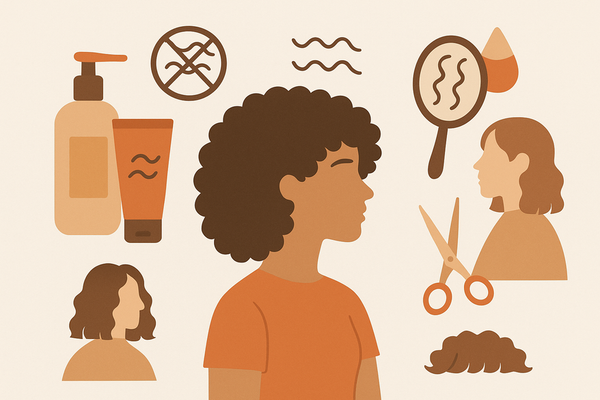
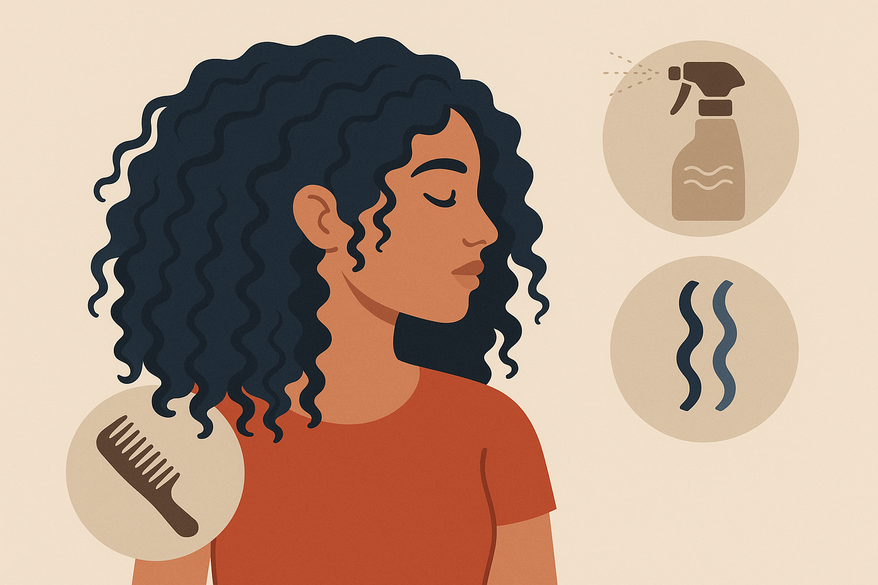
Your thick curly hair routine is a consistent, moisture-focused regimen combining washing, conditioning, styling, and protective measures. It aims to preserve natural oils, enhance your curl pattern, and minimize damage (Living Proof).
Wash Frequency
- Wash every 2–3 weeks to prevent over-stripping natural oils.
- Tip: Section hair into four quadrants before shampooing to reduce tangling and ensure even cleansing (AAD Curly Hair Care).
Conditioning Practices
- Use a daily or weekly conditioner from mid-shaft to ends. Let sit 3–5 minutes, then rinse with cool water to seal the cuticle (Living Proof).
- Deep condition weekly: choose masks with humectants (glycerin), emollients (cetyl alcohol), and oils (argan) to lock in moisture (O’Gario London).
Section 2: Frizz Prevention Tips
Defining Frizz
Frizz occurs when cuticle layers lift and misalign, creating a fuzzy appearance. It often stems from dryness, humidity, or damage to the hair’s protective barrier.
Moisture-Based Control
- Use humectant-rich formulas—glycerin, panthenol, aloe vera—to retain moisture (O’Gario London).
- Seal strands with natural oils or silicone-free serums to smooth cuticles and lock in hydration.
Protective Styling Techniques
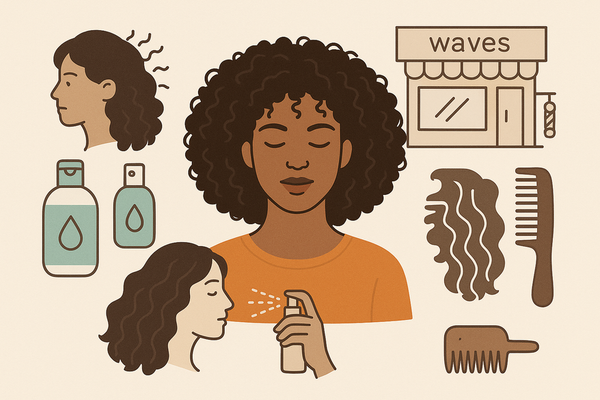
- Towel method: Gently squeeze out excess water with a microfiber towel or cotton T-shirt—never rub (Hair Romance).
- Overnight: Sleep on silk or satin pillowcases or loosely pineapple hair at the crown to minimize friction and frizz.
Targeted Application
Spot-treat frizz-prone zones (crown, perimeter) with anti-frizz serum or curl cream. Twirl each strand for uniform definition.
Section 3: Salon Selection and Expert Advice for Curly Hair
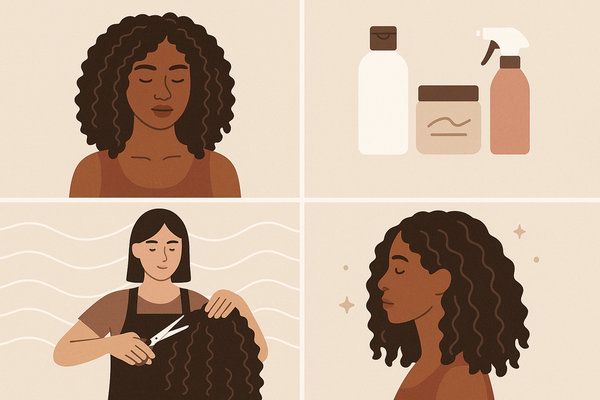
Choosing a salon that understands your texture can make all the difference. Look for stylists offering "curl audits" and techniques like DevaCut® that respect your natural pattern (O’Gario London).
What to Expect During a Visit
- Consultation: Stylist evaluates density, porosity, curl pattern, and volume goals.
- Cutting methods: Dry cutting or DevaCut®-style to see natural curl fall.
- Professional treatments: Deep conditioning masks and humidity-resistant finishing sprays.
Section 4: Keeping Waves Defined Between Washes
Wave Revival Techniques
- Flip your part: Swap to the opposite side while damp, then flip back as hair dries for root lift (Hair Romance).
- Zig-zag or diagonal parting: Creates lift and prevents flat roots.
Nighttime Preservation
- Pineapple technique: Gather hair at the top with a silk scrunchie.
- Satin bonnet or silk scarf: Minimizes friction and preserves curl shape.
Section 5: Troubleshooting Hair Color Issues (Blue Hair Not Showing Fix)
Why your vibrant blue might appear muted:
- High porosity: Strands absorb and release pigment too quickly. Test porosity and adjust processing time.
- Dark base: Pre-lighten to a pale yellow for true blue payoff.
At-home correction:
- Clarifying shampoo: Strip buildup, then follow with a blue-deposit conditioner or toner.
- Re-bleach and apply semi-permanent blue toner on under-processed sections.
Section 6: Fixing Haircut Disappointments (Bad Layers Haircut Fix)
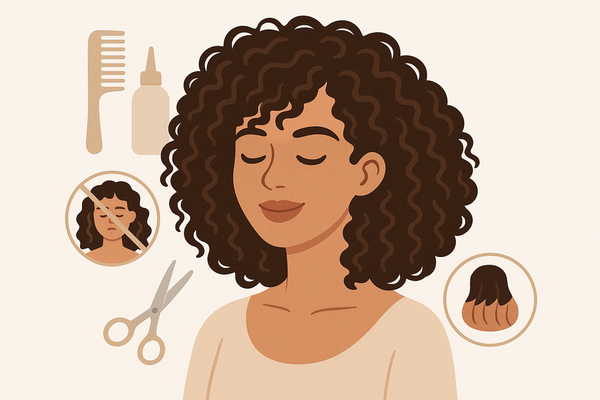
If layers feel uneven or bulky, try a small-barrel curling wand to manually blend top layers in alternating directions. For a permanent solution, opt for a dry cut focused on weight redistribution and “point cutting” to soften harsh lines (O’Gario London).
Conclusion
A sustainable thick curly hair routine blends consistent moisture management, smart styling, and expert care. Effective frizz prevention relies on hydration, protective techniques, and environmental awareness. Choosing the right curly hair salons ensures well-balanced cuts and specialized treatments. Waves between washes stay defined with part manipulation, gentle preservation, and low-maintenance styling. The blue hair not showing fix restores pigment with porosity tests, clarifying treatments, and professional glosses. Finally, bad layers haircut fix strategies—both at-home and in-salon—rescue uneven cuts and balance volume. Adopt this research-backed approach for healthier, vibrant curls. Share your routines and salon success stories in the comments below!
FAQ
- How often should I wash thick curly hair?
- We recommend washing every 2–3 weeks to preserve natural oils and prevent dryness.
- What's the best way to prevent frizz?
- Use humectant-rich products, seal with natural oils, and sleep on silk or satin pillowcases.
- How do I fix blue hair that looks dull?
- Test hair porosity, clarify buildup with a clarifying shampoo, then apply a blue-deposit conditioner or toner.
- How can I correct a bad layered haircut?
- Try point cutting to soften harsh lines or schedule a dry cut for weight redistribution with a curl-specialist stylist.