Mastering Your Thick Curly Hair Routine for Frizz-Free, Defined Curls
Discover a comprehensive thick curly hair routine to tackle frizz, maintain waves, and fix bad layers for healthy, defined curls. Perfect your hair care today.

Estimated reading time: 6 minutes
Key Takeaways
- Five-Step Routine: Cleanse, deep condition, moisturize, style, dry for optimal curl health.
- Frizz Control: Evidence-based techniques to minimize cuticle lifting and humidity damage.
- Salon Selection: Tips for finding curl-specialist stylists and the right treatments.
- Color & Cut Fixes: Strategies for vibrant color and correcting uneven layers.
- Maintenance Schedule: Frequency guidance for washes, deep treatments, and trims.
Table of Contents
- Introduction
- Understanding Routine Structure
- Frizz Prevention Techniques
- Curly Hair Salons
- Waves Between Washes Refresh Strategies
- Blue Hair Not Showing Fix
- Bad Layers Haircut Fix
- Conclusion
- FAQ
Introduction
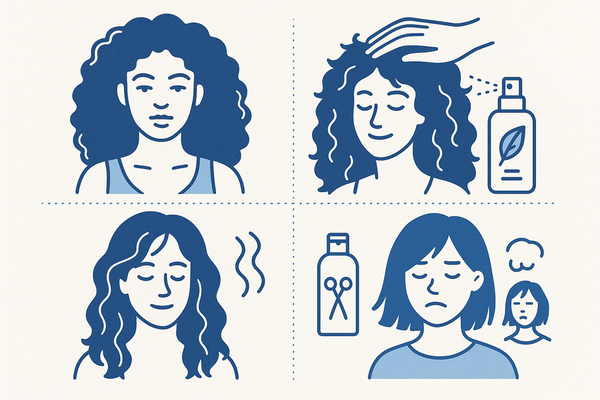
A comprehensive thick curly hair routine is your secret weapon to master frizz, maintain waves between washes, find the best curly hair salons, fix blue hair not showing, and correct bad layers haircuts. Thick, spiraled strands often battle persistent frizz, disappointing salon cuts, fading wave definition on non-wash days, dull color pigments in porous curls, and uneven layering that disrupts bounce.
Adopting a structured routine delivers:
- Moisture preservation to lock in hydration and prevent breakage.
- Enhanced curl definition for uniform spirals and consistent ringlets.
- Long-term hair health that supports elasticity and minimizes split ends.
For a deeper look at how AI-driven beauty tools can support personalized routines, see the link above. And explore the latest innovations in beauty tech.
Understanding Thick Curly Hair Routine Structure
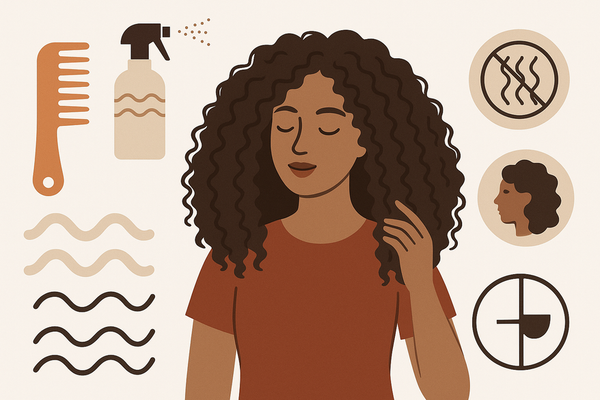
This routine breaks down into five precise steps that feed moisture, define curls, and seal cuticles for lasting shape:
- Cleansing with Moisturizing, Sulfate-Free Shampoo
- Choose a sulfate-free formula rich in glycerin or coconut derivatives.
- Rinse with lukewarm water to avoid stripping natural oils.
- Frequency: every 2–3 weeks to preserve sebum and protect high-porosity curls.
- Deep Conditioning
- Apply a rich, protein-balanced conditioner from roots through ends.
- Detangle gently with fingers or a wide-tooth comb while hair is wet.
- Leave on 5–15 minutes under a shower cap for optimum penetration.
- Moisturizing
- Layer a creamy leave-in or lightweight hair milk on damp strands.
- Target mid-shaft to ends where dryness and knotting are worst.
- Seal with natural oils (argan, jojoba) if porosity is high.
- Styling
- Use curl-defining gels or creams free from silicones and drying alcohols.
- Apply via rake-and-scrunch or finger-combing for even product distribution.
- Scrunch upward to encourage ringlet formation and scrunch out excess drips.
- Drying
- Plop hair in a microfiber towel or cotton T-shirt for 10–20 minutes to reduce frizz.
- Air-dry or diffuse on low heat and low airflow, focusing on roots to lift volume.
- Avoid touching curls during drying to maintain definition.
Why This Matters:
- High Porosity: Thick curls absorb water rapidly but lose moisture just as fast.
- Tendency to Knot: Dense coils interlock without targeted slip and detangling.
- Dryness Risk: Natural oils from the scalp struggle to travel down heavy strands.
Frequency Guidance:
- Shampoo: every 2–3 weeks.
- Conditioner: weekly deep treatments if hair feels brittle.
- Styling Refresh: as needed on non-wash days.
Frizz Prevention Techniques for Thick Curly Hair Routine
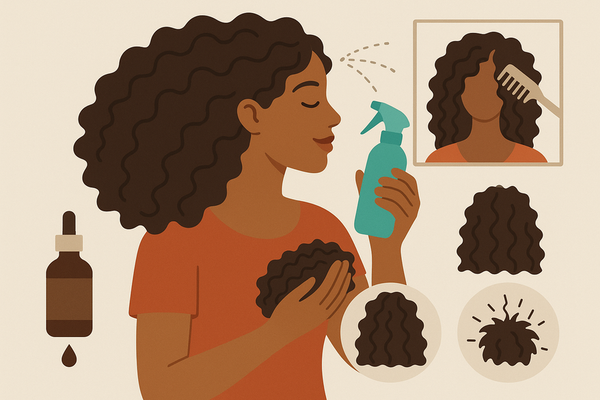
Frizz arises when the hair cuticle lifts and allows moisture exchange, causing thick curls to swell unevenly. Control frizz with these evidence-based steps:
- Temperature-Controlled Rinses
- Start with lukewarm water to open cuticles for cleansing.
- End with a cold rinse for 30 seconds to seal cuticles and boost shine.
- Plopping Method
- Post-styling, wrap hair in a microfiber towel or soft T-shirt.
- Leave for 10–20 minutes to wick moisture with minimal friction.
- Scrunch and Seal
- Apply silicone-free leave-in and gel on sopping wet hair.
- Scrunch ends toward scalp; avoid restyling until fully dry.
- Natural Humectants
- Use products containing argan oil, glycerin, or fatty alcohols.
- In clinical tests, glycerin improved moisture retention by 20%.
- Diffuser on Low Heat
- If air-drying is too slow, diffuse only at roots on low heat.
- Keep the diffuser at least six inches away to prevent overheating.
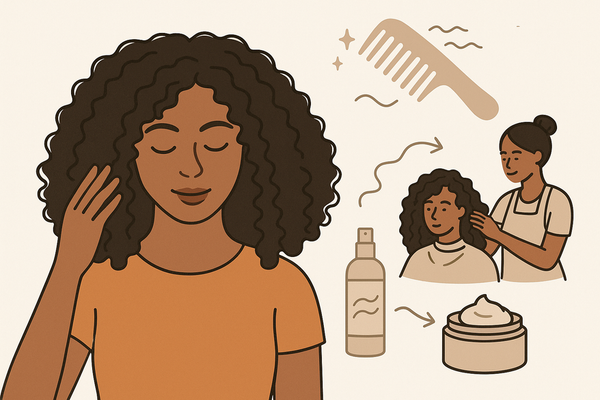
Curly Hair Salons: Selecting the Right Salon
Choosing a specialist salon ensures your thick curls get cuts and treatments designed for your pattern:
- Curl-Focused Stylists
- Cut-and-Dry Consultations
- Bond-Building Treatments
- Root-Lifting Techniques
Communication Tips:
- Bring clear reference photos.
- Share details on thickness, porosity, and wash frequency.
- Ask about post-cut care.
Waves Between Washes Refresh Strategies
- Hydration Mist
- Targeted Product Touch-Up
- Pineapple Overnight
- Quick Diffuse Boost
- Duckbill Clip Lift
Blue Hair Not Showing Fix for Thick Curly Hair Routine
- Monthly Clarifying
- Deep-Conditioning Mask
- Pre-Color Bond-Building
- In-Salon Gloss or Toner
- At-Home Shine Oil
Bad Layers Haircut Fix: Correcting Uneven Cuts
At-Home Styling Remedies: Soft layering with strategic product placement and heat styling.
Salon Intervention Options: Dry-cut adjustments and personalized layering techniques.
Conclusion
Embrace Your Thick Curly Hair Routine by committing to the five-step process, booking a dry-cut consultation, scheduling monthly clarifying and bond-building treatments, and setting trim reminders every 8–12 weeks. For a personalized approach, consider Makeup Check AI, which offers AI-powered reports on hair care and styling analysis.
FAQ
- How often should I really shampoo thick curly hair? Every 2–3 weeks to protect natural oils and prevent over-drying.
- Can I skip deep conditioning? Weekly deep treatments keep high-porosity curls strong and elastic.
- Is diffusing necessary? A low-heat diffuser speeds drying and boosts volume without frizz.
- How do I prevent color fade in curls? Use clarifying treatments monthly and gloss or toner every 4–6 weeks.
- What if my layers are still uneven after a salon visit? Request a dry-cut adjustment focused on curl pattern and density.