The Ultimate Thick Curly Hair Routine: Frizz Prevention and Salon Fixes
Master your thick curly hair routine with frizz prevention, waves between washes, and salon solutions for blue hair dullness or bad layers.

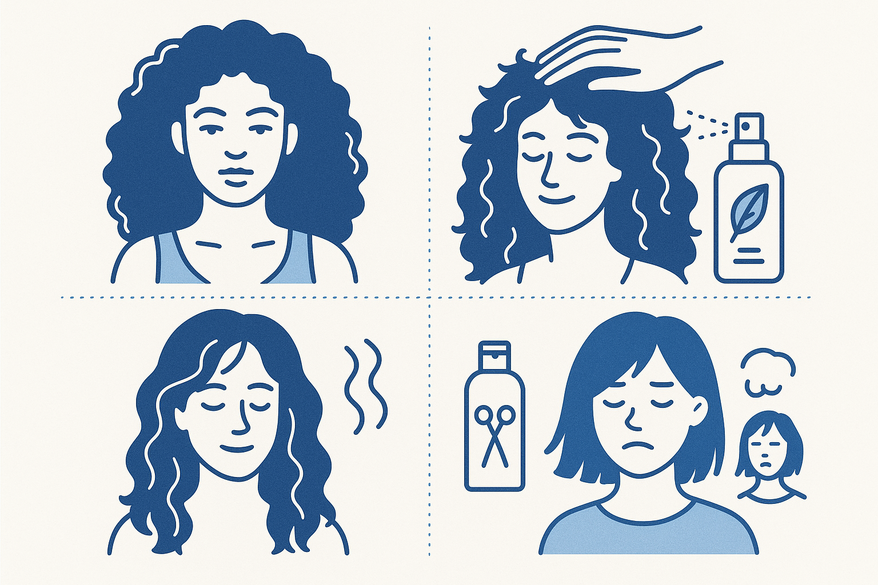
Estimated reading time: 7 min read
Key Takeaways
- Frizz control: Seal cuticles and lock in moisture with the right cleanse, condition, and sealing steps.
- Wave preservation: Refresh curls between washes using light mists, gentle scrunching, and overnight techniques.
- Salon strategy: Choose stylists certified in curly methods; dry cutting and bond-building color treatments are game-changers.
- Color fixes: Prep high-porosity curls properly and use demi-permanent glosses for vivid, even blue tones.
- Layer corrections: Address uneven or bulky layers with dry-cut trims and regular maintenance.
Table of Contents
- Introduction
- Understanding Thick Curly Hair Challenges
- Frizz Prevention Techniques
- Maximizing Waves Between Washes
- Navigating Curly Hair Salons
- Addressing Color Concerns: Blue Hair Not Showing Fix
- Correcting Haircut Issues: Bad Layers Haircut Fix
- Conclusion & Next Steps
- FAQ
Introduction
A thick curly hair routine is a clear, step-by-step plan that gives naturally voluminous locks steady moisture, curl definition, and styling control. This regimen fights frizz, keeps waves between washes, and helps you mimic salon-quality results at home.
Why you need it:
- Frizz prevention – Raised cuticles on dry curls lead to a coarse, fuzzy look.
- Waves between washes – Shrinkage and pattern loss make curls look uneven on day two or three.
- Salon results at home – A solid routine closes the gap between your chair and your shower.
We’ll cover:
- Frizz prevention tactics
- Maximizing waves between washes
- Finding and talking to curly hair salons
- Fixing blue hair that won’t show
- Correcting bad layers in curly cuts
Understanding Thick Curly Hair Challenges
Curly hair is beautiful but complex. Knowing the main hurdles helps you pick the right steps and products.
- Frizz causes: Raised, dry cuticles trap moisture in the air. Hair swells and feels coarse or fuzzy.
- Unruly wave shapes: Curls shrink and lose pattern without proper styling and moisture. Some sections look tighter, others wave-free.
- Layered haircut pitfalls: Cutting curls wet or like straight hair makes layers bounce back unevenly. Bulk shows in the wrong places.
- Color dullness: High-porosity curls soak up dye unevenly. Product buildup and tight coils hide light reflection.
Why a tailored thick curly hair routine matters:
- Matches products and techniques to your curl density and porosity
- Restores moisture and defines ringlets
- Prevents damage and uneven shape
Frizz Prevention Techniques
Smooth, defined curls start with sealing cuticles and locking in hydration.
Cleansing & Conditioning
- Use sulfate-free, silicone-free shampoo to prevent dryness.
- “Squish to condish”: saturate hair with conditioner, scrunch up toward roots, rinse partly so strands stay coated.
Leave-in Products
- Apply a lightweight leave-in conditioner or curl cream on damp hair.
- Scrunch from ends up to smooth cuticles and encourage curl clumps.
Anti-Humidity & Sealing
- Finish with silicone-free oils (e.g., jojoba, argan) or anti-humidity spray.
- Rinse hair with cool water to close cuticles and add shine.
Drying Methods
- Diffuse on low heat with a soft cloth or use air-dry.
- Avoid towel-rubbing; use a microfiber towel or old cotton T-shirt.
Maintenance
- Clarify every 4–5 washes to remove buildup.
- Deep-condition weekly with a protein-rich or moisture mask.
Pro tip: Visit curly hair salons for custom anti-frizz product combos and styling demos.
Maximizing Waves Between Washes
Keep second-day, third-day, or beyond waves fresh with light touch-ups.
- Daily Refresh: Lightly mist hair with water or a mix of water + leave-in conditioner.
- Scrunch Refresher: Cup curls in hands and gently scrunch up to revive the pattern.
- Low-Product Approach: Too much cream or gel weighs curls down and flattens waves.
- Finger-Detangling: On days 2–3, use fingers to gently separate and reshape curls.
- Overnight Care: Pineapple method – loosely tie hair on top of head with a silk scrunchie.
Navigating Curly Hair Salons
A salon that knows curls can rescue bad cuts and color issues.
Salon Selection
- Look for stylists certified in the Curly Girl Method or with curly-hair certifications.
- Check reviews or before-and-after photos of thick textures.
Consultation Checklist
- Describe your current thick curly hair routine and products.
- Share your curl porosity and density (how your hair absorbs water).
- Explain past issues: bad layers haircut fix and blue hair not showing fix.
- State your hair goals: volume control, defined waves, vivid color.
Curly-Centred Cutting
- Request a dry-cut or DevaCut-style layering to account for shrinkage.
- Avoid straight-hair layering techniques that create bulk.
Color Expertise
- Confirm the salon offers bond-building treatments (Olaplex or similar).
- Ask for gloss or demi-permanent services to boost and maintain blue tones.
Addressing Color Concerns: Blue Hair Not Showing Fix
Blue dye can look dull if you don’t match technique to curl traits.
- Why It Happens: High-porosity curls absorb dye unevenly—some sections over-process, others under-process.
- Pre-Color Prep: Clarify hair to strip away oils and buildup for an even base.
- In-Salon Solutions: Ask for a demi-permanent blue gloss or color refresh to layer tones without extra damage.
- At-Home Maintenance: Wash with color-safe, sulfate-free cleansers only.
Correcting Haircut Issues: Bad Layers Haircut Fix
Uneven or bulky layers can ruin curl shape. Here’s how to fix them fast.
- Common Mistakes: Stylists cutting curls as if they were straight hair.
- Professional Reshaping: Book a trim with a curl specialist using dry-cutting for precision.
- Home Care Tips: Deep-condition weekly to soften uneven layers and reduce frizz.
- Long-Term Routine: Schedule trims every 8–12 weeks to prevent bulk build-up.
Conclusion & Next Steps
Recap
- Frizz prevention with the right cleansers, leave-ins, and sealing oils.
- Waves between washes using light misting, scrunch refreshers, and overnight care.
- Informed visits to curly hair salons for cuts that fit your curl pattern and color specialists.
- Targeted fixes for blue hair not showing and bad layers haircut issues.
Encourage Experimentation
Try different products and tweak methods based on your curl porosity and density. Keep a hair journal to track what works best.
For personalized beauty tips—and to explore AI-powered guides on makeup, skincare, and hair—check out Makeup Check AI. Unlock tailored routines, virtual tutorials, and real-time feedback from your personal AI beauty team.
FAQ
- How often should I wash my thick curly hair? Aim for every 3–5 days. Use co-washing or a gentle, sulfate-free cleanser on off days to maintain moisture without stripping natural oils.
- What’s the best way to refresh curls overnight? The pineapple method with a silk scrunchie and a satin or silk pillowcase minimizes friction, preserves curl shape, and reduces frizz.
- Can I color my curls at home? It’s possible but tricky. For even blue tones, prep with a clarifying treatment and consider demi-permanent glosses. Otherwise, seek a curly-specialist salon.
- How do I know if my layers need fixing? Uneven volume, bulky spots, or unpredictable shrinkage signal a need for a dry-cut trim by a certified curly hair stylist.
- What products are must-haves in a thick curly hair routine? A sulfate-free shampoo, a rich conditioner, a leave-in curl cream, a lightweight oil, and a clarifying shampoo for occasional use.