Thick Curly Hair Routine: Manage Frizz, Waves & Salon Fixes
Discover the ultimate thick curly hair routine for frizz prevention, waves between washes, curly hair salon tips, and solutions to common color and cut issues.

Estimated reading time: 8 minutes
Key Takeaways
- Moisture Retention: Prioritize hydration and protein balance to keep thick curls healthy.
- Frizz Prevention: Use sulfate-free products, silk accessories and sealants to minimize stray hairs.
- Styling Methods: Techniques like squish-to-condish, plopping and diffusing preserve curl definition.
- Between Washes: Protective styles and refresh routines extend wave life and reduce manipulation.
- Salon Selection: Choose stylists trained in dry cuts and curl-friendly techniques for 3C–4A textures.
- Color Corrections: Clarify, pre-treat and use bond-builders for even semi-permanent blue tones.
- Layer Fixes: At-home cocktails, strategic trimming and professional re-layers restore balance.
Table of Contents
- Understanding Your Thick Curly Hair Routine
- Frizz Prevention Tips
- Maintaining Waves Between Washes
- Choosing the Right Curly Hair Salons
- Fixing Color Issues: Blue Hair Not Showing Fix
- Repairing Salon Mistakes: Bad Layers Haircut Fix
- Conclusion
Understanding Your Thick Curly Hair Routine
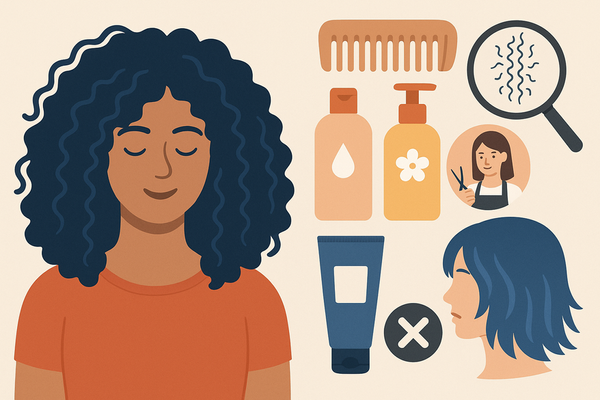
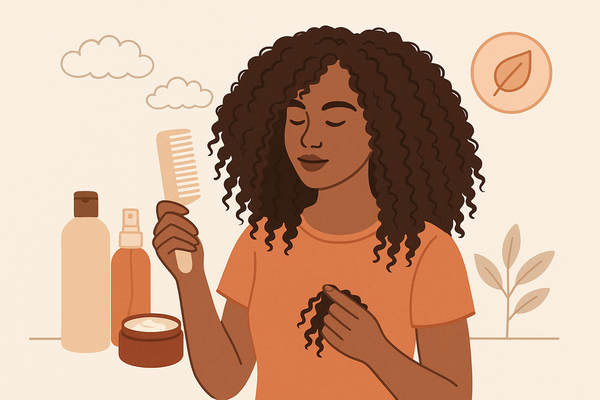
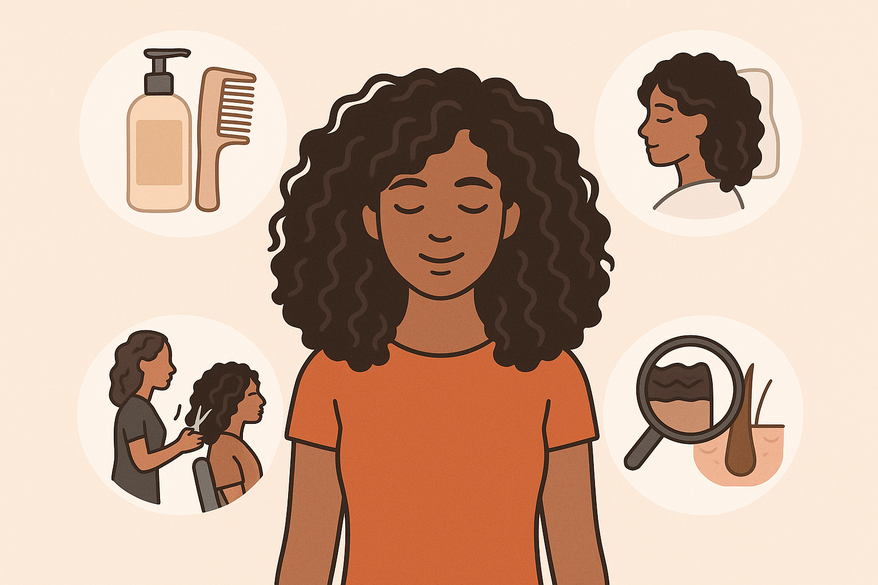
A thick curly hair routine is a tailored regimen of cleansing, conditioning, moisturizing, and styling designed to manage density, porosity, and curl definition. It balances hydration and protein to handle dense, porous curls without weighing them down. For more in-depth tips, see our previous post The Ultimate Thick Curly Hair Routine: Frizz Prevention, Waves Between Washes & Salon Fixes.
Defining Your Regimen
This routine prioritizes moisture retention, gentle cleansing, and curl definition to transform your curls into healthy, defined coils.
Daily Care Essentials
- Cleanse with sulfate‐free shampoo or co-wash to avoid stripping natural oils.
- Deep condition every wash day; use a weekly protein-rich mask for extra moisture.
- Detangle in sections with a wide-tooth comb or fingers to prevent breakage.
Styling Techniques
- Work products into soaking-wet hair using the “squish-to-condish” method to enhance curl clumps.
- Plop hair in a cotton T-shirt for 10–20 minutes to boost definition and reduce frizz.
- Diffuse on low heat or air-dry to preserve curl structure and minimize damage.
Product Layering Order
Apply products from lightest to heaviest on wet hair:
- Leave-in conditioner
- Curl cream, mousse, or gel
- Oil seal
Wash-Day Step Summary
- Optional pre-poo with coconut or olive oil to protect strands.
- Clarify every 4–5 washes to remove buildup.
- Deep condition and detangle in sections.
- Rinse, apply leave-in and styling products, then plop or diffuse.
Frizz Prevention Tips
Defining Frizz in Thick Curly Hair
Frizz results from raised cuticles and moisture loss that cause stray hairs and dullness. It’s common in dense curls that need extra hydration and protection.
Top Causes of Frizz
- Dryness from under-conditioning or harsh ingredients
- Product buildup weighing down curls
- Heat damage from high-temperature tools
- Sulfates stripping natural oils
Actionable Strategies for Frizz Prevention
- Seal moisture on wet hair with a silicone-free serum or a heavy cream, then lock with a gel for long-lasting definition.
- Skip hot showers and direct heat; use lukewarm water, microfiber towels, and silk/satin pillowcases.
- Clarify regularly to eliminate residue and restore natural curl bounce.
For a seamless beauty routine you can complement your hair care with AI-driven insights—try Makeup Check AI, which even analyzes hair health alongside makeup and skincare tips.
Maintaining Waves Between Washes
Why Waves Between Washes Matter
Preserving waves between washes extends style life, reduces manipulation, and maintains healthy hair by spacing out cleanses.
Protective Styling Techniques
- Pineapple updo: Gather hair loosely at the crown with a soft scrunchie to protect curls overnight.
- Plop with a T-shirt turban to keep roots lifted and clumps intact.
- Use gentle hair clips to prop roots for added volume.
Refresh Routine (Step-by-Step)
- Mist hair with a mix of water and leave-in conditioner.
- Scrunch to reactivate the product cast and enhance clumps.
- Flip hair upside down for volume, then diffuse briefly on low heat if needed.
Choosing the Right Curly Hair Salons
Defining Curly Hair Salons
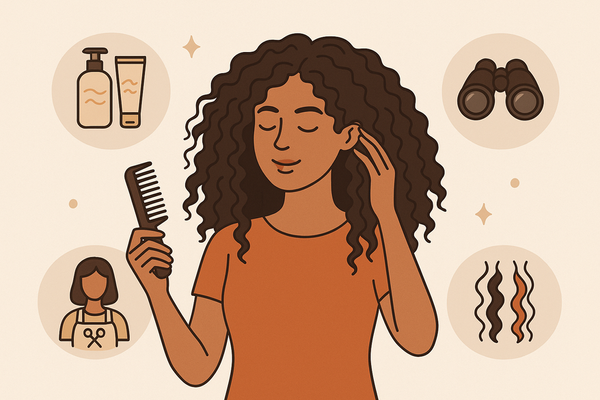
Curly hair salons specialize in curl-specific cutting techniques like dry cuts and the DevaCurl method. They differ from traditional salons that cut hair wet and risk flattening curl pattern.
Key Criteria for Selection
- Stylists trained in cutting 3C–4A textures using curl-friendly, sulfate-free brands.
- Positive client reviews and before-and-after portfolios showcasing thick curls.
- Knowledge of curl shrinkage and layering to avoid unwanted volume.
Pre-booking Questions
- “Do you cut dry or wet?”
- “What experience do you have with thick, dense curls?”
- “Can I see examples of 8–12 week maintenance trims?”
Recommended Trim Frequency
Schedule trims every 8–12 weeks to prevent split ends and maintain shape.
Fixing Color Issues: Blue Hair Not Showing Fix
Defining the Blue Hair Not Showing Issue
Blue hair not showing occurs when porous cuticles absorb dye unevenly, or buildup blocks pigment, resulting in patchy color and dull tones.
Corrective Protocol (Step-by-Step)
- Clarify scalp and strands with a buildup-removing shampoo to expose the true base.
- Pre-treat with a bond-builder or protein filler for uniform porosity.
- Apply semi-permanent blue dye on damp, towel-blotted hair; saturate mid-lengths and ends.
- Rinse with cool water; seal with a hydrating leave-in and gel cast to lock color.
- Refresh weekly with a cool-toned gloss and use color-safe, moisture-rich shampoo and conditioner.
Repairing Salon Mistakes: Bad Layers Haircut Fix
Defining Bad Layers on Thick Curly Hair
Bad layers create uneven weight distribution, leading to frizz pockets, unruly volume, and a disjointed curl pattern.
At-Home Styling Remedies
- Craft a heavy cream plus gel cocktail to clump and redefine fragmented curls.
- Plop and diffuse strategically, using root-lift clips to blend shorter and longer layers.
Growth-Phase Strategy
- Schedule monthly “dusting” trims with a curly specialist to gradually reshape layers.
- Incorporate weekly weight-adding masks to control poof and maintain curl integrity.
Professional Correction
Book a re-layer at a certified curly hair salon using dry-cut techniques to restore balanced volume and shape.
Conclusion
A comprehensive thick curly hair routine brings together frizz prevention, waves between washes, smart salon choices, color fixes, and haircut corrections. By following these science-backed steps—moisture-first cleansing, strategic styling, protective nightly techniques, and targeted solutions for blue hair not showing or bad layers—you’ll achieve healthier, defined curls. Remember to experiment with product types, adjust techniques to your curl density and porosity, and track your progress. Have questions or success stories? Leave a comment below.
Explore Further
FAQ
How often should I wash thick curly hair?
Most people with thick curls find washing every 4–7 days ideal. This schedule preserves natural oils, prevents dryness, and keeps frizz at bay.
What’s the best way to prevent frizz overnight?
Use a silk or satin pillowcase, pineapple your hair, or wrap with a silk scarf to maintain shape and reduce friction-induced frizz.
Can I color my curls at home without losing definition?
Yes, with proper porosity prep. Clarify, pre-treat with a bond-builder, apply dye on towel-blotted hair, and seal with a leave-in to lock moisture and shine.
When should I seek a professional correction for bad layers?
If at-home methods don’t blend shorter layers or if volume is unmanageable, book a curly hair specialist for a dry-cut re-layer to restore balance.