Thick Curly Hair Routine: Taming Frizz and Maintaining Waves
Discover the ultimate thick curly hair routine for frizz prevention, waves between washes, and more. Learn salon tips, color fixes, and haircut solutions.

Estimated reading time: 8 minutes
Key Takeaways
- Moisture and gentle care are essential for vibrant, bouncy curls.
- A six-step wash day routine (co-wash, condition, moisturize, style, dry, deep condition) transforms frizzy hair.
- Prevent frizz with hydration, anti-frizz tools, and protective styling.
- Refresh waves between washes using spray-and-scrunch, pineapple, or mini-diffuse methods.
- Choose a curl specialist salon for cuts that respect your natural pattern.
- Maintain blue tones with toning shampoos, bond builders, and pre-conditioning.
- Fix uneven layers at home, then plan a dry-cut trim with a curly hair expert.
Table of Contents
- Understanding Thick Curly Hair
- Building a Curly Hair Routine
- Step 1 – Co-wash or Cleanse
- Step 2 – Condition
- Step 3 – Moisturize
- Step 4 – Style
- Step 5 – Dry
- Step 6 – Deep Condition Weekly
- Frizz Prevention Techniques
- Enhancing Waves Between Washes
- Choosing the Right Curly Hair Salons
- Addressing Color Issues: Blue Hair Not Showing Fix
- Fixing a Bad Layers Haircut
- Conclusion
A thick curly hair routine is a customized regimen focused on hydration, gentle cleansing, styling techniques, and maintenance steps to tame frizz and preserve curl definition. Early in life, many of us learn that thick coils or waves need special care to stay healthy and bouncy.
People with thick, curly hair face common challenges:
- Excessive frizz from dryness
- Difficulty maintaining waves between washes
- Inconsistent salon results
- Color fading (especially blues)
- Badly executed layered haircuts that disrupt curl shape
This blog post provides actionable solutions. You’ll learn:
- How to prevent frizz
- Ways to enhance waves between washes
- Tips for finding the best curly hair salons
- Fixes for blue hair not showing
- Repairs for a bad layers haircut
Understanding Thick Curly Hair
Thick curly hair means a high strand density and tight coils or waves. These strands have increased porosity, so they let moisture in—and out—very quickly.
Key traits of thick curly hair:
- High volume and bulk
- Tendency to dry out and frizz
- Prone to breakage if handled roughly
- Cuticles that open when dry, causing tangles
Compared with fine or straight hair, thick curls need more moisture and gentle handling to keep curls springy. A tailored routine brings back shine and elasticity by sealing cuticles and restoring hydration.
Building a Curly Hair Routine
A step-by-step program can transform dry, puffy curls into defined, soft waves. Follow these six steps every wash day:
Step 1 – Co-wash or Cleanse
- Use a Curly Girl Method–approved cleansing conditioner or sulfate-free shampoo.
- Massage product into your scalp for 1 minute to lift dirt.
- Detangle gently with a wide-tooth comb or your fingers.
- “Co-wash” means you skip harsh shampoos and wash with conditioner to preserve natural oils.
Step 2 – Condition
- Apply generous conditioner from mid-lengths to ends.
- “Squish to condish”: scrunch hair upward so the conditioner soaks in.
- Rinse most of it out; a little leftover conditioner helps weigh strands down for definition.
Step 3 – Moisturize
- On damp hair, use a leave-in conditioner or curl cream.
- Spread product evenly from roots to ends.
- Look for ingredients like pro-vitamin B5, glycerin, and avocado oil to lock in hydration.
Step 4 – Style
- Divide hair into sections.
- Rake in gel or curl styler with your fingers.
- Flip hair forward and scrunch to form ringlets.
- In thick hair, focus on roots and underlayers to ensure an even hold.
Step 5 – Dry
- Plop hair in a microfiber towel or cotton T-shirt for 5–15 minutes to remove excess water.
- Air-dry or use a diffuser on a low heat/cool setting.
- Once fully dry, gently scrunch out any gel “cast” to reveal soft, defined curls.
Step 6 – Deep Condition Weekly
- Use a nourishing hair mask containing oils and proteins.
- Leave it on for 10 minutes or overnight the first few times.
- This restores elasticity, seals the cuticle, and cuts down frizz.
Frizz Prevention Techniques
Frizz arises when hair loses moisture or suffers heat damage. Thick curls need extra care to keep the cuticle smooth.
- Hydration Focus
– Apply leave-in products daily.
– Deep condition weekly to rebuild the moisture barrier. - Anti-Frizz Tools
– Use light oils or serums like argan or jojoba after styling.
– Sleep on a silk or satin pillowcase to reduce friction and breakage. - Protective Styling
– Diffuse on cool or low heat only.
– Avoid over-manipulating hair between wash days.
– Clarify with a gentle shampoo every 4–5 washes to remove buildup.
Enhancing Waves Between Washes
Waves between washes means keeping your curl pattern alive on non-wash days. This saves time and cuts down frizz.
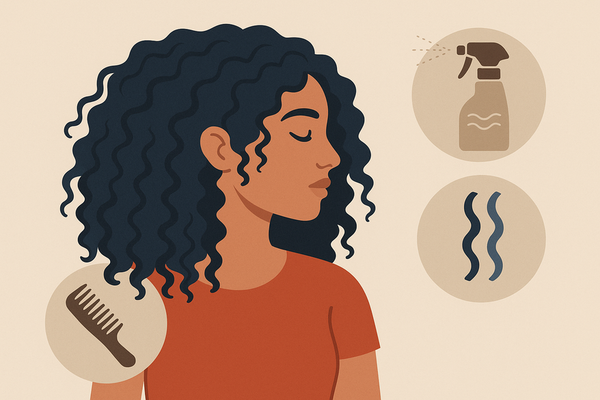
- Spray and Scrunch
• Mix water and leave-in conditioner in a spray bottle.
• Lightly mist roots and mid-lengths.
• Scrunch to reactivate product and coil shape. - Pineapple Technique
• Gather hair loosely on top of your head with a silk scrunchie.
• Sleep this way to keep curls lifted and intact.
• In the morning, shake out and finger-scrunch to reshape. - Mini Diffuse
• If curls feel flat, use a diffuser on low heat.
• Focus on underlayers for 2–3 minutes to boost volume without a full rewash.
Choosing the Right Curly Hair Salons
Finding a salon that understands textured hair makes all the difference. Here’s how to choose:
- Search for Curl Experts
– Look for salons advertising “Curly Girl Method” or “curl specialist.”
– Read reviews mentioning thick, textured hair.
– Ask friends or online communities for recommendations. - What to Expect at Your Visit
– A thorough consultation on your hair’s porosity, density, and curl type.
– A dry-cut method to see how layers fall in your natural curl pattern.
– Demonstrations of home-care products tailored to your routine. - Common Salon Treatments
– Curl-defining haircuts using the dry-cut method.
– Deep conditioning or bond-building masks.
– Anti-shrinking treatments to control volume and enhance pattern.
Addressing Color Issues: Blue Hair Not Showing Fix
Blue tones can vanish on thick, porous curls if the cuticle is too open. Patches of muted color or quick fading are common.
- At-Home Fixes
• Weekly blue pigment toning shampoos or color-deposit masks.
• Deep condition after every color treatment to seal the cuticle and lock in pigment. - Professional Fixes
• Book a corrective color session at a curly hair salon.
• Use semi-permanent or direct dyes with bond builders for even deposition. - Preventive Care
• Deep condition for 1–2 weeks before coloring to smooth the cuticle.
• Choose color-safe, sulfate-free shampoos and conditioners.
• Limit clarifying washes to preserve color intensity.
Fixing a Bad Layers Haircut
A bad layers haircut on curly hair means uneven layer placement that breaks curl formation. You end up with poufs, frizz, or flat spots.
- Home Styling Quick-Fix
• Apply curl cream and gel to damp hair.
• Scrunch underlayers to encourage curl.
• Diffuse upside-down for 3–5 minutes to blend layers and lift roots. - Interim Care
• Protective updos like loose buns or braids hide uneven shape.
• Weekly protein treatments strengthen weakened strands. - Long-Term Solution
• Wait 4–6 weeks for natural regrowth.
• Book a dry-cut or dusting trim with a curl specialist focusing on weight distribution.
• Aim for minimal layering and shape that complements your curl pattern.
Conclusion
A full thick curly hair routine brings together frizz prevention, maintaining waves between washes, picking the right curly hair salons, and solutions for color or cut mishaps. Key takeaways:
- Prioritize moisture with co-washes, conditioners, and weekly deep treatments.
- Prevent frizz by protecting the cuticle, using silk tools, and avoiding heat damage.
- Refresh curls on non-wash days with simple spray, pineapple, or mini-diffuse techniques.
- Seek salons with curl expertise for cuts that respect your pattern.
- Fix blue hair fading with toners, bond-builders, and pre-conditioning.
- Tackle a bad layers haircut at home, then plan a regrowth trim with a curly specialist.
For personalized beauty insights you can incorporate into your thick curly hair routine, explore Makeup Check AI.
FAQ
How often should I co-wash my thick curly hair?
Co-wash every 3–5 days or as needed to maintain moisture without stripping natural oils. Adjust based on scalp oiliness and product buildup.
Can I use heat styling tools on my curls?
Yes, but limit to the coolest setting and always apply a heat protectant. Better yet, use a diffuser on low or cool air to enhance curls safely.
What’s the best way to make blue hair color last longer?
Deep condition before and after coloring, use blue pigment toning shampoos, and avoid sulfur-based shampoos. Cool water rinses help seal the cuticle.
How does the pineapple technique work?
Pineappling involves loosely gathering hair on top of the head with a silk scrunchie before sleep, which preserves curl shape and volume overnight.
How do I find a salon that specializes in curly hair?
Search for “curl specialist” or “Curly Girl Method” salons, read client reviews mentioning thick or textured hair, and ask for consultations that include a dry-cut demo.