The Ultimate Thick Curly Hair Routine: From Frizz Prevention to Color Fixes
Master your thick curly hair routine with tips on frizz prevention, maintaining waves, finding curly hair salons, fixing blue hair, and correcting bad layers.

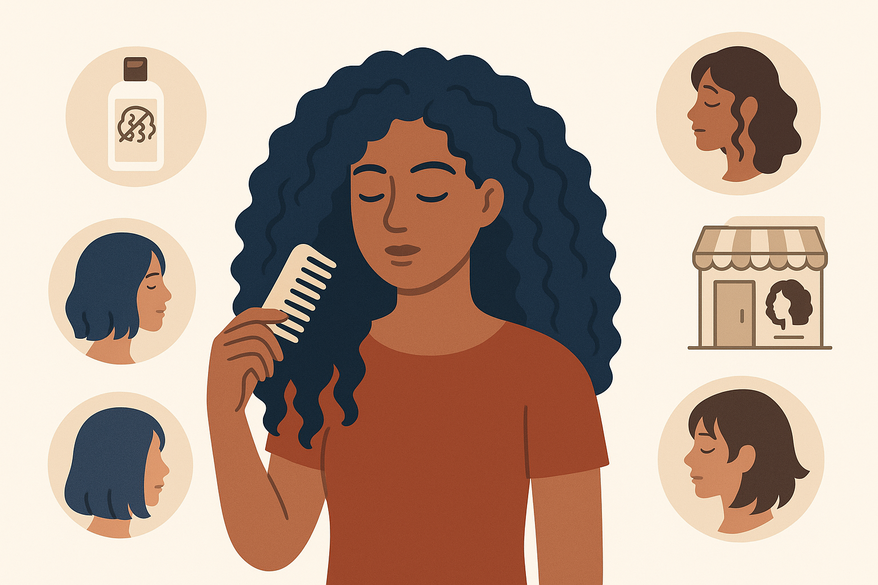
Estimated reading time: 8 minutes
Key Takeaways
- Moisture-focused care: Embrace the four pillars—Cleansing, Conditioning, Styling, Protection—for lasting hydration.
- Frizz prevention: Seal cuticles with cool rinses and silk tools to maintain smooth curls.
- Wave maintenance: Refresh non-wash days with light mists, scrunching, and gentle pineappling.
- Salon expertise: Choose stylists who specialize in curly cuts and dry-cutting techniques.
- Color corrections: Use clarifying treatments and color-depositing masks to revive faded blue hues.
- Layer fixes: Deploy weight-down products, plopping, and strategic clipping to even out uneven layers.
Table of Contents
- Section 1: Understanding Your Hair and Routine Essentials
- Section 2: Frizz Prevention Strategies
- Section 3: Maintaining Waves Between Washes
- Section 4: Choosing the Right Curly Hair Salon
- Section 5: Tackling Color Challenges: Blue Hair Not Showing Fix
- Section 6: Fixing a Bad Layers Haircut
- Conclusion and Final Tips
- FAQ
Section 1: Understanding Your Hair and Routine Essentials
Thick curly hair boasts high strand density and unique oil distribution challenges, making a specialized regimen essential.
- High strand density: Denser coils often lead to dryness when natural oils can’t travel down the shaft.
- Oil distribution challenges: Tight curls hinder oil flow, causing frizz and brittle ends.
By tailoring your routine you can:
- Preserve scalp oils to strengthen strands.
- Enhance elasticity for bouncy, defined curls.
- Reduce breakage through consistent hydration.
Four pillars of an effective routine:
- Cleansing: Use a sulfate-free, hydrating shampoo on the scalp 1–2 times weekly; clarify monthly.
- Conditioning: Apply a rich conditioner from mid-lengths to ends, detangling gently; rinse with cool water to seal cuticles.
- Styling: On soaking-wet hair, layer products using the LOC method: Liquid, Oil, Cream; scrunch with a microfiber towel.
- Protection: Sleep on silk or satin, air-dry when possible, diffuse on low heat, and deep-condition weekly.
Section 2: Frizz Prevention Strategies
Frizz appears when cuticles lift, letting moisture in or out. Common culprits include dryness, friction, and humidity.
- Lock in moisture immediately after washing with leave-in conditioner or lightweight oil.
- Style with curl creams or gels; scrunch and avoid touching until fully dry.
- Finish with a cool-water rinse and swap to silk or satin tools to reduce abrasion.
Section 3: Maintaining Waves Between Washes
On non-wash days, S-pattern waves can loosen. Refresh them with:
- Light misting and a pea-sized dab of conditioner or gel, scrunched into dry sections.
- Gentle finger-combing and a loose “pineapple” secured by a silk scrunchie.
- Scalp-only shampooing on wash days to encourage oil flow down the hair shaft.
Section 4: Choosing the Right Curly Hair Salon
Seek stylists skilled in dry-cutting and curl-specific techniques.
- Review before-and-after portfolios of curly clients.
- Ensure they offer protein treatments, curl-friendly coloring, and regular trims every 6–8 weeks.
- Opt for salons that discuss your porosity level and daily styling habits.
Section 5: Tackling Color Challenges: Blue Hair Not Showing Fix
Porous curls can lead to patchy blue tones. Try these at-home and professional solutions:
- At-home: Clarify buildup, use weekly color-depositing masks, and apply a pre-color oil seal to smooth cuticles.
- Professional: Book toning or gloss services and porosity-balancing treatments like protein or bonding services.
Section 6: Fixing a Bad Layers Haircut
Uneven layers can disrupt curl clumps and create frizz hotspots. Interim styling fixes include:
- Weight-down products: Apply a heavier gel or cream to shorter layers, then scrunch out the cast for soft curls.
- Plopping method: Use a cotton T-shirt turban to encourage even drying and reduce frizz.
- Clip and blend: Duckbill clips can pin back shorter pieces to balance volume.
- DIY dusting: Trim split ends every 4–6 weeks to maintain shape without major cuts.
Conclusion and Final Tips
A consistent, moisture-focused routine addresses frizz, maintains waves, guides you to expert salons, revives blue hues, and tames bad layers.
- Follow the four pillars: Cleansing, Conditioning, Styling, Protection.
- Refresh curls between washes with light mists and pineappling.
- Choose curl-savvy stylists for precision cuts and color work.
- Combat fading blue with clarifying and deposit treatments.
- Fix uneven layers using creams, plopping, and strategic clipping.
Explore Makeup Check AI for personalized hair care insights and tutorials!
FAQ
What is the LOC method?
The LOC method stands for Liquid, Oil, and Cream. It’s a layering approach applied to soaking-wet hair to maximize moisture retention and curl definition.
How often should I clarify my hair?
Clarify once a month to remove product buildup. Over-clarifying can strip natural oils, so limit thorough cleansing with a clarifying shampoo to maintain healthy curl integrity.
Can I color curly hair at home?
You can, but porous curls may absorb dye unevenly. Use clarifying treatments, oil seals, and color-depositing masks for best results, or visit a professional for balanced, lasting color.