Thick Curly Hair Routine: Ultimate Guide to Prevent Frizz and Define Waves
Discover a thick curly hair routine for frizz prevention and wave definition. Learn about curly hair salons, blue hair fixes, and correcting bad layers.

Estimated reading time: 10 minutes
Key Takeaways
- Core four-step routine—cleanse, condition, moisturize, and style—is essential for dense, high-porosity curls.
- Frizz prevention tactics like monthly clarifying, cool rinses, and protective sleep routines keep strands smooth.
- Wave-refresh techniques between washes extend style life using water spritzes, gel casting, and lightweight serums.
- Salon selection and corrective cuts address bad layers, while bond builders and pigmented masks revive blue shades.
- Consistency and customization based on porosity and curl pattern deliver long-term definition and shine.
Table of Contents
- Section 1: Understanding Your Thick Curly Hair Routine
- Section 2: Your Core Four-Step Thick Curly Hair Routine
- Section 3: Frizz Prevention Techniques
- Section 4: Enhancing Waves Between Washes
- Section 5: Navigating Curly Hair Salons
- Section 6: Addressing Color Issues – Blue Hair Not Showing Fix
- Section 7: Fixing Haircuts – Bad Layers Haircut Fix
- Section 8: Results Timeline for Your Thick Curly Hair Routine
- Conclusion
- FAQ
Section 1: Understanding Your Thick Curly Hair Routine
A thick curly hair routine is a structured set of steps—cleansing, conditioning, moisturizing, and styling—tailored for dense, high-porosity coils whose natural oils struggle to travel down the hair shaft. Without a cohesive plan, curls become dry, frizzy, and undefined.
- Why moisture and layering matter:
Curly hair’s bends and twists block sebum, leading to dryness. Layering products from lightest to heaviest helps trap hydration and smooth cuticles. - This synergy ensures each product amplifies the next, protecting against frizz while boosting definition and color vibrancy.
Section 2: Your Core Four-Step Thick Curly Hair Routine
A reliable wash-day routine prevents frizz and keeps curls springy. Follow these steps every session:
- Cleanse
- Use a sulfate-free or clarifying shampoo every 4–5 washes.
- Gently massage the scalp to dissolve buildup without stripping essential oils.
- Condition
- Apply conditioner from mid-length to ends.
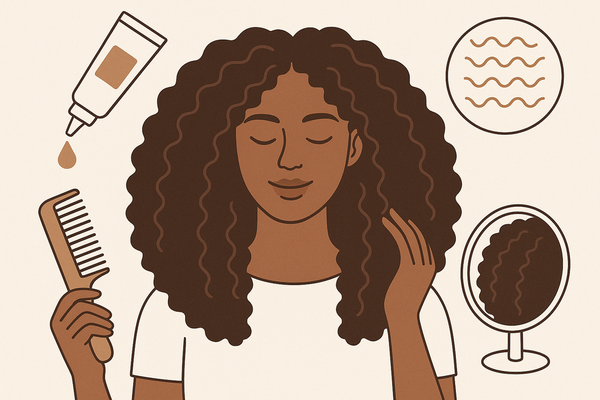
- Detangle with a wide-tooth comb; leave on for 3–5 minutes.
- Deep-condition once weekly for extra moisture.
- Moisturize
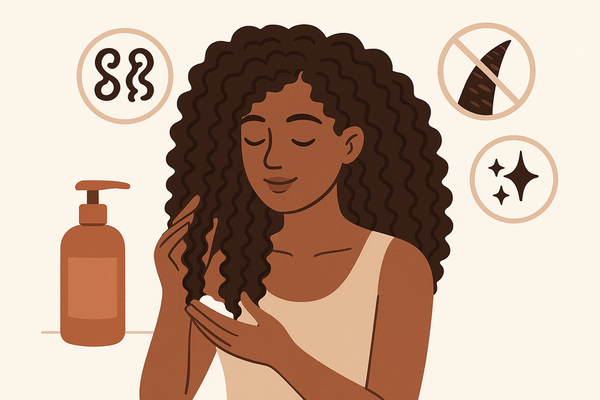
- Distribute a creamy leave-in through damp hair.
- Focus on dry spots and split ends to smooth cuticles and control frizz.
- Style & Dry
- Layer a curl cream, then a gel or mousse.
- Scrunch from ends toward roots to encourage clumping.
- Diffuse on low heat or air-dry; finish with a lightweight sealing oil.
Optional LOC/LCO method:
Leave-in → Oil → Cream (or leave-in → cream → oil) for maximum hydration on high-porosity coils.
Section 3: Frizz Prevention Techniques
Frizz occurs when moisture escapes or buildup roughens the cuticle. Combat it with:
- Monthly Clarifying:
Use a clarifying shampoo once a month, then replenish with a deep-conditioning mask. - Seal & Protect:
After styling, lock in moisture with a lightweight oil. Sleep on satin or silk to reduce friction. - Targeted Refresh:
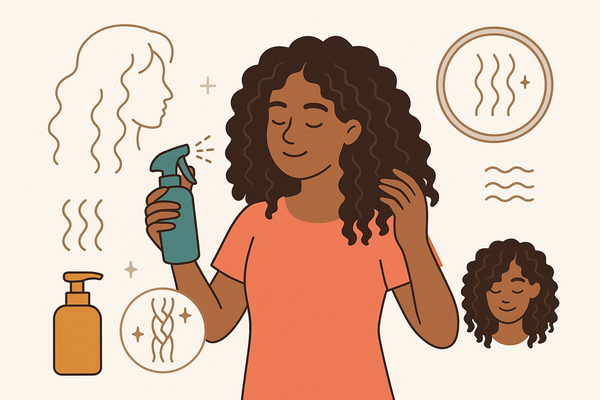
Mist frizzy areas with water and leave-in conditioner, scrunch, then diffuse briefly. - Cool Rinse:
Finish conditioner rinses with cool water to close cuticles and seal hydration. - Lifestyle & Environment:
Shield hair from humidity with anti-frizz sprays, protective styles, satin bonnets, and UV protectants.
Section 4: Enhancing Waves Between Washes
Keep waves fresh and extend your routine with these simple methods:
- Water & Cream Refresh:
Spritz hair with water, apply a small amount of leave-in conditioner, scrunch, and diffuse briefly. - Gel Cast Reactivation:
Mist plain water, flip your head, gently break the cast, add mousse at roots, then scrunch to re-form clumps. - Serum or Foam Boost:
Apply a lightweight serum or foam to mid-lengths and ends for extra definition. - Wash Frequency Tip:
Aim for washes every 2–3 weeks to preserve natural oils and curl health.
Section 5: Navigating Curly Hair Salons
Choosing the right salon transforms at-home results. Seek out:
- Curl-specialist stylists trained in dry-cut and curl-specific techniques.
- Professionals who assess your curl pattern, density, and porosity.
- A portfolio featuring hair similar to yours.
- Layering that boosts clumping and reduces frizz.
Always bring reference photos and discuss past haircut issues to ensure a flattering, curl-friendly result.
Section 6: Addressing Color Issues – Blue Hair Not Showing Fix
Blue hues can fade or appear muted on thick, porous curls. Try these fixes:
- Clarify Before Coloring:
Remove buildup so pigments penetrate evenly. - Use Bond Builders:
Include bond-strengthening treatments during coloring to protect the hair fiber. - Pigmented Mask Refresh:
Every 4–6 weeks, use a pigmented hair mask to revive blue without a full dye session.
Want personalized guidance? Check out Makeup Check AI for custom beauty and hair care plans, powered by AI.
Section 7: Fixing Haircuts – Bad Layers Haircut Fix
Uneven layers disrupt clumps and fuel frizz. These strategies help:
- DIY Remedies:
Use volumizing mousse at roots and curl cream on ends to encourage clumping. - Grow-Out Trims:
Trim every 8–12 weeks to gradually even out layers. - Professional Corrective Styling:
Book a dry cut with a curl specialist and show photos of your desired shape.
Section 8: Results Timeline for Your Thick Curly Hair Routine
Consistency yields progress. Expect:
- 2–4 weeks: Noticeable frizz reduction and stronger wave definition.
- 6–8 weeks: Improved curl health, elasticity, and shine as hydration routines settle in.
Track your journey with photos or notes on texture and volume to celebrate each milestone and fine-tune products.
Conclusion
An integrated thick curly hair routine unites cleansing, conditioning, moisturizing, and styling with targeted frizz prevention, wave-refresh methods, expert salon cuts, color maintenance, and layer fixes. By tailoring steps to your porosity, density, and curl pattern—and staying consistent—you’ll unlock vibrant, defined waves that boost both curl health and confidence.
FAQ
- How often should I wash my thick curly hair?
Aim for every 2–3 weeks or as needed; over-washing can strip natural oils and lead to dryness. - What’s the best way to sleep on curly hair?
Use a satin or silk pillowcase and consider a loose pineapple or satin bonnet to reduce friction and frizz. - Can I color treat my curls at home?
While possible, it’s best to consult a curl-specialist stylist to ensure even pigment absorption and minimize damage.