Master Your Thick Curly Hair Routine for Frizz-Free Waves
Master your thick curly hair routine to prevent frizz, maintain waves between washes, and choose the best curly hair salons with easy fixes.

Estimated reading time: 8 minutes
Key Takeaways
- Deep hydration combats frizz and dryness in high-porosity curls.
- A consistent weekly & daily routine balances cleansing, conditioning, and styling.
- Frizz prevention relies on microfiber drying, layered leave-ins, and silk linens.
- Refresh waves between washes with a curl smoothie, pineapple method, and volumizing foam.
- Choosing a curly hair specialist ensures proper dry-cutting, bond repairs, and custom layering.
- Quick fixes address color fading and uneven layers with targeted treatments and protective styles.
Table of Contents
- Introduction
- What Is Thick Curly Hair?
- Your Weekly & Daily Thick Curly Hair Routine
- Cleanse
- Condition
- Moisturize (Leave-In)
- Style
- Top Frizz Prevention Strategies
- How to Refresh Waves Between Washes
- Choosing the Right Curly Hair Salons & Communicating Your Needs
- Quick Fixes for Blue Hair Not Showing & Bad Layers Haircut
- Blue Hair Not Showing Fix
- Bad Layers Haircut Fix
- Conclusion
- FAQ
Building a tailored thick curly hair routine is key for high-density, moisture-hungry curls. A strong system solves frizz prevention, maintains waves between washes, mimics salon results at home, and even tackles color issues like blue hair not showing and haircut woes with bad layers. This guide will walk you through hydration, gentle cleansing, styling strategies, salon-savvy tips, and quick corrections—so you can master your thick curly hair routine from root to tip.
Section 1: What Is Thick Curly Hair?
Thick curly hair features:
- High strand density with tight coils or S-shaped patterns
- High porosity that loses moisture rapidly, leading to dryness and brittleness
- Prone to tangles and product buildup without a structured care plan
Why these traits matter:
- Dryness sparks frizz as strands swell unevenly
- Brittleness increases breakage during detangling or styling
- Excess sebum and residue cause scalp issues
Why a dedicated routine is essential:
- Focuses on deep hydration to combat high porosity
- Uses gentle cleansing to avoid stripping natural oils
- Incorporates protective styles and nighttime care to lock in moisture
Section 2: Your Weekly & Daily Thick Curly Hair Routine
Establishing a predictable regimen balances hydration, cleansing, styling, and protection. Aim for 2–3 washes weekly, with clarifying every third wash to remove buildup.
Cleanse
Instruction
- Wet hair under lukewarm water to open the cuticle
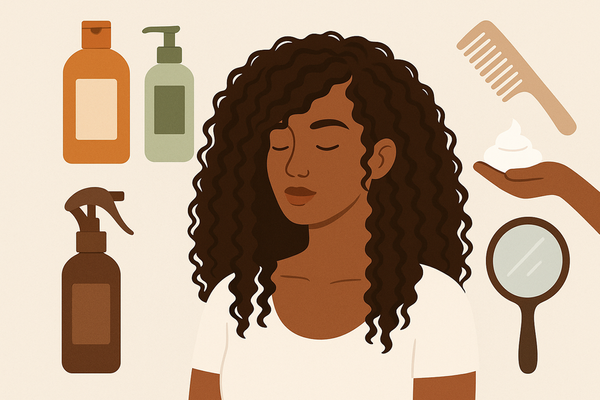
- Apply a sulfate-free shampoo such as Flora & Curl Coconut Mint Scalp Refresh or Alikay Naturals Caribbean Coconut Milk Shampoo
Technique
- Gently massage the scalp for 1–2 minutes, focusing on root buildup
- Rinse until water runs clear, ensuring no suds remain
- Clarify every third wash to prevent product accumulation and dullness
Condition
Instruction
- Apply a rich, hydrating conditioner from mid-lengths to ends
- Leave on between 1–30 minutes, depending on porosity
Technique
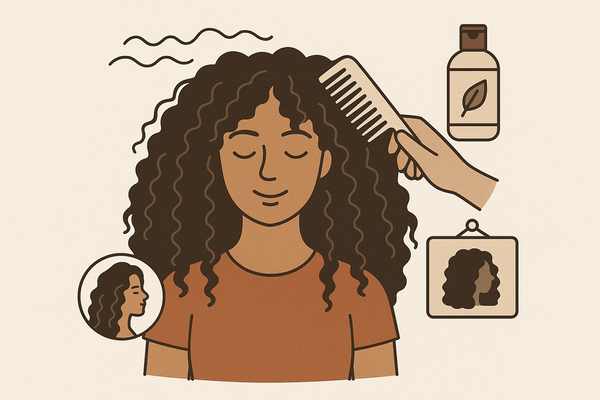
- Detangle gently with fingers or a wide-tooth comb, starting at the tips
- Rinse with cool water to seal the cuticle, locking in moisture
Moisturize (Leave-In)
Instruction
- Divide hair into sections and rake in a lightweight leave-in like Flora & Curl Rose Water & Honey Leave-in Detangler
- Concentrate on mid-lengths and ends where curls dry out first
Technique
- Scrunch hair upward to promote curl clumping
- Smooth any frizz-prone areas by gliding product from root to tip
Style
Instruction
- On soaking-wet hair, apply styling products from lightest (foam) to heaviest (gel or custard)
Technique
- Finger-coil small sections for uniform ringlets
- Scrunch excess water with a microfiber towel or cotton T-shirt to reduce friction
- Plop in a T-shirt for 10–20 minutes or air-dry for defined curls
Section 3: Top Frizz Prevention Strategies
Frizz stems from:
- High porosity that lets moisture escape
- Humidity causing hair shaft swelling
- Friction from towels and rough fabrics
- Product buildup weighing curls down
Core tactics:
- Dry with microfiber towels or cotton T-shirts to lower friction
- Layer a lightweight leave-in before gel to lock hydration
- Sleep on silk or satin linens; avoid tight styles
- Clarify monthly and deep-condition 1–2 times per month
Section 4: How to Refresh Waves Between Washes
Maintain bounce and shine on non-wash days:
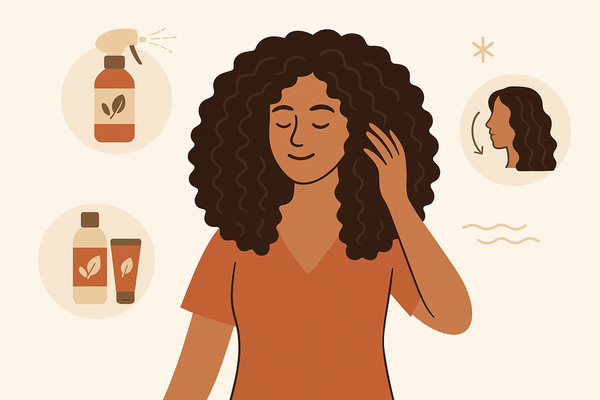
- Create a “curl smoothie” by mixing equal parts water and leave-in conditioner in a spray bottle
- Lightly mist dry or damp hair, then finger-coil or scrunch from ends up to lift waves
- Add volumizing foam at roots for lift without stiffness
Night tip:
- Pineapple hair loosely and sleep on silk to preserve wave shape and prevent frizz
For guidance on coordinating hair care with your overall beauty routine, consider apps like Makeup Check AI, which provide AI-powered insights across makeup, hair, skincare, and fashion.
Section 5: Choosing the Right Curly Hair Salons & Communicating Your Needs
Selecting a pro:
- Look for stylists certified in the Curly Girl Method or partnered with Curlsmith/DevaCurl
- Check before-and-after photos highlighting thick curl clients
Cutting techniques:
- Dry-cutting on natural curls ensures layers follow your unique pattern
- Stylists can identify shrinkage zones and shape hair for balanced volume
“I have high-porosity thick curls that frizz easily. I need layers that complement my curl pattern and treatments that seal moisture.”
Salon services to request:
- Bond-rebuilding treatments for elasticity
- Professional deep-conditioning masks tailored for porosity
- Custom layering and texturizing for weight management

Section 6: Quick Fixes for Blue Hair Not Showing & Bad Layers Haircut
Blue Hair Not Showing Fix
Issue
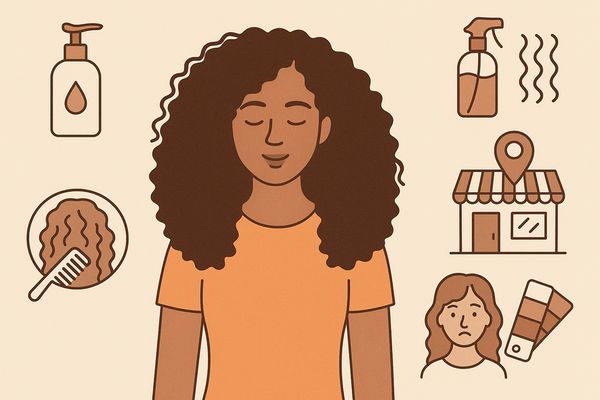
- High-porosity curls shed vibrant pigments like blue faster as moisture escapes through lifted cuticles
Solutions
- Weekly bond-rebuilding treatments (e.g., Curlsmith Bond Curl Rehab Salve) to strengthen cuticle layers and lock in color
- Apply shine-enhancing, strong-hold gels after coloring to smooth scales and reinforce pigment adhesion
- Avoid clarifying shampoos for at least two weeks post-color; use blue-toned, color-depositing conditioners monthly to refresh hue
Bad Layers Haircut Fix
Issue
- Uneven or misplaced layers create inconsistent shrinkage, frizz hotspots, and loss of curl continuity
Solutions
- Use protective styles (loose ponytails, braids) with silk accessories to minimize breakage during grow-out
- Schedule a trim with a curl specialist who dry-cuts curls for accurate layering and shape
- At home, blend awkward shorter pieces by applying volumizing foam at roots and finger-coiling mismatched strands into uniform ringlets
Conclusion
A comprehensive thick curly hair routine unites frizz prevention, wave refresh methods, smart salon choices, and targeted fixes for color and cut issues. Embrace these steps to transform your curls with confidence, then share your results or questions in the comments below!
FAQ
How often should I wash my thick curly hair?
Wash 2–3 times a week and use a clarifying shampoo every third wash to remove buildup without over-drying.
How can I prevent frizz in high-porosity curls?
Dry with a microfiber towel, layer a lightweight leave-in before gel, sleep on silk linens, and clarify monthly with deep conditioning.
What’s the best way to refresh waves between washes?
Use a curl smoothie (water + leave-in), mist lightly, then scrunch or finger-coil. Pineapple at night and add root foam for volume.
How do I communicate my needs to a curly hair stylist?
Explain your porosity and curl challenges, request dry-cutting, bond-building treatments, and show before-and-after photos that match your goals.
How can I fix blue hair fading quickly?
Incorporate bond-rebuilding treatments, use shine-enhancing gels, avoid clarifiers post-color, and apply blue-toned conditioner monthly.