Makeup for Mature Skin: Hydrating Skincare & Pro Makeup Tips
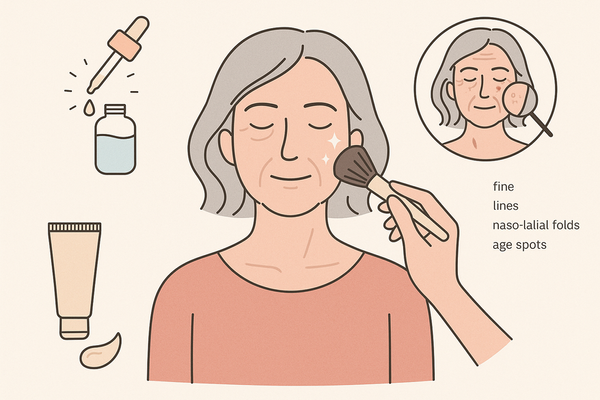
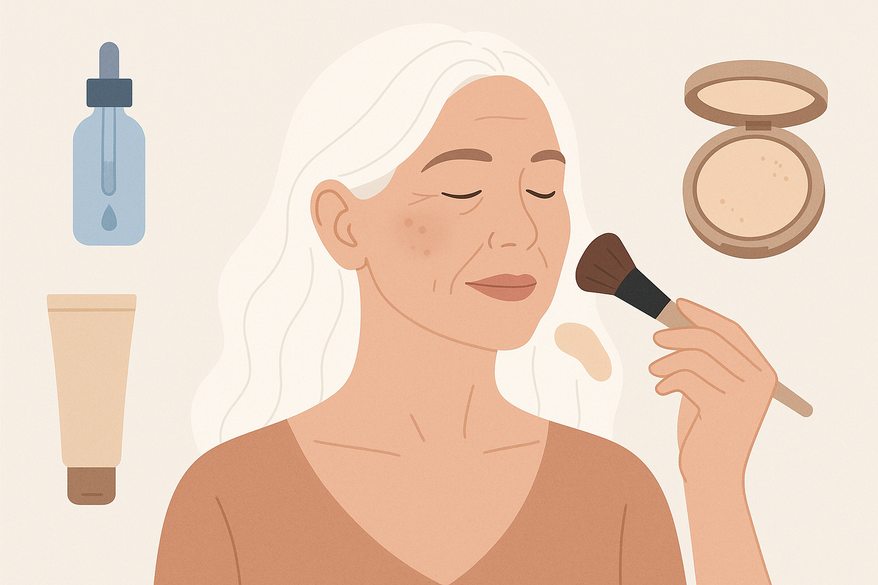
Explore expert tips for makeup on mature skin, focusing on hydration and lightweight products to reduce fine lines, nasolabial folds, and age spots.

Estimated reading time: 8 minutes
Key Takeaways
- Hydration-first skincare prevents makeup from settling into fine lines and enhances radiance.
- Lightweight, dewy formulas maintain a youthful glow without caking or creasing.
- Targeted applications for nasolabial folds and under-eye hollows lift and brighten.
- Gentle strategies soothe chemo/radiation-induced dryness and sensitivity.
- Brightening routines and concealing tips help fade and camouflage age spots.
Table of Contents
- I. Introduction & Overview
- II. Understanding Mature Skin
- III. Foundation of Effective Skincare for Mature Skin
- IV. Targeted Makeup Tips for Mature Skin Concerns
- V. Skincare & Makeup Strategies in Challenging Conditions
- VI. Addressing Age Spots Through Routine
- VII. Practical Tips & Product Recommendations
- VIII. Conclusion
- FAQ
I. Introduction & Overview
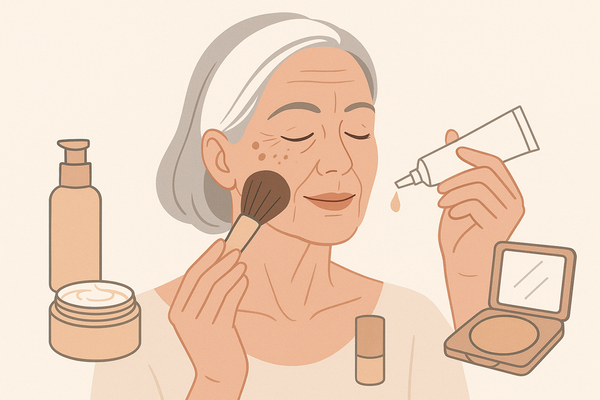
Makeup for mature skin is the practice of using hydrating, lightweight formulas to combat dryness, fine lines, and dullness. Mature skin needs tailored makeup and skincare because loss of moisture and elasticity makes wrinkles and texture more visible when heavy products are used.
In this guide you’ll learn:
- A fine lines skincare routine to plump and prep your skin
- Nasolabial folds makeup techniques for a lifted look
- Under-eye hollows solutions to brighten and smooth
- Skincare & makeup for chemo/radiation-induced dryness
- An age spots routine and coverage tips for an even tone
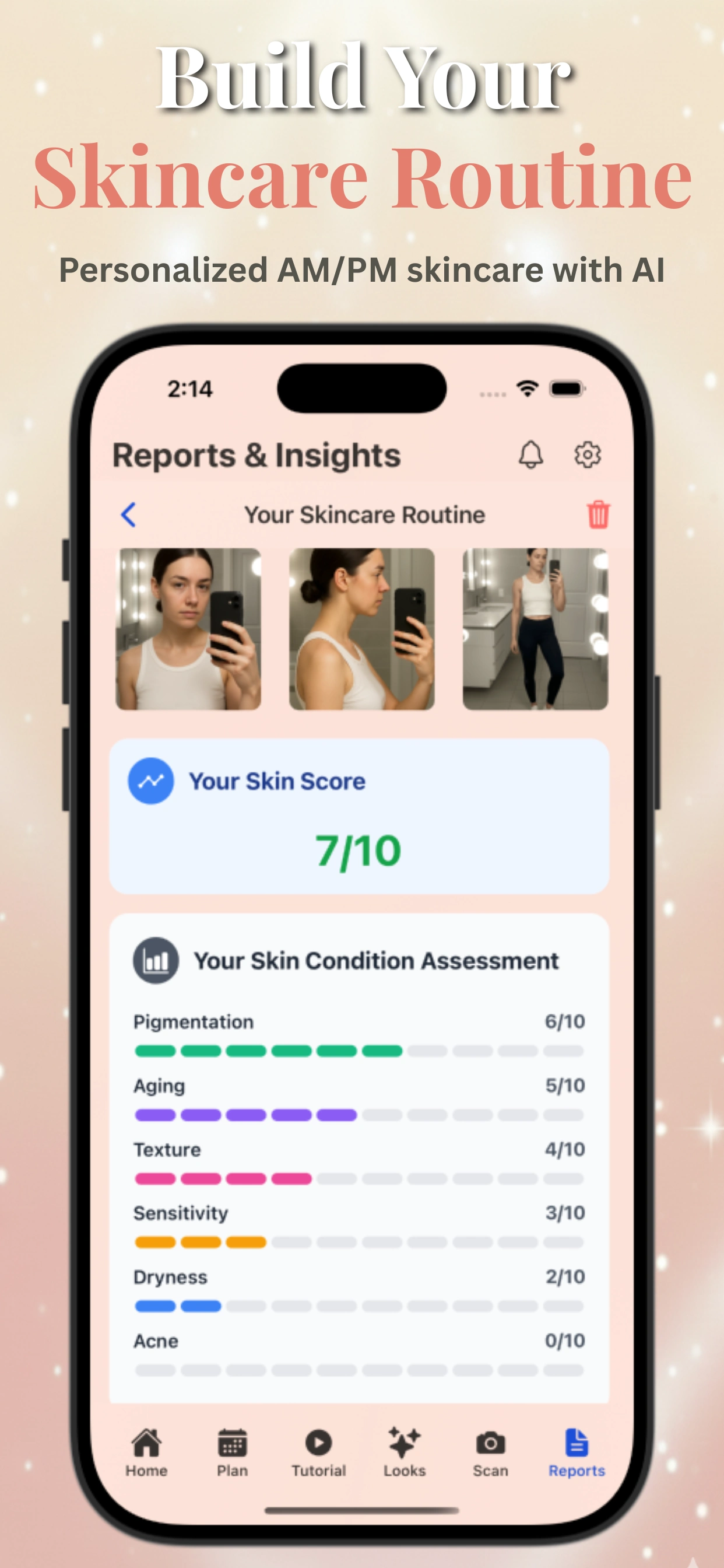
Get personalized insights and daily reminders with Makeup Check AI—your complete AI beauty assistant for skincare, tutorials, and more.
II. Understanding Mature Skin
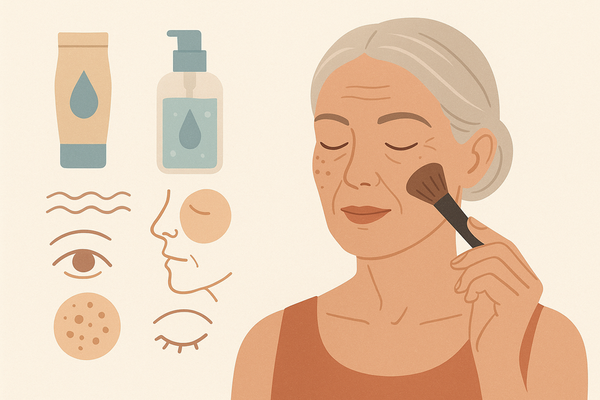
Mature skin is defined by a thinner epidermis, reduced collagen, and decreased sebum production leading to dryness and less elasticity. Over time, fine lines, under-eye hollows, nasolabial folds, and age spots become more prominent. Texture and crepey patches can worsen if you use dense or matte formulas.
Common concerns:
- Fine lines and wrinkles
- Under-eye hollows and dark circles
- Nasolabial folds (smile lines)
- Age spots and hyperpigmentation
External factors:
- Chemo or radiation strips natural oils and lipids
- Heightened sensitivity and redness
- Accelerated moisture loss and barrier damage
III. Foundation of Effective Skincare for Mature Skin
Building a smooth, hydrated base prevents makeup from settling into creases and enhances radiance. For more on pre-makeup prep for mature skin, explore our detailed routine.
- Gentle cleansing
Use a moisturizing foam cleanser that removes impurities without stripping natural oils to maintain barrier function and plumpness. - Hydrating toner or serum
Apply a hyaluronic acid serum to draw moisture into deeper layers. Look for multi-molecular HA for both surface and deep hydration. - Active ingredients before moisturizer
- Vitamin B3 (niacinamide) to improve barrier and soothe redness.
- Peptides to support collagen synthesis and firmness. - Rich moisturizer
Choose ceramide-rich formulas to lock in hydration. Creamy textures smooth fine lines for a seamless makeup application.
IV. Targeted Makeup Tips for Mature Skin Concerns
A. Makeup for Mature Skin
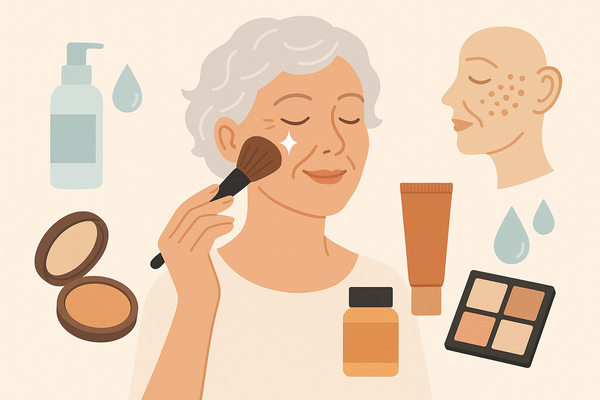
Lightweight, dewy formulas maintain a youthful glow without caking or creasing. For top foundation and concealer picks over 40, check our expert recommendations.
- Foundation selection
Pick liquid foundations infused with hyaluronic acid or serum hybrids for buildable, radiant coverage that moves with your skin. - Application method
After priming and moisturizing, use a damp sponge or soft flat-top brush. Stipple gently rather than swipe to avoid dragging. - Finish tips
Avoid heavy powders and dense matte formulas. Opt for a luminous or satin finish in neutral-peachy nude shades.
B. Nasolabial Folds Makeup Techniques
- Hydrate & prime
Apply a serum-infused primer to blur and smooth the area. - Foundation layering
Use thin coats of lightweight foundation and blend upward in a “3-shape” from cheeks toward temples. - Contour & set
Lightly contour the hollows under cheekbones with a cream bronzer. Set sparingly with translucent powder only where needed.
C. Under Eye Hollows Makeup Solutions
- Prep
Apply a hydrating eye cream with peptides or caffeine to firm and de-puff. - Conceal
Choose a lightweight, liquid concealer one shade lighter than your skin. Tap gently with ring finger or damp sponge to avoid creases. - Highlight
Dot a liquid highlighter on inner corners and orbital bone. Blend seamlessly for a lifted, radiant finish.
V. Skincare & Makeup Strategies in Challenging Conditions
A. Chemo Radiation Dry Skin
Skin undergoing chemo or radiation needs ultra-gentle care and extra hydration:
- Ultra-gentle cleansing foam to preserve oils and barrier lipids.
- Layer hyaluronic acid serums for deep hydration.
- Apply thick, ceramide-rich creams to rebuild and seal moisture.
Makeup selection: Choose non-comedogenic serum foundations with SPF and nourishing oils (e.g., argan oil). Use fragrance-free, hydrating lip balms or tinted treatments.
VI. Addressing Age Spots Through Routine
Fading discoloration and camouflaging spots delivers an even, youthful complexion. For natural blush and plumping tips, explore our blush guide.
- Pre-makeup treatment
Apply daily brightening serums with vitamin C or niacinamide. Protect with a broad-spectrum SPF to prevent new spots. - Targeted concealing
Use a high-coverage, creamy concealer directly on spots. Blend edges carefully with a small brush or sponge. - Foundation choice
Opt for a radiant-finish foundation to unify tone and diffuse discoloration. - Final touch
Sweep on a lightweight blush in a natural rosy hue to distract and harmonize.
VII. Practical Tips & Product Recommendations
Key ingredients:
- Hyaluronic acid: plumps fine lines, boosts moisture
- Peptides: firm skin, support collagen
- Ceramides: restore barrier, lock in hydration
- Vitamin B3 (niacinamide): brightens, soothes redness
- Argan oil: nourishes lips and dry patches
Multi-functional product picks:
- L’Oréal Paris Age Perfect Radiant Serum Foundation with SPF 50 – hydrating and protective
- Cream-to-powder blushes – buildable color with a dewy glow
- Liquid highlighters – luminous finish without settling into lines
- Satin-finish lipsticks with hydrating oils – comfort and color in one
VIII. Conclusion
Hydration-first skincare and lightweight, dewy makeup work in tandem to minimize fine lines, nasolabial folds, under-eye hollows, chemo-induced dryness, and age spots. A consistent routine builds a smooth canvas, while targeted techniques lift and brighten. Ultra-gentle care paired with nourishing formulas soothes sensitive skin, and strategic concealing delivers an even tone.
Experiment and adjust these methods to your unique needs. Share your favorite mature skin hacks below for a community of glow-getters!
FAQ
How often should I moisturize mature skin before applying makeup?
For optimal hydration, cleanse and moisturize morning and night. On makeup days, allow your moisturizer to absorb for 5–10 minutes before priming and foundation.
What type of foundation is best for mature skin?
Choose a liquid or serum-based foundation with hydrating ingredients like hyaluronic acid. Buildable, luminous formulas minimize the appearance of texture without settling into fine lines.
How can I prevent makeup from creasing in under-eye hollows?
Prep with a peptide-rich eye cream, then apply a lightweight concealer with a damp sponge. Finish by gently tapping a liquid highlighter into the orbital bone for lift.
Is it safe to wear makeup during chemo or radiation treatment?
Yes—opt for ultra-gentle, non-comedogenic products with minimal fragrance. Focus on hydration (ceramides, hyaluronic acid) and barrier support, and always patch-test new products on unaffected skin.