Makeup for Mature Skin: Strategies for Fine Lines, Age Spots & More
Explore expert strategies for makeup and skincare targeting mature skin, fine lines, age spots, under-eye hollows, and chemo radiation dry skin.

7 min read
Key Takeaways
- Understanding the key skin changes in mature skin: loss of collagen, moisture and elasticity.
- Targeted skincare routines for fine lines, age spots and chemo/radiation–induced dryness.
- Makeup techniques that hydrate, smooth and brighten without accentuating texture.
- Recommended products backed by experts and AI insights from Makeup Check AI.
- Step-by-step application tips and a testing protocol for sensitive and mature skin.
Table of Contents
- Overview of Mature Skin Challenges
- Skincare Strategies for Mature Skin
- Makeup Techniques for Mature Skin
- Product Recommendations & Testing Tips
- Conclusion
Overview of Mature Skin Challenges
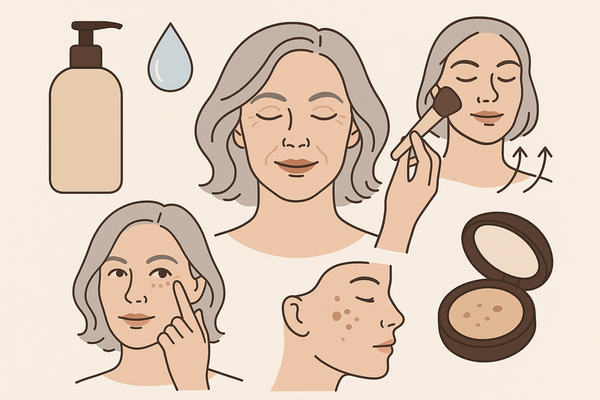
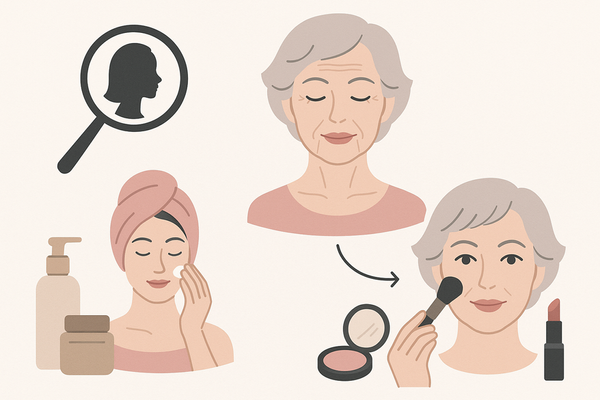
Mature skin faces biological changes that affect texture and tone. As we age, collagen and elastin decline, moisture retention drops and skin becomes thinner and more sensitive. Without proper prep, makeup can settle into lines and appear uneven.
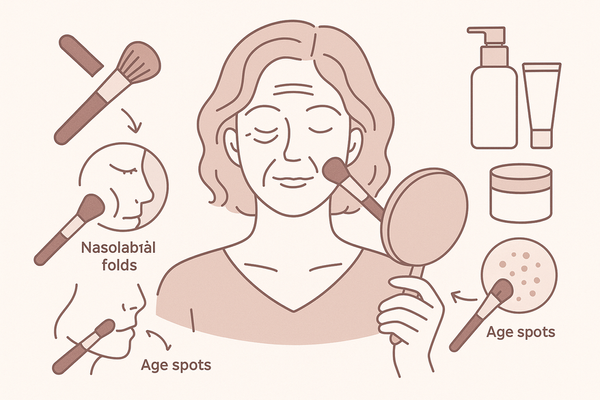
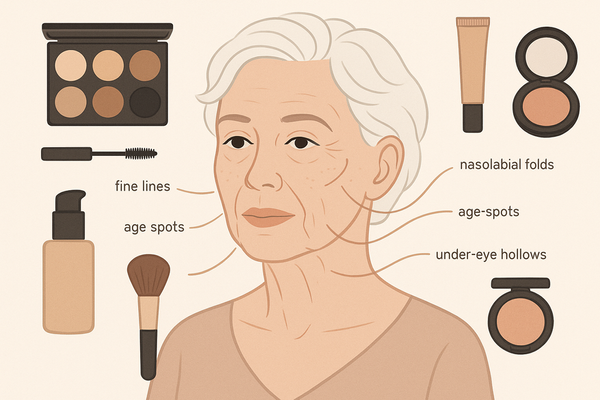
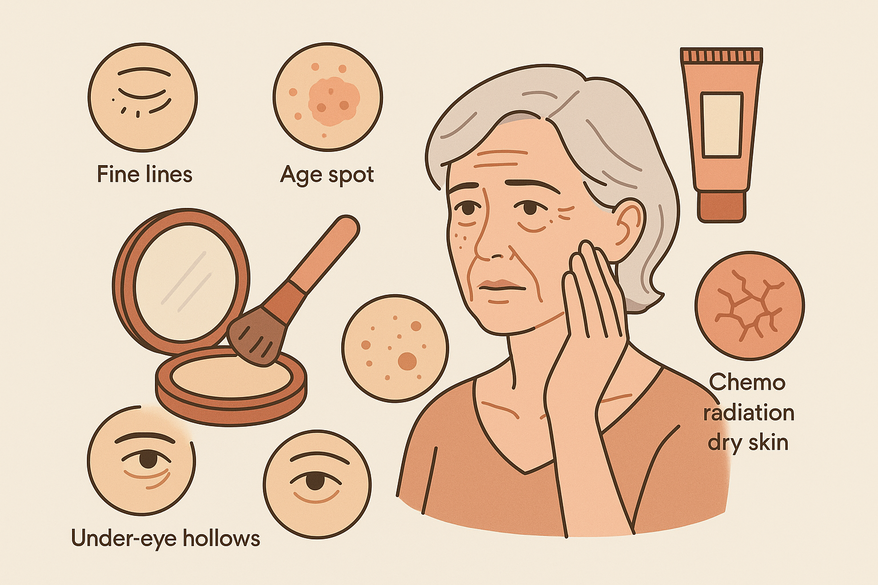
Key concerns include:
- Fine lines – shallow creases that deepen over time.
- Age spots – hyperpigmented patches from UV exposure.
- Under-eye hollows – depressions that cast shadows.
- Nasolabial folds – creases running from nose to mouth.
- Chemo/radiation dry skin – extreme dryness and barrier disruption.
Skincare Strategies for Mature Skin
A. Fine Lines Skincare Routine
Fine lines arise from reduced hyaluronic acid and collagen. A gentle, hydrating regimen plumps skin and minimizes creases:
- ARTDECO Cleansing Foam Concentrate – removes dirt without stripping moisture.
- Vichy Mineral 89 (hyaluronic acid) – draws hydration deep into the skin.
- Bobbi Brown Extra Repair Moisture Cream Intense – softens and plumps lines around the eyes.
- Rich barrier-repair moisturizer – allow 2–3 minutes for full absorption before makeup.
- Hydrating or illuminating primer such as Laura Mercier Pure Canvas or MILK MAKEUP Hydro Grip.
B. Age Spots Routine
Age spots form when melanin accumulates in patches. A brightening routine reduces their appearance and prevents new ones:
Morning:
- Vitamin C antioxidant serum (e.g., SkinCeuticals C E Ferulic).
- SPF-infused moisturizer or broad-spectrum sunscreen (SPF 30+).
- ArtDeco Tonic Spray to refresh and prep.
Evening:
- Gentle cleanser.
- ArtDeco Tonic Spray (toner or spritz).
- Brightening serum with niacinamide or alpha arbutin.
- Barrier-support moisturizer.
Tip: Patch-test new actives and use twice daily for 8–12 weeks for visible results.
C. Chemo/Radiation Dry Skin
Cancer therapies can damage the skin barrier, causing water loss and sensitivity. A minimal, soothing routine offers relief:
- Ultra-gentle, fragrance-free cleanser.
- Hyaluronic acid serum (Vichy Mineral 89).
- Ceramide-rich cream or balm (CeraVe Healing Ointment).
- Minimal layering – avoid retinoids and strong exfoliants until recovery.
Tip: Apply products on damp skin to boost absorption.
Makeup Techniques for Mature Skin
To refine your look virtually, try Makeup Check AI for personalized, AI-driven beauty advice.
A. Foundations & Primers
Goal: even tone, hydration and no caking. Opt for lightweight, skincare-infused formulas:
- L’Oréal Age Perfect Radiant Serum SPF 50 (serum texture with SPF).
- COVERGIRL Simply Ageless (plumping effect).
- Maybelline Super Stay Skin Tint (light, natural finish).
Primer picks: Laura Mercier Pure Canvas, MILK MAKEUP Hydro Grip.
Application:
- Dampen a beauty sponge.
- Dispense foundation onto the back of your hand.
- Press sponge into product, then apply from center outward in thin layers.
- Build coverage gradually, focusing on discoloration.
- Avoid heavy strokes that accentuate texture.
Set with a mist (e.g., Caudalie Grape Water). Skip powder or lightly dust the T-zone only.
B. Nasolabial Folds
Softening smile lines creates lift:
Use cream contour in an inverted “3” from cheekbone to temple, highlight above cheekbones, then blend blush upwards in circular motions.
C. Under-Eye Hollows
Brightening concealers lift tired eyes:
After foundation, dot a light-reflecting, hydrating concealer (e.g., Make Up For Ever Ultra HD) in an inverted triangle and tap gently with a sponge.
Product Recommendations & Testing Tips
Skincare picks: ARTDECO Cleansing Foam Concentrate, Vichy Mineral 89, Bobbi Brown Extra Repair Moisture Cream Intense, broad-spectrum SPF 30+.
Makeup picks: MILK MAKEUP Hydro Grip, Laura Mercier Pure Canvas, L’Oréal Age Perfect Radiant Serum SPF 50, COVERGIRL Simply Ageless, Maybelline Super Stay Skin Tint, Make Up For Ever Ultra HD.
Testing protocol: Patch-test on the jawline for 24–48 hours. Choose a dewy formula for very dry skin and a light coverage for visible texture. For extra-sensitive or post-treatment skin, consult your dermatologist first.
Learn more in our previous posts: Makeup for Mature Skin: Top Foundations and Concealers for 40+ and Skincare Before Makeup Over 40.
Conclusion
We’ve covered five pillars for mature skin makeup: targeted routines for fine lines, age spots, and chemo/radiation dryness, plus makeup techniques for nasolabial folds and under-eye hollows. Tailor each tip to your unique skin needs, experiment with product pairings and share your favorite routines below. Let’s celebrate beauty at any age—together, we learn, adapt and glow.
FAQ
- Q: How can I prevent makeup from settling into fine lines?
A: Prep with a hydrating primer and apply foundation in thin layers, pressing product rather than dragging. - Q: Which ingredients help fade age spots?
A: Vitamin C, niacinamide and alpha arbutin are proven brighteners. Always pair with SPF in the morning. - Q: Is it safe to use retinoids if I’ve had chemo or radiation?
A: Avoid retinoids until your skin barrier is fully restored. Stick to ultra-gentle, fragrance-free hydration. - Q: What’s the best way to test sensitive products?
A: Patch-test on your jawline for 24–48 hours. If no irritation appears, gradually introduce the product into your routine. - Q: Can I use the same routine year-round?
A: You may need richer hydration in winter and lighter textures in summer. Adjust according to your skin’s seasonal needs.