Makeup for Mature Skin: The Complete Guide
Discover the ultimate guide to makeup for mature skin, addressing fine lines, nasolabial folds, under-eye hollows, and age spots with expert techniques.

Estimated reading time: 8 minutes
Key Takeaways
- Hydration is essential to plump and smooth aging skin.
- Dewy, light-reflecting formulas create a youthful glow.
- Gentle application prevents tugging and accentuating lines.
- Targeted routines address fine lines, folds, hollows, and spots.
- Integrate skincare for lasting skin health and makeup performance.
Table of Contents
- Understanding Mature Skin
- Makeup Techniques for Mature Skin
- Addressing Fine Lines with a Fine Lines Skincare Routine
- Makeup Solutions for Nasolabial Folds
- Concealing Under Eye Hollows
- Skincare Amid Chemo and Radiation
- Tackling Age Spots
- Integrative Routines and Expert Tips
- Conclusion
Understanding Mature Skin
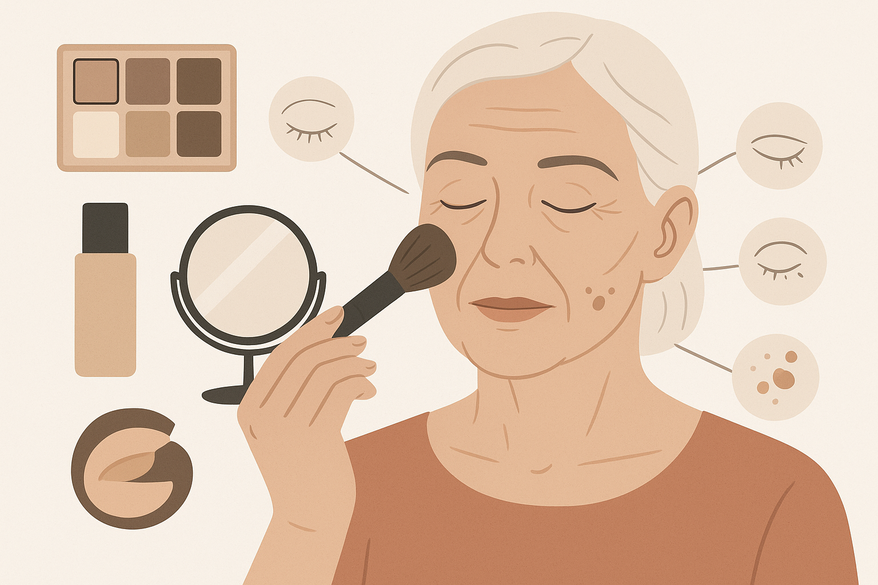
Mature skin produces less sebum, leading to dryness, visible fine lines, and loss of elasticity. Collagen and elastin decline cause texture changes and sagging.
Why matte or heavy formulas fail:
- They settle into creases and accentuate wrinkles.
- Powder foundations emphasize texture instead of blurring it.
Mature skin needs:
- Deep hydration to restore moisture barriers.
- Dewy, luminous finishes for a healthy glow.
- Soft, gentle application to avoid pulling.
Real-world experience: A matte foundation on a 55-year-old client settled into every line. Switching to a hydrating, light-reflecting tinted moisturizer transformed her look instantly.
For an AI-powered perspective, try Makeup Check AI for personalized, data-driven recommendations.
Makeup Techniques for Mature Skin
Skincare Prep
- Cleanse with a gentle, hydrating cleanser.
- Apply a moisturizer rich in hyaluronic acid and peptides; wait 2–3 minutes for absorption.
Primer Choice
- Use a silicone-free, moisturizing primer to fill in fine lines.
- Choose light-diffusing particles for a soft-focus effect.
Foundation Selection
- Pick a lightweight liquid foundation with hyaluronic acid and collagen-boosting peptides.
- Apply in a cross-hatch motion using a dense synthetic brush or damp sponge.
- Limit coverage to areas needing evenness (cheeks, chin, nose).
Concealer Technique
- Start with a peach or orange shade-corrector on blue or purple under-eye shadows.
- Press on a brightening concealer with your ring finger; build coverage sparingly.
Setting
- Target the T-zone only with a finely milled translucent powder.
- Use a small fluff brush or sponge to press product, avoiding dry areas.
Addressing Fine Lines with a Fine Lines Skincare Routine
Boost hydration and plump skin before makeup:
- Serum: Apply a collagen- and vitamin C–rich serum to support elasticity.
- Eye/Lip Cream: Use a plumping cream around eyes and lips to smooth lines.
Key ingredients:
- Hyaluronic Acid & Glycerin to draw moisture into the skin.
- Peptides & Ceramides to encourage collagen and reinforce the barrier.
- Light-reflecting primers for a subtle glow.
Actionable tip: Massage serums with upward strokes and tap eye cream, focusing on outer corners and smile lines.
Learn more in the Artdeco Makeup Guide and Beautyblender Tips.
Makeup Solutions for Nasolabial Folds
Deepening folds can be softened with strategic contour and lift:
- Use a matte bronzer two shades darker than skin tone to draw a “3” shape: temple → under cheekbone → jawline.
- Blend edges with a damp sponge for a natural shadow.
- Opt for cream blush applied in circles on the apples of cheeks, then sweep toward temples.
- Dab a liquid highlighter on cheekbones, brow bone, and cupid’s bow to draw attention away from folds.
Expert observation: Celebrity artist Sarah Lucero favors cream contour sticks for mature faces for effortless blending.
Concealing Under Eye Hollows
Shadows under the eyes can age you. Correct and brighten:
- Apply a thin layer of peach or light orange corrector on hollows.
- Top with a light-reflecting concealer one shade lighter than foundation.
- Blend with inward rolling taps using your ring finger.
Formula recommendations: Look for hydrating concealers with light-diffusing pigments and avoid matte, thick formulas.
Pro tip: Gently stretch the under-eye area with your ring finger while tapping to fill without pulling.
For specialized eye looks, see Eye Makeup for Aging Eyes.

Skincare Amid Chemo and Radiation
- Gentle Cleanse: Use a mild foam or soap-free gel; rinse with lukewarm water.
- Hydration Boost: Apply a mist or tonic with panthenol, glycerin, aloe vera, and chamomile immediately after cleansing.
Makeup tips:
- Choose ultra-hydrating, fragrance-free, paraben- and sulfate-free foundations.
- On sensitive days, skip makeup to let skin repair.
- If you apply makeup, start with a barrier-repair cream and use minimal product.
Trust tip: Always perform a patch test on the inner forearm before applying new formulas to compromised skin.
Tackling Age Spots
Combine coverage with brightening for an even tone:
- Targeted Corrector: Use a fine brush to neutralize spot hues.
- Full-Coverage Concealer: Dab your skin-tone shade over the corrector and blend softly.
- Brightening Serum: Niacinamide, vitamin C, or licorice root extract regulate melanin.
- Sunscreen: Daily SPF 30+ to prevent darkening and new pigmentation.
Consistently apply serums before makeup and reapply SPF every two hours in sun exposure.
Integrative Routines and Expert Tips
- Hydrate at every stage: cleanser, toner, serum, moisturizer, primer.
- Use cream-based blush, bronzer, and contour for seamless blends.
- Apply products with pressing or rolling motions—no vigorous buffing.
- Adopt “less is more” by building coverage gradually.
- Limit powder to the T-zone.
- Favor liquid foundations infused with collagen and ceramides.
- Prioritize barrier-repair ingredients for overall skin health.
Pro makeup artist tip: “Treat mature skin like a fine fabric—handle gently, layer sparsely, and let hydration be your base.” – Jane Doe, Celebrity Makeup Artist
More on prepping skin at Skincare Before Makeup Over 40.
Conclusion
Makeup for mature skin succeeds when targeted prep, hydration, and strategic application come together. By understanding aging skin’s needs, addressing fine lines, folds, hollows, and spots, and integrating gentle skincare, you can enhance your natural beauty gracefully.
Experiment and customize these steps to your unique skin. Share your favorite mature-skin makeup tips or questions below—we’d love to hear what works for you!
Further Reading: Makeup for Mature Skin: Top Foundations and Concealers for 40+
FAQ
- What primers work best for mature skin? Silicone-free, hydrating primers with light-diffusing particles help blur fine lines without drying out the skin.
- How can I minimize creasing under my eyes? Use a peach corrector, a hydrating, light-reflecting concealer, and blend with gentle tapping motions—don’t over-powder.
- Is it safe to wear makeup during chemo or radiation? Yes, choose ultra-gentle, fragrance-free products and always patch-test new formulas before full application.