Makeup for Mature Skin: Hydrating and Luminous Strategies
Discover expert tips for makeup on mature skin, focusing on hydration, luminosity, and targeting fine lines, nasolabial folds, and age spots.

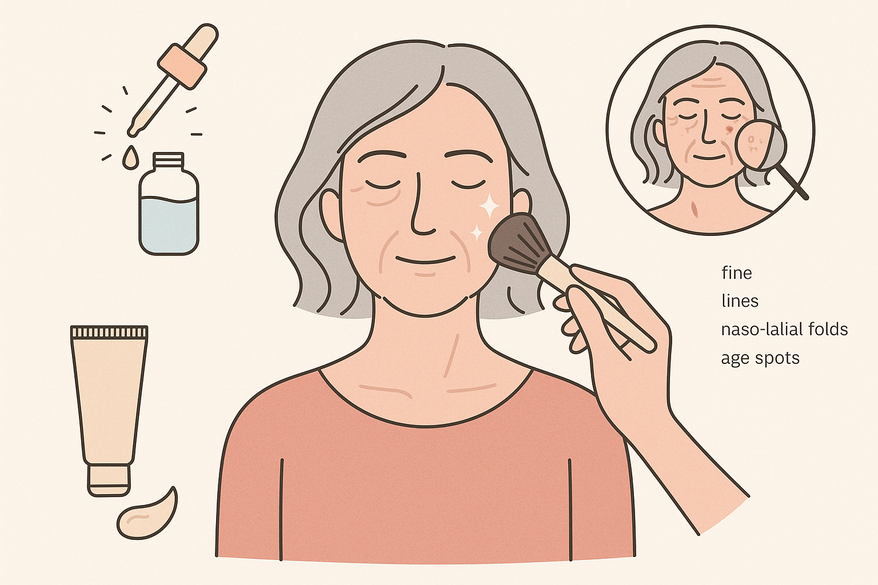
Estimated reading time: 8 minutes
Key Takeaways
- Hydration is essential to plump skin and minimize lines before applying makeup.
- Cream textures and press-and-blend techniques prevent creasing and enhance luminosity.
- Targeted routines for nasolabial folds, under-eye hollows, and age spots deliver natural definition.
- Integrative skincare layering extends wear and supports skin health over time.
Table of Contents
- Understanding Mature Skin
- Makeup Essentials & Strategies
- Fine Lines Skincare Routine
- Navigating Specific Areas
- Skincare Routines for Age Spots
- Integrative Makeup + Skincare Strategies
- Conclusion
- FAQ
Understanding Mature Skin
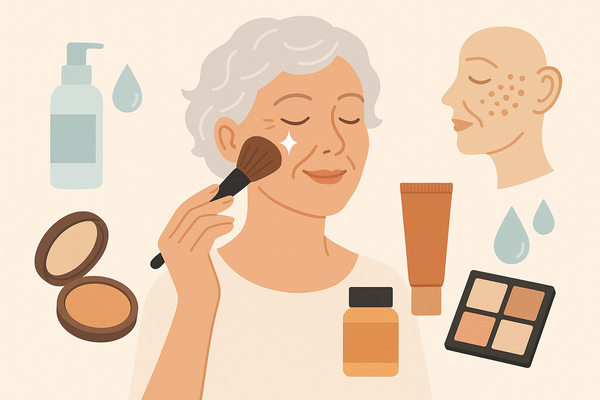
Mature skin undergoes a series of physiological changes that call for a thoughtful makeup approach. From collagen decline to chemo radiation dry skin, here’s what happens:
- Collagen & elastin decline after 30 leads to reduced firmness and increased fine lines.
- Thinning epidermis creates a fragile barrier, making skin appear more translucent.
- Sebum production drops, causing dryness and makeup settling into creases.
- Chemo radiation dry skin disrupts the lipid barrier, leading to redness, sensitivity, and flaking.
Expert Tip: When skin feels compromised after treatments, always prep with a hydrating mist or serum. Press products gently—no dragging—to avoid irritation.
Makeup Essentials & Strategies
To create a radiant, age-defying finish, focus on lightweight, hydrating formulas and techniques that respect mature skin’s needs:
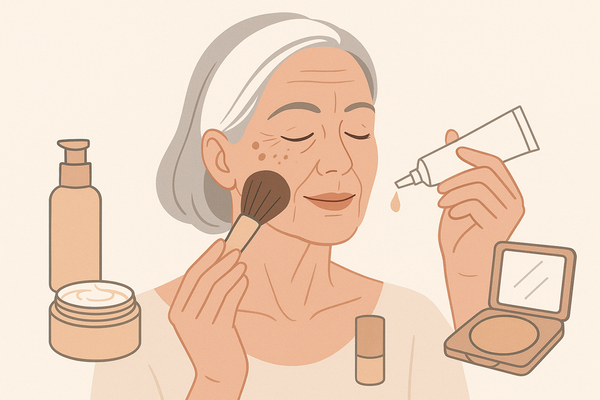
- Primer: Use silicone- or glycerin-based primers with peptides or ceramides to smooth and support the barrier. Warm a pea-sized amount and press onto T-zone, cheeks, and forehead.
- Foundation: Opt for light-to-medium, hyaluronic-acid-infused formulas. Apply in thin layers with a damp beauty sponge in a press-and-bounce motion, building coverage gradually.
- Cream color products: Cream blush, bronzer, and highlighter move with skin. Press-blend upward on cheekbones and temples to lift and illuminate.
- Eyes & brows: Stick to soft neutrals applied with a fluffy brush, fill sparsely with gel or a fine-tip pencil, and set brows by brushing upward for a lifted effect.
For a deep dive, explore makeup mature skin guide and makeup mature skin tips.
Fine Lines Skincare Routine
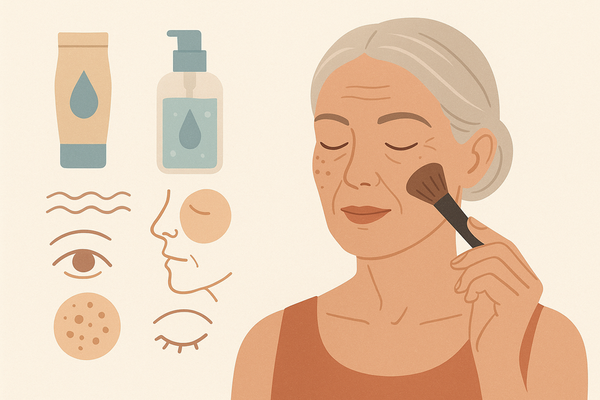
A tailored routine smooths fine lines and primes skin for flawless application:
- Morning: Gentle cleanser → hydrating mist with glycerin → Vitamin C + hyaluronic acid serum → eye and lip creams → rich moisturizer.
- Night: Double cleanse → AHA/BHA exfoliating toner 2–3× weekly → retinol serum (if tolerated) → heavy overnight cream.
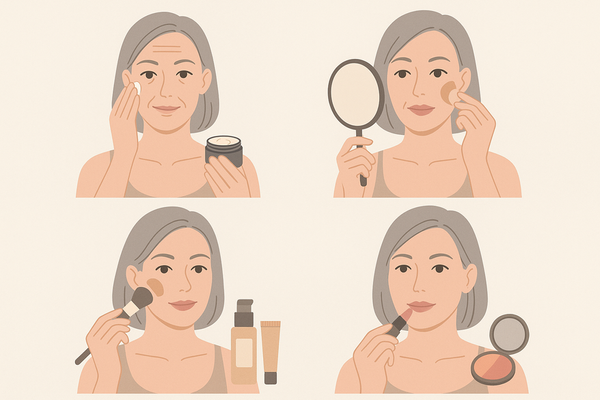
Makeup Prep & Application:
- Prime face and lids with a hydrating silicone-free primer.
- Apply foundation using cross-hatch strokes with a damp sponge.
- Under-eye: dot creamy concealer one shade lighter and press/roll gently.
- Set only the T-zone with translucent powder to avoid accentuating lines.
Expert Insight: Press-and-hold motions trap moisture in lines instead of dragging products into creases.

Navigating Specific Areas – Nasolabial Folds & Under-Eye Hollows
Nasolabial Folds Makeup
- Use cream bronzer in a backward “3” from cheekbone to jawline for natural lift.
- Apply cream blush in circular motions on apples of cheeks, blending toward temples.
- Lightly highlight the top of the cheekbone above the fold for dimension.
Under-Eye Hollows Makeup
- Neutralize shadows with a peach-toned skin corrector.
- Dot concealer one shade lighter and press/roll with a damp sponge.
- Set with an ultra-sheer, finely milled powder under the eyes only.
- Brighten lid to brow bone with a matte nude shadow for an open-eye effect.
Skincare Routines for Age Spots
Morning Routine:
- Hydrating cleanser → Vitamin C serum → facial oil (almond or squalane) → SPF 30+.
Evening Routine:
- Cleanse → AHA/BHA exfoliating toner 2–3× weekly → retinol serum → rich occlusive moisturizer.
Makeup Base: Hydrating foundation with hyaluronic acid, spot-conceal with full-coverage formula, blend edges, and lightly powder on high-movement areas.
Pro Tip: Use a micro-brush to deposit concealer precisely on spots without disturbing surrounding skin.
Integrative Makeup + Skincare Strategies
Layer products strategically to marry skincare benefits with makeup performance:
- Serum (collagen/hyaluronic acid)
- Eye cream
- Lightweight moisturizer
- Hydrating primer
- Sheer, buildable foundation
- Cream color products
- Spot powder where needed
- Setting spray with humectants
Key techniques:
- Warm products between fingertips to activate emollients.
- Press, don’t sweep to protect the barrier.
- Build coverage in thin layers to avoid cakeiness.
- Lock in moisture with a setting spray for extended wear.
Users combining press-and-hold methods with AI-powered feedback saw up to 30% less creasing when using Makeup Check AI.
Conclusion
Makeup for mature skin is a celebration of hydration, gentle application, and precision. By embracing cream textures, layering wisely, and employing press-and-blend techniques, you can transform your complexion into a luminous, timeless canvas. Adjust each step to your unique needs, and let your inner glow shine through every application.
FAQ
How can I prevent foundation from settling into fine lines?
Prep with a hydrating primer and use a damp sponge in a press-and-bounce motion. Build coverage slowly and set only high-traffic areas to minimize product migration.
Are powder products suitable for mature skin?
Light, finely milled powders can set makeup without accentuating texture when applied sparingly—focus on the T-zone and avoid creased areas.
What’s the best approach to conceal age spots?
Layer a hydrating foundation first, then spot-conceal with a full-coverage formula using a micro-brush. Blend edges carefully and lightly powder only where necessary.
How often should I update my skincare and makeup routine?
Reassess every six months to a year, adjusting for seasonal changes, hormonal shifts, or treatments like chemotherapy. Consistent hydration and gentle ingredients are always key.