Makeup for Mature Skin: Skincare and Makeup Strategies to Combat Signs of Aging
Discover skincare and makeup strategies for mature skin to combat fine lines, sagging, and age spots. Achieve a natural, radiant look with tailored techniques.

Estimated reading time: 8 minutes
Key Takeaways
- Understanding mature skin's hydration and texture needs is crucial for makeup that looks natural.
- Prepping with targeted skincare for fine lines and under-eye hollows ensures smoother foundation application.
- Gentle formulas and strategic product placement help minimize nasolabial folds and age spots.
- Ultra-sensitive skin post-chemo or radiation benefits from barrier-repair and fragrance-free products.
- A cohesive AM and PM routine focused on moisture, protection, and light coverage maintains a youthful glow.
Table of Contents
- Why Mature Skin Needs Specialized Care
- Fine Lines Skincare Routine: Prep for Smooth Application
- Nasolabial Folds Makeup: How to Minimize Smile Lines
- Under Eye Hollows Makeup: Brighten Without Creasing
- Chemo Radiation Dry Skin: Gentle Skincare & Makeup
- Age Spots Routine: Skincare & Makeup to Even Tone
- Conclusion and Integrated Mature Skin Routine
Section 1: Why Mature Skin Needs Specialized Care
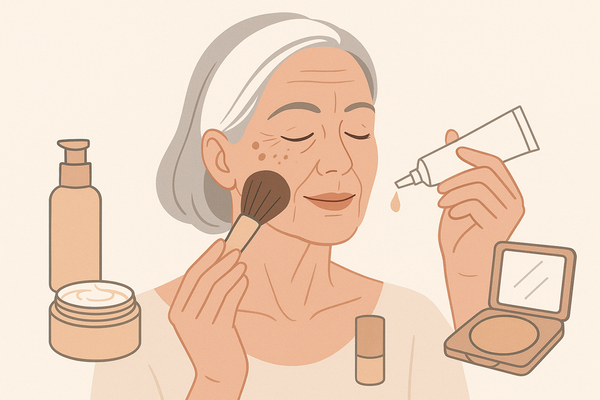
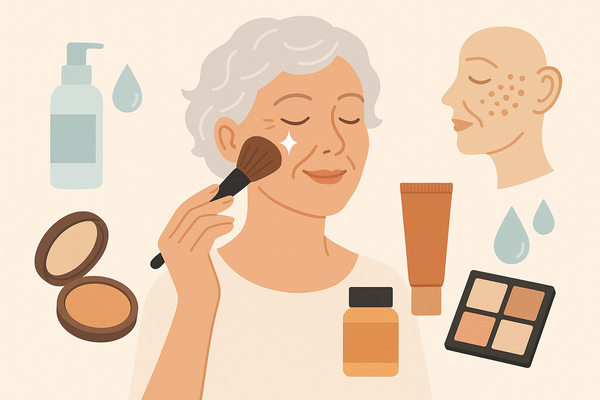
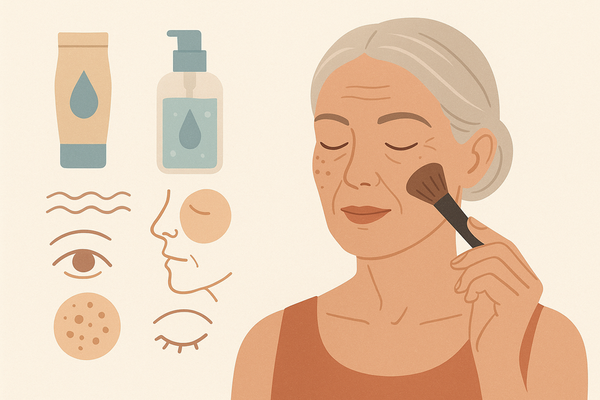
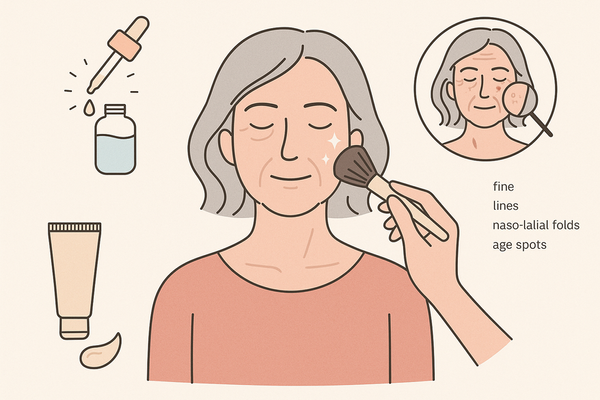
Mature skin requires extra attention because aging reduces collagen and elastin, leading to sagging, dryness, and uneven tone. Texture changes make makeup settle into lines if not addressed.
- Collagen/elastin decline causes loss of firmness and more visible folds.
- Reduced natural oils lead to dryness and a crepey surface (Beautyblender; Bobbi Brown).
- Slower renewal means rough patches and age spots (Artdeco).
- Fine lines around eyes and mouth become more pronounced.
Section 2: Fine Lines Skincare Routine: Prep for Smooth Application
Addressing shallow wrinkles and dehydrated creases makes foundation glide on seamlessly. Follow this step-by-step:
- Gentle Non-Stripping Cleanser – Preserves oils to prevent flaking.
- Hydrating Toner or Essence – Boosts moisture for better absorption.
- Hyaluronic Acid + Glycerin Serum – Plumps lines by attracting water.
- Rich Non-Greasy Moisturizer – Contains ceramides and peptides for barrier support.
- Light, Hydrating Eye Cream – Prevents concealer creasing under the eyes.
- Targeted Smoothing Primer – Opt for a hydrating or blurring primer around creased areas.
Recommended: look for products labeled “hydrating moisturizer for mature/dry skin” and “silicone-free blurring primer.”
Section 3: Nasolabial Folds Makeup: How to Minimize Smile Lines
These grooves deepen with volume loss, casting shadows. A lightweight approach prevents accentuation.
- Avoid heavy foundation in folds—it settles into creases.
- Use a thin, serum foundation all over, then spot-conceal around the folds (Bobbi Brown).
- Tap a cream concealer one shade lighter into the deepest shadow for a subtle lift.
- Apply a soft cream bronzer above the fold toward the cheekbone to visually lift.
Key textures: liquid foundation with hyaluronic acid, satin-finish cream concealer, and cream contour sticks.
Section 4: Under Eye Hollows Makeup: Brighten Without Creasing
- Hydrating Eye Cream – Apply thinly and wait 1–2 minutes.
- Color Correct – Dab peach corrector on dark spots to neutralize blues.
- Lightweight Radiant Concealer – Place one to two shades lighter in the hollow and inner corner.
- Minimal Setting Powder – Press micro-fine translucent powder into creases sparingly.
Choose serum-like concealers and finely milled powders for flexibility and hydration.
Section 5: Chemo Radiation Dry Skin: Gentle Skincare & Makeup
Cancer therapies can compromise the skin barrier, demanding ultra-gentle care.
- Use cream or oil cleansers without scrubs.
- Select barrier-repair moisturizers with ceramides, cholesterol, and fatty acids.
- Apply occlusives like petrolatum on very dry patches (if approved).
- Avoid fragrance, alcohol, AHAs, and retinoids unless medically cleared.
- Pick hypoallergenic, non-comedogenic formulas for sensitive or post-treatment skin.
- Apply makeup with fingers or a damp sponge to reduce friction.
Section 6: Age Spots Routine: Skincare & Makeup to Even Tone
Blend brightening skincare with precise camouflage for solar lentigines.
- Daily broad-spectrum SPF 30+ to prevent new spots.
- Use gentle brighteners like vitamin C derivatives, niacinamide, or kojic acid.
- Apply a light-to-medium coverage tinted moisturizer or hydrating foundation (Makeup for Mature Skin Guide).
- Spot-conceal age spots with a matching creamy concealer; tap-blend edges only.
- Optionally set concealed spots with a light dusting of micro-fine powder.
Conclusion and Integrated Mature Skin Routine
Building a cohesive routine focuses on moisture, protection, and strategic coverage for a radiant, natural finish.
Sample AM Routine:
- Gentle cleanse → hydrating toner/essence → humectant serum → rich moisturizer → eye cream → SPF.
- Hydrating primer → light foundation or tinted moisturizer → spot concealing → minimal powder.
- Cream blush and bronzer for dimension without texture emphasis.
Sample PM Routine:
- Gentle cleanse → soothing serum → barrier-repair moisturizer.
- Introduce gentle actives (vitamin C, low-strength retinol) as tolerated and approved.
Experiment with product textures and placements to find your most comfortable combination. Choose formulations for mature or sensitive skin to support long-term radiance.
For personalized, AI-driven beauty plans, explore Makeup Check AI.
Ready to elevate your mature skin routine? See our Skincare Before Makeup Over 40 guide for more tips.
FAQ
- How often should mature skin be moisturized?
Apply a hydrating moisturizer twice daily—morning and evening—for optimal barrier support. - Can I use retinoids on mature skin?
Yes, but start with low-strength formulas and always follow with moisturizer and SPF in the morning. - What is the best foundation finish for mature skin?
A dewy or satin finish that doesn’t settle into lines, ideally with hydrating ingredients like hyaluronic acid. - How do I prevent concealer creasing under eyes?
Prep with eye cream, use a light, flexible concealer, and set minimally with micro-fine powder. - Are matte products bad for mature skin?
Heavy matte formulas can exaggerate texture; instead, opt for light, luminous, or satin textures.