Makeup for Mature Skin: Effective Skincare & Makeup Solutions
Explore effective makeup and skincare routines for mature skin. Target fine lines, nasolabial folds, under eye hollows, chemo radiation dry skin, and age spots.

Estimated reading time: 8 minutes
Key Takeaways
- Hydrating skincare with active ingredients like hyaluronic acid and peptides plumps and smooths fine lines.
- Targeted routines soften nasolabial folds and brighten under eye hollows for a rested appearance.
- Gentle, barrier-repairing steps are essential for chemo radiation dry skin recovery.
- Brightening ingredients and consistent sun protection help fade age spots and prevent new ones.
- Light-reflecting, weightless makeup techniques prevent creasing and boost luminosity.
- Multifunctional products streamline your routine without sacrificing performance.
Table of Contents
- Introduction
- Understanding Mature Skin
- Skincare Strategies for Mature Skin
- Fine Lines Skincare Routine
- Chemo Radiation Dry Skin Routine
- Age Spots Routine
- Makeup Techniques Tailored for Mature Skin
- Prepping & Primer
- Nasolabial Folds Makeup
- Under Eye Hollows Makeup
- Cheek & Finishing Touches
- Integrating Skincare & Makeup Routines
- Conclusion
- FAQ
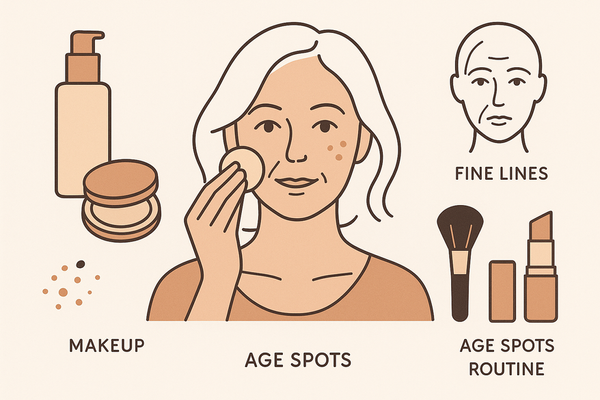
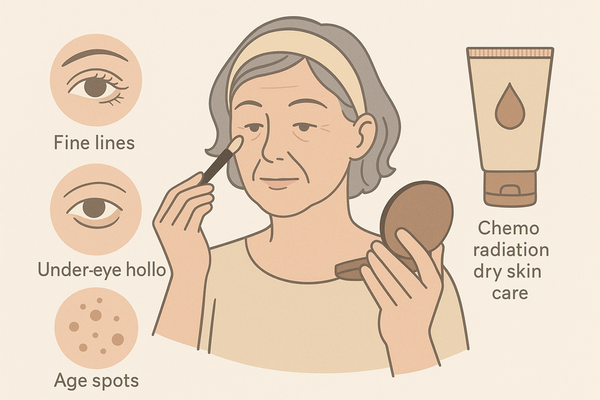
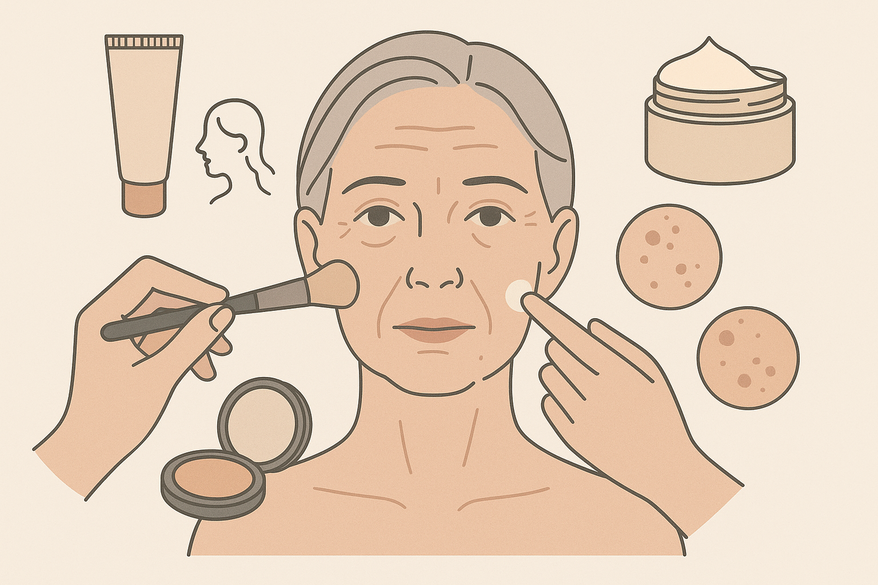
Makeup for mature skin means formulas crafted to lift, plump, and brighten without emphasizing wrinkles. These products blend skincare actives—hyaluronic acid, peptides, antioxidants—so you glow instead of creasing. A fine lines skincare routine keeps skin supple; nasolabial folds makeup softens creases around the nose and mouth; under eye hollows makeup brightens shadowed contours; chemo radiation dry skin care restores moisture after barrier damage; and an age spots routine fades hyperpigmentation.
Mature skin needs intense hydration, structural support, even tone, and a fresh luminosity to look its best. In this guide, you’ll learn targeted skincare and makeup steps for the five most common concerns:
- Fine lines
- Nasolabial folds
- Under eye hollows
- Chemo radiation dry skin
- Age spots
For a deep dive on foundational approaches and for a holistic perspective, explore these in-depth resources.
Understanding Mature Skin
Mature skin undergoes unique changes that impact texture, tone, and resilience:
- Slower cell turnover creates a dull, rough surface.
- Collagen and elastin decline cause loss of bounce and visible wrinkles.
- Reduced sebum production leads to dryness and flaking.
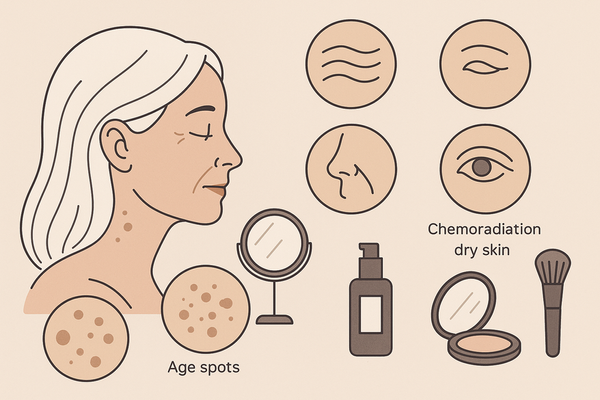
Hormonal shifts after 40 lower natural moisture, while years of UV exposure deepen fine lines and sun spots. In the case of chemo or radiation, the lipid barrier may be disrupted—tight, sensitive, and prone to dehydration. Chemo radiation dry skin often presents as redness, scaling, and stinging. With a weakened barrier, water evaporates rapidly; a gentle, reparative routine is essential to restore comfort and suppleness.
Skincare Strategies for Mature Skin
Fine Lines Skincare Routine
Fine lines are shallow grooves from collagen loss and surface dehydration. A consistent regimen helps smooth and plump these tiny creases.
Morning Routine:
- Cleanse with a gentle ceramide or amino acid formula to protect the barrier.
- Apply vitamin C serum (15–20% L-ascorbic acid) for antioxidant defense and brightening.
- Follow with dual-weight hyaluronic acid serum—light and heavy molecular weights—to draw moisture into multiple layers.
- Pat on a peptide serum (e.g., palmitoyl pentapeptide-4) to support collagen.
- Finish with broad-spectrum SPF 30+ to prevent photoaging.
Evening Routine:
- Double cleanse (oil-based remover, then gentle foaming or cream cleanser) if wearing makeup.
- Use a retinol serum—start at 0.25% and work up. Apply a pea-sized amount, avoiding the eye area.
- Gently smooth an eye cream with hyaluronic acid under the eye.
- Lock in hydration with a rich ceramide moisturizer.
Tips:
- Introduce retinol slowly—twice weekly, then build frequency.
- Always follow retinoids with SPF the next day.
- Patch-test new actives to avoid irritation.
Chemo Radiation Dry Skin Routine
Chemo radiation dry skin has a severely compromised barrier and heightened sensitivity. Restore balance with calming, hydrating steps:
- Cleanser: Ultra-gentle, sulfate-free, fragrance-free hydrating cleanser.
- Serum: Calming niacinamide or panthenol (4–5%) for barrier repair and redness reduction.
- Moisturizer: Emollient-rich cream with ceramides, glycerin, and squalane.
- Night balm: Optional petrolatum or shea butter barrier balm to seal moisture.
- Sun protection: SPF 30+ tinted mineral sunscreen for light, antioxidant coverage.
Age Spots Routine
Age spots—solar lentigines—are flat, brownish patches from UV damage. A brightening routine evens tone and fades dark marks:
- Gentle cleanser morning and night.
- Apply toner with 5–10% lactic acid for mild exfoliation and cell turnover.
- Use a brightening serum containing vitamin C (L-ascorbic acid), niacinamide (2–5%), or kojic acid.
- Layer broad-spectrum SPF 30+ daily.
- Weekly spot treatment with targeted hydroquinone (2%) or natural alternatives like arbutin.
Makeup Tip: Use a serum foundation or CC cream with antioxidants to even tone and boost hydration.
Makeup Techniques Tailored for Mature Skin
Prepping & Primer
Prep time is crucial—wait 5–10 minutes after moisturizer and eye cream before applying makeup.
Hydrating primers:
- Laura Mercier Pure Canvas Hydrating Primer
- MILK MAKEUP Hydro Grip Primer (hyaluronic acid)
Primers boost hydration, blur texture, grip color, and extend wear without creasing.
Nasolabial Folds Makeup
Nasolabial folds run from the sides of the nose to the corners of the mouth. Softening these creases prevents a tired look.
- Foundation: Use a hydrating, light-reflecting liquid foundation in thin layers. Blend outward with a damp sponge to avoid product settling.
- Highlight: Dot a creamy illuminator on the top of the cheekbones—steer clear of the folds themselves.
- Contour: Lightly sculpt with a cream contour. Use a small brush in cross-hatch strokes on the hollows of cheeks and jawline to give lift.
- Powder: Set only the T-zone with a fine translucent powder to prevent creasing elsewhere.
Under Eye Hollows Makeup
Under eye hollows appear as shadowed grooves from volume loss. Brightening this area makes you look rested:
- Choose a creamy, hydrating concealer.
- Apply one to two shades lighter under the eye in a small triangle.
- Pat gently with ring finger or a damp mini sponge—avoid heavy layers.
- Lightly set with micro loose powder, using a small brush only where creasing occurs.
Cheek & Finishing Touches
- Cream blush and highlighter glide over textured skin without settling (e.g., MERIT Flush Balm).
- Buildable liquid or serum foundations maintain a dewy, natural radiance.
- Finish with a dewy setting spray to meld layers and revive glow.
Integrating Skincare & Makeup Routines
Layering order is key:
- Skincare (cleanser → serums → moisturizer → eye cream).
- Wait 5–10 minutes for absorption.
- Primer to smooth and hydrate.
- Base makeup: foundation, concealer.
- Targeted blending: contour, highlight, blush.
- Light setting and finishing spray.
IT Cosmetics CC+ Cream with hyaluronic acid and SPF 50+ delivers hydration, sun protection, and color correction in one, cutting multiple steps.
Conclusion
Makeup for mature skin thrives on a dual approach: targeted skincare routines for fine lines, chemo radiation dry skin, and age spots, plus tailored makeup techniques for nasolabial folds and under eye hollows. Combining hydration heroes (hyaluronic acid, peptides) with light-reflecting, weightless makeup transforms textured, tired skin into a smooth, radiant canvas.
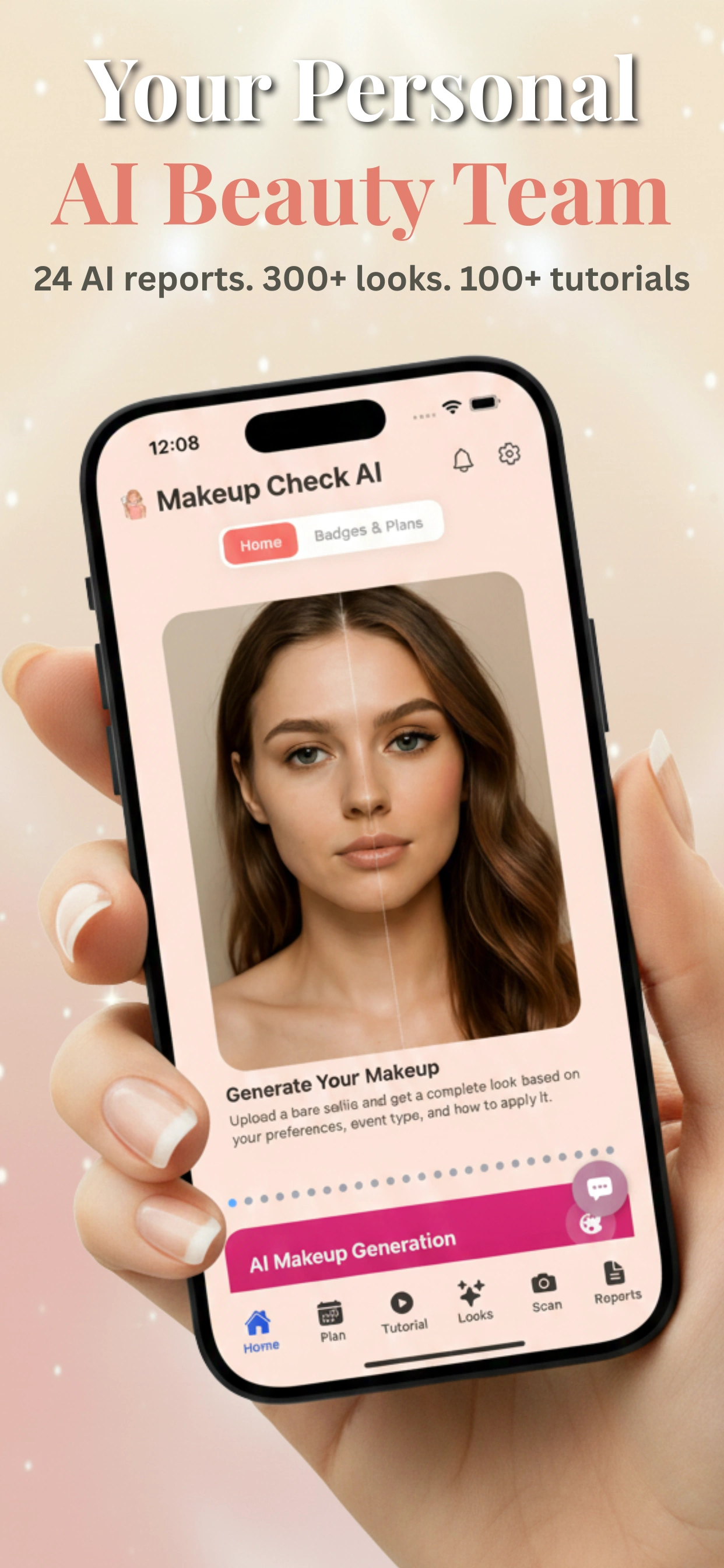
For personalized analysis and virtual try-ons, explore the Makeup Check AI tool—your AI makeup app offers AI-powered insights and routines to support every stage of your beauty journey.
FAQ
- Can mature skin benefit from retinol?
Yes. Start with a low concentration (0.25%) and apply 1–2 times weekly, gradually increasing frequency as your skin adjusts. Always follow with daytime SPF.
- How do I prevent makeup from settling into fine lines?
Prep with hydrating primers and use light-reflecting formulas. Apply thin layers and finish with a dewy setting spray to meld products seamlessly.
- What’s the best way to restore moisture after chemo or radiation?
Use ultra-gentle, fragrance-free cleansers, barrier-repairing serums (niacinamide or panthenol), and emollient-rich moisturizers. Seal in hydration with a night balm if needed.
- How often should I reapply sunscreen?
Reapply every two hours when outdoors. For daily wear, a tinted mineral SPF or CC+ cream with SPF provides light antioxidant coverage and reduces the need for frequent touch-ups.