The Ultimate Guide to Makeup for Mature Skin
Discover the ultimate guide to makeup for mature skin with tips on fine lines skincare routine, nasolabial folds makeup, and more for a radiant look.

Estimated reading time: 7 minutes
Key Takeaways
- Hydration is essential—mature skin thrives on moisture and barrier support.
- Targeted skincare routines for fine lines and age spots lay the groundwork for flawless makeup.
- Specialized makeup techniques—cream contour, color correction, strategic highlighting—soften folds and hollows.
- Chemotherapy and radiation call for ultra-gentle creams and liquid textures to avoid irritation.
- Seamless integration of skincare and makeup yields a radiant, natural finish that lasts all day.
Table of Contents
- Section I: Understanding Mature Skin Concerns
- Section II: Skincare Strategies for Mature Skin
- Section III: Makeup Techniques Tailored for Mature Skin
- Section IV: Addressing Chemo Radiation Dry Skin
- Section V: Integrating Skincare and Makeup
- Conclusion
Section I: Understanding Mature Skin Concerns
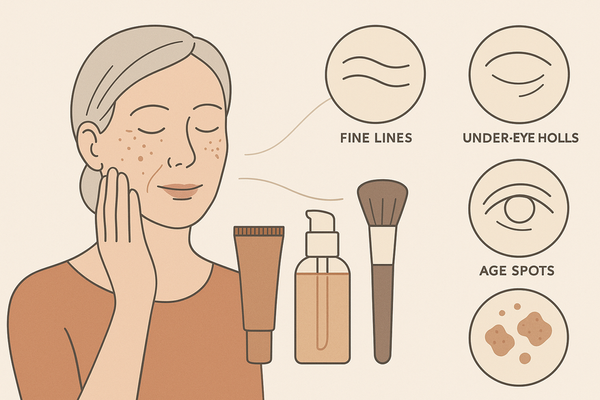
Mature skin experiences a natural decline in collagen and elastin, resulting in reduced resilience and increased sagging. Its weakened barrier leads to dryness, flakiness, and uneven tone.
Key aging factors include:
- Sun damage → UV rays break down collagen fibers and deepen wrinkles.
- Hormonal changes → Menopause lowers sebum and hyaluronic acid, increasing dryness.
- Chemo radiation → Treatments strip lipids, heighten sensitivity, and exacerbate dry, fragile skin.
By combining rich skincare with thoughtful makeup, you can:
- Seal in moisture and restore barrier lipids
- Smooth fine lines and wrinkles
- Even out tone and diffuse age spots
- Enhance radiance for a youthful glow

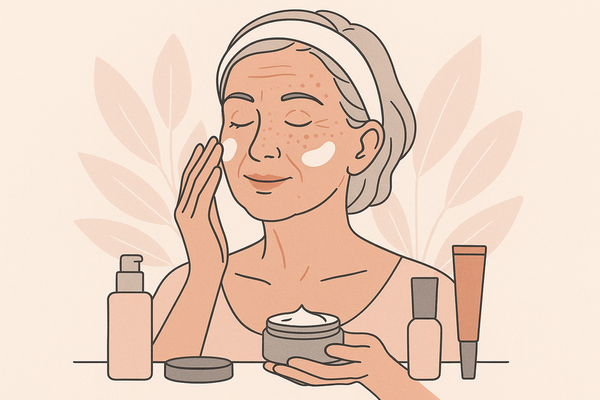
With proper serum and cream prep, makeup glides on smoothly without settling into creases or clinging to dry patches. Relevant reading
Section II: Skincare Strategies for Mature Skin
A. Fine Lines Skincare Routine
Fine lines are surface wrinkles formed by repeated facial movements. Early action preserves skin smoothness.
- Gentle, pH-balanced cleanser – prevents over-stripping oils.
- Hyaluronic acid serum – draws water into skin for instant plumpness.
- Peptide or retinol serum – stimulates collagen and elastin production.
- Eye cream with ceramides & niacinamide – strengthens the delicate under-eye barrier.
- Collagen-boosting moisturizer – locks in hydration.
- Broad-spectrum SPF 30+ each morning – shields from UV-induced collagen loss.
Tip: Allow each layer 60–90 seconds to absorb before the next for optimal results.
B. Age Spots Routine
Age spots are small, dark patches caused by uneven melanin due to UV exposure. Manage them with brightening and cell-turnover ingredients.
Morning routine:
- Vitamin C serum – blocks tyrosinase, reducing new spots
- Niacinamide or alpha-arbutin spot treatment – lightens existing pigmentation
- Lightweight tinted moisturizer or foundation with SPF – provides coverage and UV defense
Evening routine:
- Retinoid cream 2–3 times/week – speeds cell turnover and fades spots
- Targeted spot-corrector – tackles stubborn pigmentation
Note: Rotate serums every few nights to avoid irritation and maintain tolerance. Additional tips
Section III: Makeup Techniques Tailored for Mature Skin
A. Nasolabial Folds Makeup
To soften folds running from nose sides to mouth corners, use contouring and highlighting strategically.
- Apply a hydrating cream foundation evenly.
- Use a cream contour shade 1–2 tones darker than your skin beside the folds.
- Apply a luminous cream highlighter above the top of each fold.
- Blend with a damp sponge in light, upward strokes.
Pro tip: Avoid heavy powders that settle into creases—opt for buildable, hydrating formulas.
B. Under-Eye Hollows Makeup
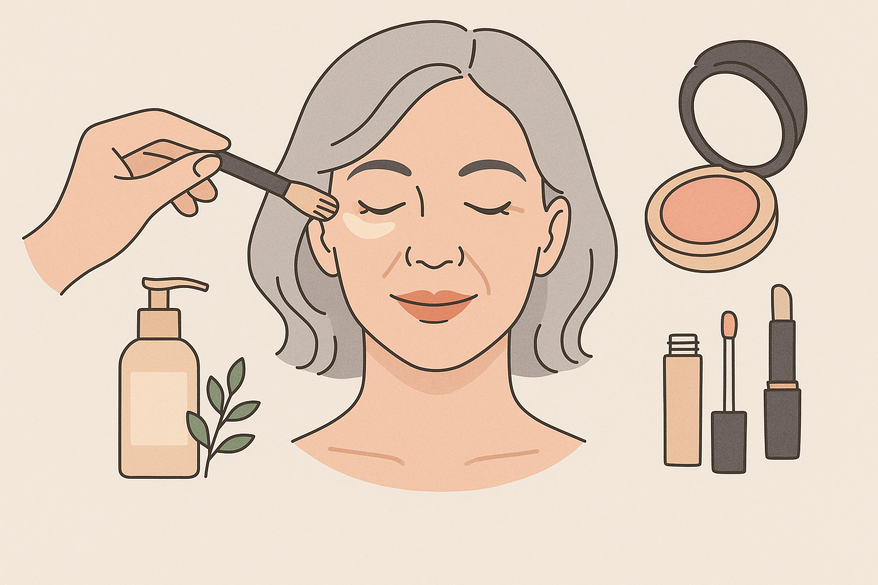
Sunken tear troughs cast shadows that age the eye area. Counteract them with color correction and light-reflecting concealers.
- Peach or orange corrector – neutralizes blue/purple shadows.
- Hydrating, brightening concealer with light-reflecting particles.
- Gently pat with your ring finger and blend edges with a damp sponge.
- Minimal set with a finely milled translucent powder under the eye.
Key: Choose emollient-rich formulas and skip heavy matte powders that cake or crack. Further eye makeup tips
Section IV: Addressing Chemo Radiation Dry Skin
Chemo and radiation treatments can damage the skin barrier, causing extreme dryness, redness, and sensitivity.
Skincare picks: Ceramides, panthenol, squalane, colloidal oatmeal, hyaluronic acid, niacinamide.
Makeup picks: Serum foundations or CC creams with moisturizing actives. Avoid alcohol-based primers and powders. Favor cream-to-liquid textures for gentle wear.
Application tips:
1. Prep with a hydrating primer
2. Apply makeup in light layers—build coverage gradually
3. Finish with a hydrating setting spray to preserve dewiness
Section V: Integrating Skincare and Makeup
When you combine targeted skincare with smart layering techniques, you achieve a lasting, radiant look. For additional digital support, explore Makeup Check AI, which offers AI-powered analysis and tutorials to refine your techniques. Its AI beauty assistant can help you customize routines and track improvements in real time.
Conclusion
A thoughtful “makeup for mature skin” routine begins with a targeted skincare regimen—addressing fine lines, age spots, and barrier support for post-chemo dryness. Paired with specialized application techniques—cream contour, strategic highlights, and color correction—you’ll celebrate mature skin’s unique beauty with a soft-focus, luminous finish.
Embrace hydration-first products, build coverage in thin layers, and master color correcting to enjoy a smoother, more radiant complexion every day.
FAQ
How can I prevent foundation from settling into fine lines?
Use ultra-hydrating primers and lightweight, buildable foundations. Apply in thin layers, allow each to absorb, and finish with a light mist of setting spray.
What’s the best way to camouflage age spots without heavy coverage?
Layer a brightening serum under a color-correcting concealer, then apply a sheer, tinted SPF base. Spot-treat with alpha-arbutin or niacinamide at night to gradually fade pigmentation.
Is it safe to introduce retinol if I’ve never used it before?
Yes—start with a low-concentration formula and apply 2–3 times per week. Always follow with SPF in the morning and monitor your skin for any signs of irritation.
How should I prep extremely dry, post-chemo skin for makeup?
Begin with a creamy, ceramide-rich cleanser, layer on humectants like hyaluronic acid and panthenol, then seal with a nourishing moisturizer. Choose a liquid or serum foundation and skip powders.
Can color correction really make a difference for under-eye hollows?
Absolutely—peach and orange correctors neutralize blue shadows, letting your concealer sit on a more even base. Always blend gently and set minimally with a fine powder.