Makeup for Mature Skin: Age-Defying Tips and Techniques
Discover makeup for mature skin with tips on fine lines skincare, nasolabial folds, and under eye hollows to achieve a youthful, natural look.

Estimated reading time: 6 minutes
Key Takeaways
- Hydration-First Prep: Moisturize and prime to smooth fine lines before makeup.
- Cream & Serum Formulas: Choose lightweight, emollient foundations and blushes to avoid settling.
- Targeted Techniques: Address fine lines, nasolabial folds and under-eye hollows with color correction, contour and highlight.
- Special Care: Use gentle, barrier-supporting products for chemo or radiation–affected skin.
- Integrated Workflow: Combine skincare and makeup steps for a luminous, long-lasting finish.
Table of Contents
- Understanding Mature Skin Concerns
- Why Traditional Heavy Makeup Fails
- Makeup for Mature Skin: Best Practices
- Fine Lines Skincare Routine
- Nasolabial Folds Makeup Techniques
- Under Eye Hollows Makeup Solutions
- Tips for Chemo Radiation Dry Skin
- Age Spots Routine and Makeup Strategies
- Integrating Skincare and Makeup Routines
- Conclusion
- FAQ
Understanding Mature Skin Concerns
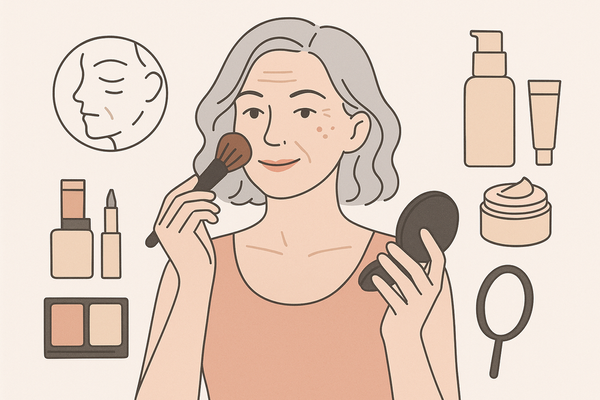
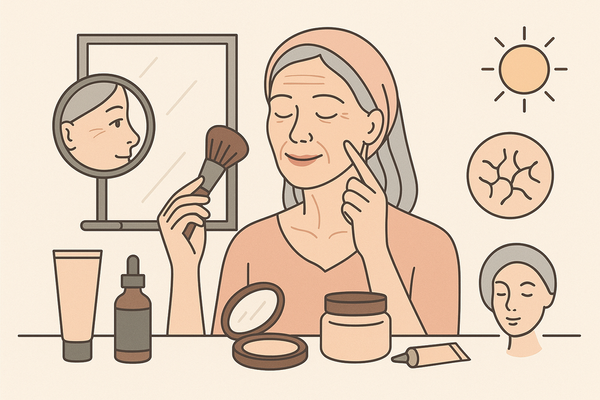
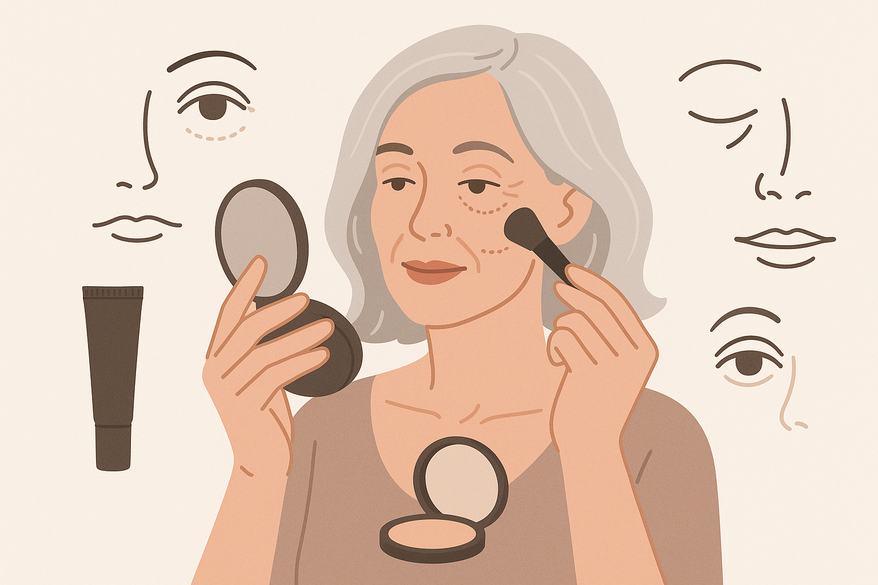
*Mature skin* undergoes key biological changes that affect makeup application. As collagen and elastin diminish, the epidermis thins, moisture is lost and pigment irregularities appear.
- Reduced collagen & elastin – loss of firmness and bounce
- Thinner epidermis – increased fragility and translucence
- Moisture loss – dryness and rough texture
- Pigment changes – age spots from sun damage
Why Traditional Heavy Makeup Fails
- Settles into lines and deep folds
- Looks patchy on uneven texture
- Dry areas absorb product, creating patchy shine
Hydration-first prep is vital; a well-moisturized base helps makeup glide on and last longer.
Sources:
Makeup for Mature Skin: Best Practices
Hydration-First Prep
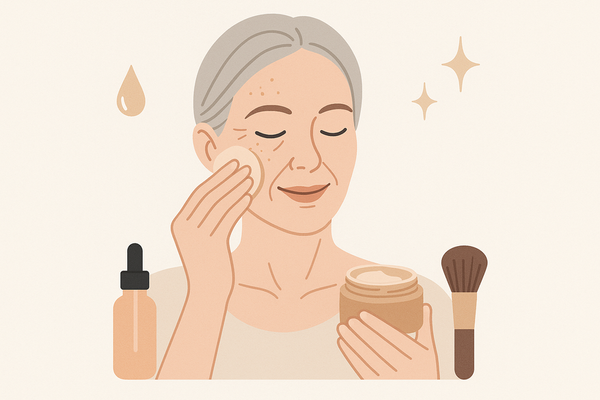
- Apply a rich, ceramide- or hyaluronic acid–rich moisturizer.
- Use a light, blurring primer to fill fine lines (e.g., Bourjois Healthy Mix Anti-Fatigue Blurring Primer).
Foundation Application
- Choose serum or cream formulas (e.g., L’Oréal True Match, Armani Luminous Silk).
- Apply with a damp sponge or gentle cross-hatch brush strokes to minimize tugging.
Learn more in Makeup for Mature Skin: Top Foundations and Concealers for 40+.
Cream Blush and Bronzer
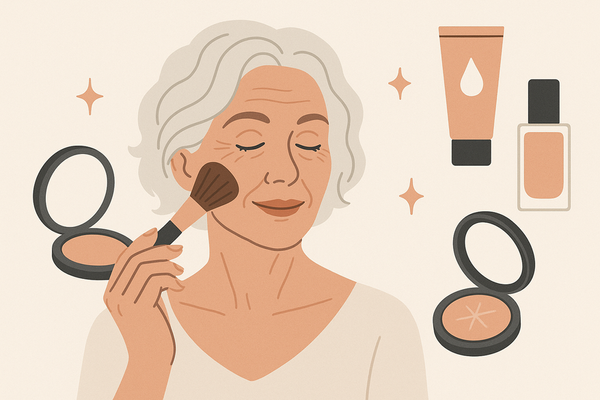
- Cream formulas give a natural, dewy glow.
- Tap color onto the apples of cheeks and blend outward.
For lip and cheek tips, see Natural Blush for Mature Skin: Anti-Aging Lip & Plumping Tips 50+.
Minimal Powder Use
- Dust sparingly in the T-zone with a fluffy brush.
- Avoid powder on dry patches to prevent accentuating texture.
Fine Lines Skincare Routine
Plumping fine lines before makeup prevents creasing and magnification of wrinkles:
- Cleanser – Gentle, non-stripping to preserve natural oils.
- Hydrating Serum – Hyaluronic acid or glycerin; press into skin without rubbing.
- Moisturizer – Weleda Skin Food Light; warm between fingers and massage in.
- Silicone-Based Primer – The Ordinary Silicone Primer to blur remaining texture.
Well-hydrated skin smooths the surface and keeps foundation from settling.
Sources:
Nasolabial Folds Makeup Techniques
Deep creases need targeted shading and lift:
- Apply cream contour 1–2 shades darker in the fold.
- Blend upward and outward with a small dense brush.
- Use a luminous cream highlight above the cheekbone for lift.
Under Eye Hollows Makeup Solutions
- Color Correction – Peach-tone corrector on bluish shadows; blend gently.
- Concealing – Hydrating concealer in an inverted triangle; press in with ring finger or mini sponge.
- Setting – Lightly press micro-fine translucent powder only where needed.
Build coverage in thin layers to maintain flexibility and avoid drag.
See more at Eye Makeup for Aging Eyes: A Complete Guide.
Tips for Chemo Radiation Dry Skin
- Use fragrance-free, ceramide-rich or hyaluronic acid moisturizers.
- Layer thin coats, allowing each to absorb fully.
- Avoid actives (retinoids, AHAs, BHAs) until the barrier heals.
Opt for sensitive-skin CC creams or tinted moisturizers with a light, luminous finish.
Age Spots Routine and Makeup Strategies
- Morning: antioxidant serum (vitamin C) + broad-spectrum SPF 30+
- Evening: niacinamide or gentle tyrosinase inhibitors
Use color-correcting primers (green for redness, lavender for sallow tones) and a buildable foundation. Blend edges well to avoid a mask-like finish.
Integrating Skincare and Makeup Routines
Follow a smooth workflow for plump, flawless skin:
- Cleanser → Fine lines skincare routine
- Moisturizer (or chemo-safe layer)
- Primer selection
- Foundation → under-eye hollows → nasolabial folds contour/highlight → age spots coverage → light powder set
Prefer creams and serums over powders for mature or dehydrated skin to lock in moisture and prevent product migration.
Conclusion
Makeup for mature skin thrives on a hydration-first foundation, targeted techniques for fine lines, nasolabial folds, under-eye hollows, chemo radiation dryness, and age spots. By blending dedicated skincare steps with thoughtful makeup methods, you can achieve a youthful, natural finish that lasts. Personalize these tips, experiment with cream formulas, and embrace the power of plumped, well-protected skin.
For AI‐powered tutorials and personalized routine insights, visit Makeup Check AI.
FAQ
- How do I choose the right foundation finish? For mature skin, opt for hydrating, satin or dewy finishes in serum or cream formulas. Avoid matte powders that can emphasize texture.
- Can I use powder on dry or crepey areas? Use micro-fine translucent powder sparingly only on the T-zone. Skip powder on dry patches to prevent accentuating fine lines.
- What’s the best way to conceal age spots? Apply a thin layer of color-correcting primer (lavender for dullness, green for redness), then blend a buildable liquid foundation carefully around pigmented areas.
- How often should I update my skincare routine? Review products seasonally or as your skin’s needs change—especially if you experience sensitivity from treatments like chemo or radiation.