Essential Makeup for Mature Skin: A Complete Guide
Discover essential makeup tips for mature skin, featuring hydration, skincare routines, and targeted techniques for fine lines, nasolabial folds, and more.

Estimated reading time: 8 minutes
Key Takeaways
- Hydration is key to prevent makeup from settling into fine lines.
- Lightweight, skin-caring formulas enhance glow and minimize texture.
- Prep with skincare essentials: hyaluronic acid, ceramides, antioxidants, and SPF.
- Targeted makeup techniques soften nasolabial folds and under-eye hollows.
- Gentle, fragrance-free routines are vital for sensitive or chemo/radiation-affected skin.
Table of Contents
- Understanding Mature Skin
- Why Hydrating, Lightweight Makeup Wins
- Fine Lines Skincare Routine
- Nasolabial Folds Makeup Techniques
- Under Eye Hollows Makeup Tips
- Addressing Chemo Radiation Dry Skin
- Age Spots Routine
- Conclusion
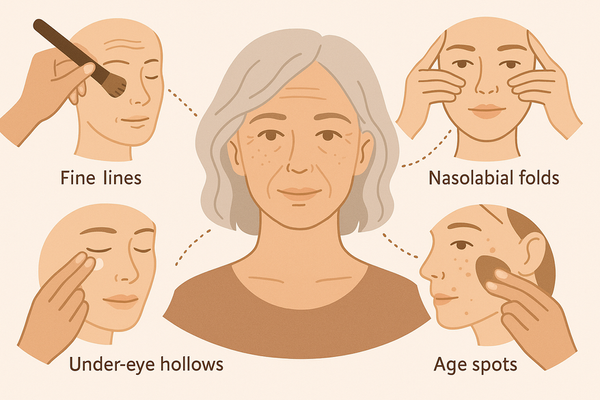
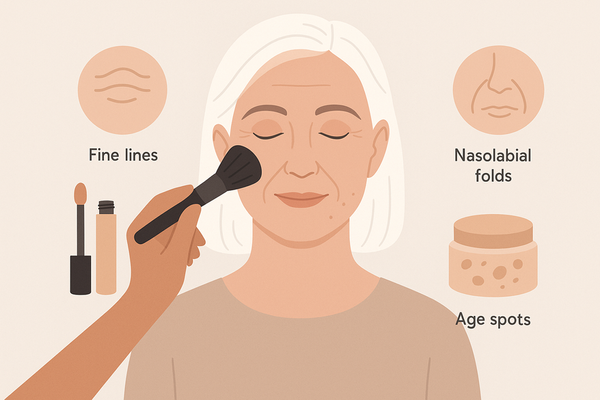
Makeup for mature skin requires special attention to look smooth and fresh. Aging often brings fine lines, loss of elasticity, dryness, under-eye hollows, nasolabial folds, and age spots. Products designed for younger skin can accentuate texture, making wrinkles appear deeper. A tailored routine that blends caring skincare with smart makeup tips delivers a radiant, natural finish—even for skin affected by chemo or radiation.
For top foundations and concealer picks, see our comprehensive guide Makeup for Mature Skin: Top Foundations and Concealers for 40+. You can also fine-tune your routine with expert prep tips at Skincare Before Makeup Over 40.
At Makeup Check AI, AI-powered insights and personalized reports help you master every step of your skincare and makeup journey, offering tailored recommendations for every concern.
Understanding Mature Skin
Aging skin changes in several ways. Understanding these shifts helps you choose the right makeup and creams.
- Loss of Elasticity
• Collagen and elastin drop by about 1% a year after age 30.
• Skin sags; folds and wrinkles deepen. - Increased Dryness
• Oil production slows; the barrier weakens.
• Skin feels tight and flaky. - Texture & Tone Changes
• Rough, uneven surface.
• Enlarged pores and blotches, like sun spots.
Why Hydrating, Lightweight Makeup Wins
- Heavy mattes settle into lines and look cakey.
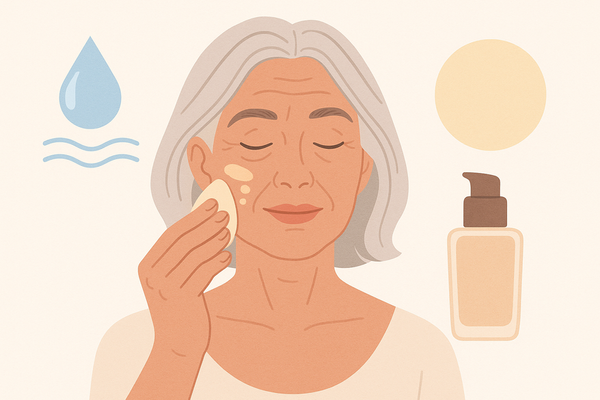
- Creamy, water-based formulas fill in fine cracks and impart glow.
- Ingredients like glycerin and squalane smooth the surface.
Choose products labeled hydrating, non-comedogenic, and skin-caring to keep skin soft and prevent makeup from emphasizing texture.
Fine Lines Skincare Routine
Fine lines are shallow creases from repeated facial movements and collagen loss. A routine that plumps lines ensures foundation glides on evenly.
Why Hydration Matters
• Dry lines look deeper under powder.
• Plump skin lets foundation sit smoothly.
Key Ingredients
• Hyaluronic Acid: draws moisture to fill lines.
• Ceramides & Peptides: bolster the barrier and firm skin.
• Antioxidants (Vitamins C & E): protect against sun and pollution.
• Broad-Spectrum SPF: prevents new lines and spots.
Sample Routine
Morning
1. Gentle, sulfate-free cleanser.
2. Hyaluronic acid serum.
3. Rich, non-greasy moisturizer.
4. Broad-spectrum SPF 30+.
Evening
1. Gentle cleanser.
2. Hydrating serum with peptides.
3. Barrier-support night cream (ceramides).
4. Eye cream for under-eye fine lines.
Nasolabial Folds Makeup Techniques
Nasolabial folds run from the sides of the nose to the mouth corners. They deepen as volume drops, but smart makeup can soften their appearance.
- Foundation: use a light, hydrating formula and apply sparingly on folds.
- Concealer: dot a thin layer just above the deepest shadow; blend out, not into the crease.
- Highlighter: choose a soft satin stick and swipe above the fold to catch light.
- Contour/Bronzer: sweep under cheekbones, not in the crease, for a lifting effect.
- Cream Blush: tap on the upper outer cheek, blending toward temples to draw the eye up.
Extra Tip: Use a damp sponge to press product into the skin, avoiding texture buildup.
Under Eye Hollows Makeup Tips
Under-eye hollows are sunken areas from fat and collagen loss that can look dark and crepey.
Prep & Prime
• Gently pat a hydrating eye cream to plump and smooth.
Corrector + Concealer
1. Apply a peach or bisque corrector on shadows.
2. Use a thin, creamy concealer in a soft triangle under the eye.
3. Tap lightly; do not drag or swipe.
Triangle Brightening Method
• Draw a small triangle with concealer—base at the lower lash line.
• Blend edges for a subtle lift.
• Less is more: avoid caking.
Set with Powder
• Only where creasing appears.
• Use an ultra-fine loose powder; light dusting to lock, never cake.
Addressing Chemo Radiation Dry Skin
Chemo and radiation can strip moisture and make skin sensitive. This skin needs extra gentle care.
- Gentle Skincare First
• Fragrance-free, mild cleansers.
• Soothing moisturizers with ceramides, hyaluronic acid, colloidal oatmeal, or aloe.
• Patch-test each product. - Barrier Repair
• Use rich creams to rebuild the lipid layer.
• Apply at least twice daily before any makeup. - Makeup Choices
• Pick formulas labeled “sensitive-skin friendly.”
• Hydrating, fragrance-free foundations and concealers.
• Cream blush and highlighter; avoid powders that pull moisture out.
• Skip alcohol-heavy or long-wear mattes. - Application Tips
• Use fingertips or a soft brush to press product gently.
• Work in thin layers.
• Reapply moisturizer between steps if skin feels tight.
Age Spots Routine
Age spots are flat, dark patches from years of sun exposure. A mix of skincare and targeted makeup can reduce their appearance.
Skincare Actions
• Daily broad-spectrum SPF to prevent darkening and new spots.
• Brightening serums: vitamin C, niacinamide. Introduce slowly to avoid sensitivity.
• Gentle AHAs or BHAs can even tone; limit use to avoid irritation.
Makeup Steps
1. Base: hydrating, buildable foundation to even skin tone.
2. Spot Conceal: use a creamy, high-coverage concealer. Press gently onto each spot, feather edges.
3. Blend: use a damp sponge to merge concealer into foundation.
4. Powder: lightly dust only on oil-prone areas; avoid pigmented zones to keep them looking smooth and hydrated.
Extra Tip: For stubborn spots, layer a second thin coat of concealer after the first sets.
Conclusion
An integrated plan for mature skin blends hydration, barrier support, and sun protection with smart makeup placement. Start with a simple skincare routine: gentle cleansing, hyaluronic acid, ceramides, and SPF. Then use targeted makeup tips for fine lines, folds, under-eye hollows, chemo radiation dry skin, and age spots.
Pick one or two steps from each section—like adding an eye cream, switching to a hydrating foundation, or using the triangle method under the eyes. Watch how each change lifts, smooths, and brightens your skin over time. Makeup for mature skin is about enhancing your natural glow, not masking it. Share your favorite tips or questions in the comments below. Sign up for our newsletter to get more age-defying beauty advice and product picks delivered weekly!
FAQ
How do I choose the right makeup for mature skin?
Focus on hydrating, non-comedogenic, and skin-caring formulas. Look for ingredients like glycerin, squalane, and peptides that smooth texture.
Can I use regular foundation if I have fine lines?
Regular matte foundations can settle into lines. Instead, opt for lightweight, water-based formulas that plump and glow.
What’s the best way to conceal under-eye hollows?
Use a color corrector followed by a creamy concealer applied in a soft triangle. Tap gently and set lightly with ultra-fine powder.
How can I care for skin affected by chemo or radiation?
Prioritize gentle, fragrance-free skincare and barrier-repair creams. Use sensitive-skin-friendly, hydrating makeup in thin layers.
Which skincare ingredients should I look for before applying makeup?
Hyaluronic acid for hydration, ceramides and peptides for barrier support, antioxidants for protection, and broad-spectrum SPF to prevent damage.