Makeup for Mature Skin: Strategies for Fine Lines and Age Spots
Explore expert strategies for makeup and skincare tailored for mature skin, focusing on minimizing fine lines, nasolabial folds, and age spots.

Estimated reading time: 8 minutes
Key Takeaways
- Targeted skincare (retinol, vitamin C, peptides, occlusives) addresses root signs of aging.
- Dedicated routines for fine lines, age spots, and chemo-radiation dry skin create a smooth canvas.
- Makeup tricks—silicone primers and color correctors—visually soften folds and hollows.
- Strategic layering: cleanse, treat, moisturize, prime/SPF, then makeup for optimal results.
- Consistency and correct product order yield a youthful, radiant appearance.
Table of Contents
- Section 1: Understanding Mature Skin Concerns
- Section 2: Skincare Strategies for Mature Skin
- Section 3: Makeup Techniques Specifically for Mature Skin
- Section 4: Integrating Skincare and Makeup
- Conclusion
- FAQ
Section 1: Understanding Mature Skin Concerns (Fine Lines Skincare Routine)
Aging skin shows texture changes, volume loss, shadowing, and pigmentation. Skincare plus makeup yields the best visual and long-term effects.
Fine Lines
- Definition: Shallow creases from collagen loss and repeated muscle movement.
- Impact: More visible when skin is dry or crepey.
- Research: A 0.5% retinol regimen study showed ~30% improvement over 12 weeks.
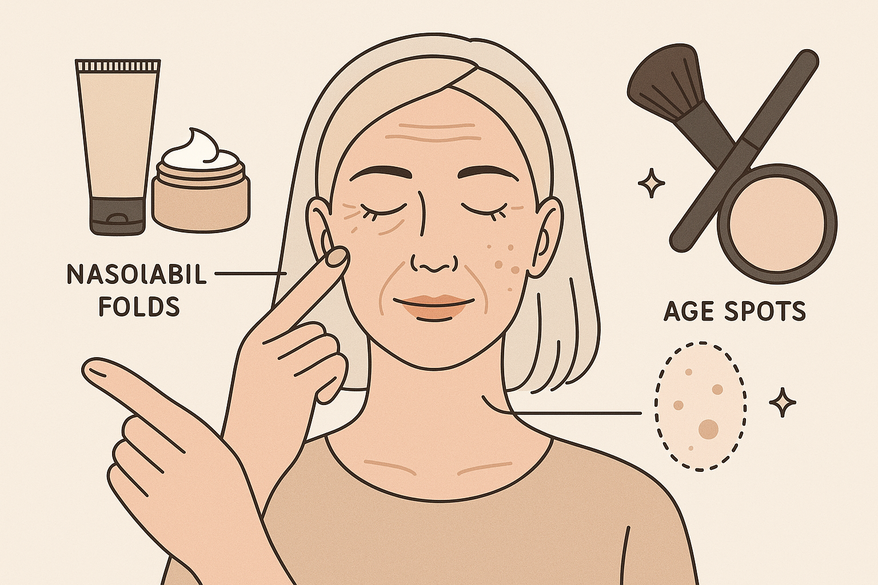
Nasolabial Folds
- Definition: Grooves from nose to mouth corners due to volume loss and lax skin.
- Impact: Deepen with age, especially during expressions.
- Research: Silicone-based primers study suggests they fill grooves for a softer look.
Under Eye Hollows
- Definition: Tear trough depressions casting shadows from fat pad descent and thinning skin.
- Impact: Creates a tired, aged appearance.
- Research: Concealer for dark circles recommends salmon-toned correctors to neutralize blue shadows.
Age Spots
- Definition: Flat, brown or tan patches from UV-induced melanin clusters.
- Impact: Give skin an uneven, aged look.
- Research: The AAD dermatology guidelines recommend hydroquinone and vitamin C to lighten hyperpigmentation.
Chemo Radiation Dry Skin
- Definition: Xerosis from radiation damage, causing tightness, flaking, and sensitivity.
- Impact: Makeup clings to dry patches, emphasizing texture.
- Research: Occlusive moisturizers study shows barrier restoration and reduced dryness in cancer patients.
Key Insight: Targeted skincare treats root issues; makeup techniques visually minimize any remaining concerns.
Section 2: Skincare Strategies for Mature Skin (Age Spots Routine)
A solid skincare routine paves the way for smooth makeup application and long-term improvement.
A. Fine Lines Skincare Routine
Morning Steps
- Gentle, pH-balanced cleanser
- Vitamin C serum (10–20%)
- Hyaluronic acid serum
- Peptide-infused moisturizer
- Broad-spectrum SPF 30+
Evening Steps
- Gentle cleanser
- Retinol 0.5–1%
- Rich ceramide-based cream
B. Age Spots Routine
Morning Steps
- Gentle cleanser
- Vitamin C serum (15–20%)
- Niacinamide 5%
- Broad-spectrum SPF 30+
Evening Steps
- Cleanser
- Hydroquinone 2–4% cream (8-week cycle)
- Moisturizer
- 1–2×/week glycolic or azelaic acid exfoliant
C. Chemo Radiation Dry Skin
- Fragrance-free, pH-balanced cleansers
- Occlusive moisturizers with ceramides, glycerin, shea butter
- Petrolatum or dimethicone ointment on irradiated areas
- Overnight squalane masks for deep hydration
Section 3: Makeup Techniques Specifically for Mature Skin (Nasolabial Folds Makeup)
Prepping skin ensures makeup sits smoothly and minimizes lines.
A. Nasolabial Folds Makeup
Goal: Soften grooves and diffuse shadows.
- Apply a silicone-based primer into folds to fill and blur.
- Use a lightweight, luminous foundation with a damp sponge.
- Apply a high-reflective concealer one shade lighter on cheekbones, avoiding heavy layers over folds.
- Dust micro-fine translucent powder outside the folds to set makeup.
B. Under Eye Hollows Makeup
Goal: Correct discoloration, brighten tear troughs, avoid creasing.
- Use a salmon-toned corrector to neutralize blue shadows.
- Apply a hydrating eye primer or serum with peptides and caffeine.
- Layer a brightening concealer at a 1:2 corrector-to-concealer ratio.
- Blend softly, pressing rather than dragging.
- Finish with a fine dusting of loose powder and a hydrating setting spray.
Section 4: Integrating Skincare and Makeup (Under Eye Hollows Makeup)
Layering Order: Cleanse → Treat serums → Moisturize → SPF or primer → Makeup
Step-by-Step Guide
- Cleanse with your gentle formula.
- Apply Vitamin C and niacinamide serums.
- Dab on eye cream or primer.
- Seal hydration with peptide moisturizer or occlusive.
- AM: finish with SPF or sun-filtering primer; PM: use silicone primer to blur folds.
- Press in foundation with a damp sponge, focusing on even coverage.
- Color correct and conceal under eye hollows.
- Set sparingly with micro powders where needed.
- Fine lines: Retinol and peptides pre-makeup
- Age spots: Brightening serums and hydroquinone
- Dry areas: Occlusives and gentle cleansers
- Grooves: Silicone primers and light foundation
- Tear troughs: Color correction and hydration
Conclusion
Combining consistent fine lines, age spots, and dry skin care routines with targeted nasolabial folds and under eye hollows makeup yields smoother, brighter mature skin. Routine consistency, correct layering, and strategic makeup techniques work together to enhance real skin improvements. Share your results and tips below to help everyone achieve healthier, more youthful radiance.
FAQ
- What ingredients are best for fine lines? Retinol (0.5–1%), peptides, hyaluronic acid, and occlusive moisturizers help boost collagen and hydration.
- How do I reduce age spots? Use vitamin C (15–20%), niacinamide, hydroquinone (2–4%), and sunscreen to prevent dark spots.
- How can I prep chemo-affected dry skin for makeup? Choose fragrance-free, pH-balanced cleansers and occlusive moisturizers (ceramides, petrolatum) to restore the barrier.
- Which primer works for nasolabial folds? A dimethicone-based silicone primer fills lines and blurs grooves for a smoother foundation finish.