Makeup for Mature Skin: Expert Tips for Fine Lines, Folds & Dryness
Discover expert tips on makeup for mature skin, including routines for fine lines, nasolabial folds, under eye hollows, chemo radiation dry skin, and age spots.

Estimated reading time: 7 minutes
Key Takeaways
- Hydration first: A well-moisturized base prevents makeup from settling into lines.
- Targeted serums: Vitamin C, retinol, peptides and AHAs address fine lines and age spots.
- Application techniques: Light cross-hatch and finger pressing keep makeup natural and dewy.
- Cream and dewy finishes: Avoid mattifying powders that emphasize dryness or texture.
- Consistency: Regular skincare and smart makeup choices yield long-term, radiant results.
Table of Contents
- Makeup for Mature Skin
- Fine Lines Skincare Routine
- Nasolabial Folds Makeup
- Under Eye Hollows Makeup
- Chemo Radiation Dry Skin
- Age Spots Routine
- Conclusion
Makeup for Mature Skin
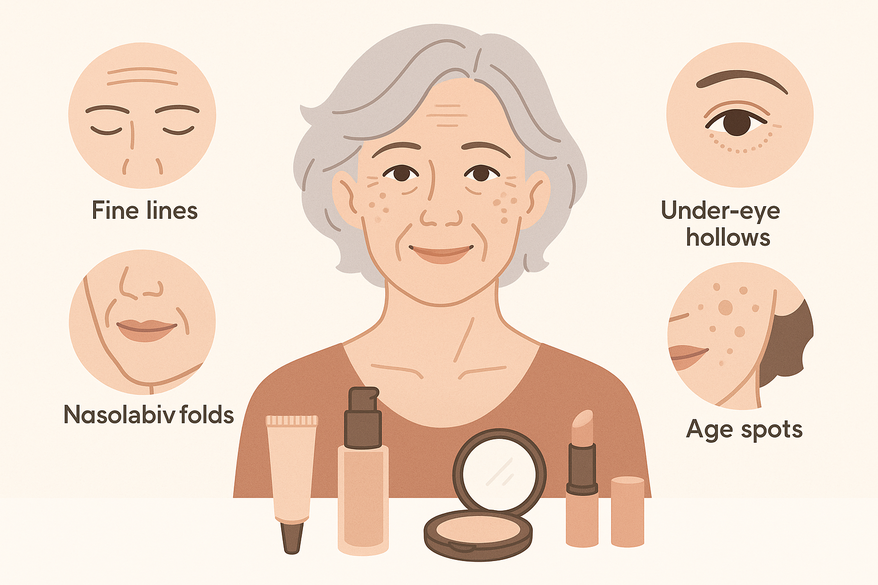
Makeup for mature skin demands both makeup and skincare solutions tailored to aging concerns. Starting with a hydrating skincare base prevents makeup from accentuating fine lines or texture. Mature skin often shows fine lines, folds, under-eye hollows, age spots or extreme dryness—so your routine must be both protective and corrective.

For a high-tech twist, try Makeup Check AI, which uses AI analysis to refine your routine instantly.
Challenges with Mature Skin
- Dryness and sensitivity leading to patchy application.
- Uneven texture and wrinkles that makeup can settle into.
- Loss of firmness causing sagging and shadowing.
Ideal Skincare Prep
- Cleanser: Ultra-gentle, non-stripping foaming or cream formula.
- Moisturizer: Rich, deep-hydrating creams to plump lines.
- Sunscreen: Broad-spectrum SPF 30+ to protect and prime skin.
Foundation & Primer Selection
- Hydrating, glowy foundations with hyaluronic acid to fill and smooth.
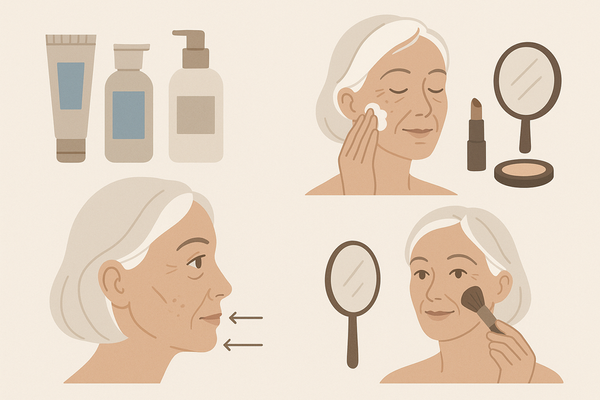
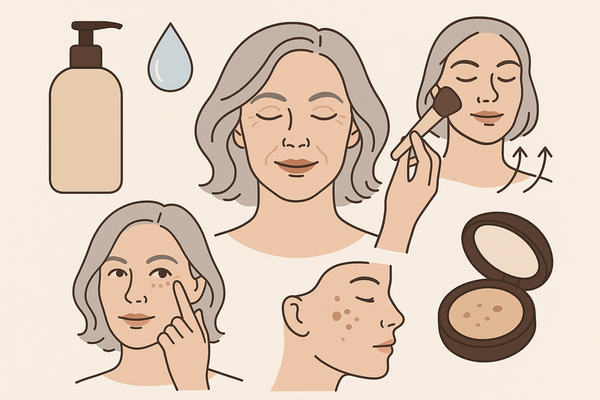
- Use fingertips or a soft stippling brush in a light cross-hatch motion.
- Apply silicone-based smoothing primer only on textured areas (nose, cheeks).
Setting
- Dust a sheer, micro-fine loose powder lightly on the T-zone to control shine.
- Avoid full-face mattifying powders that can dull dewiness.
For foundation picks and concealer recommendations, visit our detailed guide.
Fine Lines Skincare Routine
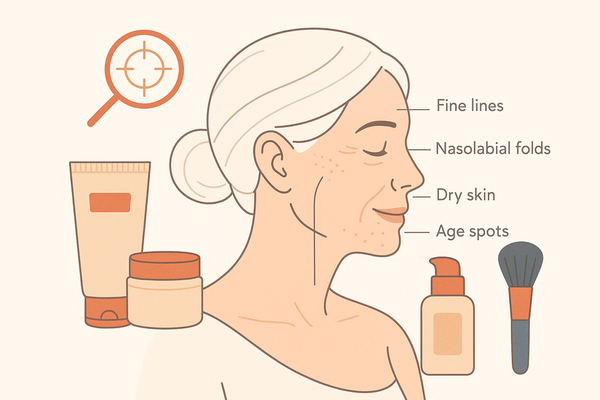
Defining fine lines: Superficial wrinkles from collagen loss and dehydration, appearing around eyes, mouth and forehead.
AM Routine
- Vitamin C serum to brighten and boost collagen.
- Hyaluronic acid serum for deep hydration.
- Barrier-boosting moisturizer to lock in moisture.
- SPF 30+ to prevent further photoaging.
PM Routine
- Gentle retinol or bakuchiol serum for cell turnover.
- Peptide or collagen-boosting cream to strengthen structure.
- Occlusive balm or almond oil on very dry patches.
- Eye & lip cream to smooth under-eye lines and lip wrinkles.
Makeup Technique
- Apply smoothing primer on lined areas.
- Use a lightweight, hydrating foundation and press into skin with fingertips.
- Choose cream blush and bronzer to blend seamlessly.
- Finish with dewy setting spray for a fresh look.
Nasolabial Folds Makeup
Nasolabial folds run from the sides of the nose to mouth corners and deepen as elasticity and facial fat shift.
- Contour: Light-reflecting cream or powder product.
- Technique: Soft “3” shape from cheekbone to jawline, blending upward to lift.
- Cream blush: Dab on apples of cheeks in circular motions to diffuse folds.
Under Eye Hollows Makeup
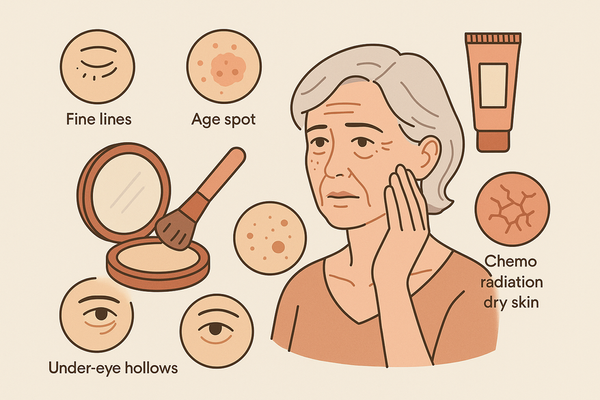
Under-eye hollows cast shadows and create a tired appearance.
- Color correct: Peach or rose cream corrector to neutralize blue tones.
- Brightening concealer: Apply in a small triangle and press with ring finger.
- Setting: Use micro-fine translucent powder only at outer corners if needed.
For eye application tips over 40, check our specialized tutorial.
Chemo Radiation Dry Skin
Chemo and radiation can cause severe dryness, barrier compromise and sensitivity.
- Cleanser: Non-foaming, fragrance-free, pH-balanced formula.
- Hydrating mist: Hyaluronic acid and glycerin to boost moisture.
- Vitamin C serum: Supports barrier repair and shields from oxidative stress.
- Rich creams: Ceramide- and hyaluronic acid–based for deep repair.
Makeup approach: Finger-applied, skin-caring tinted moisturizers; avoid powders and finish with a hydrating setting spray.
Age Spots Routine
Age spots are hyperpigmented patches from UV damage and aging melanocytes.
- Vitamin C or niacinamide daily: Brightens and evens tone.
- Gentle exfoliation: PHA or lactic acid 1–2 times weekly to slough pigmented cells.
- SPF 30+: Prevents new spots and protects treated areas.
Makeup camouflage: Dewy foundation with brush or sponge, light-reflecting concealer on spots and selective sheer powder setting.
Conclusion
An integrated skincare and makeup approach transforms mature skin. By combining hydrating prep, targeted serums and smart application—from nasolabial folds to under-eye hollows, chemo radiation dryness to age spots—you achieve a natural, radiant finish. Consistency in both routines ensures lasting, confident results.
FAQ
- Q: How do I keep foundation from settling into fine lines?
A: Begin with a hydrating primer, use a lightweight foundation, and press product with fingertips to avoid tugging. - Q: What’s the best way to brighten under-eye hollows?
A: Color correct with a peach or rose cream, then apply a luminous concealer in a triangle, pressing gently. - Q: How can chemo radiation patients manage extreme dry skin?
A: Use non-foaming cleansers, hydrating mists, barrier-repair serums and rich creams; opt for tinted moisturizers over powders. - Q: How do I conceal age spots without caking?
A: Apply a dewy foundation, dot concealer on spots, and set selectively with a sheer, micro-fine powder.