Revolutionize Your Routine with a Customized Makeup Plan with AI
Discover how a customized makeup plan with AI enhances personalization, saves time, and boosts confidence by tailoring product choices just for you.

Estimated reading time: 8 minutes
Key Takeaways
- AI delivers hyper-personalized product and application recommendations.
- Real-time data analysis replaces trial-and-error, saving time and boosting accuracy.
- AI-driven regimens foster confidence by matching products precisely to individual skin needs.
Table of Contents
- Introduction
- Understanding Customized Makeup Plans with AI
- How AI Is Used in Creating Customized Makeup Plans
- Benefits of a Customized Makeup Plan with AI
- How to Get Started with a Customized Makeup Plan with AI
- Challenges and Considerations
- The Future of AI in Makeup Personalization
- Conclusion
Introduction
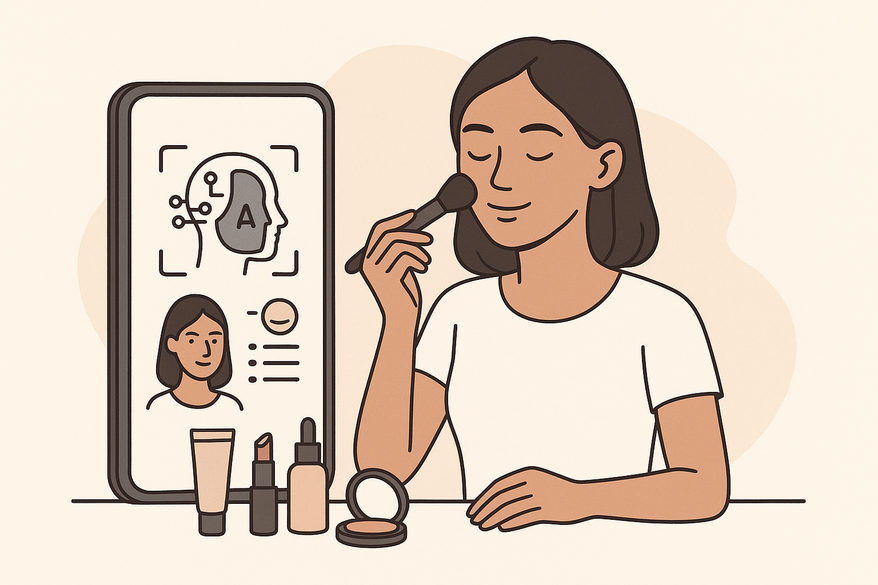
From one-size-fits-all palettes to hyper-personalized regimens, the beauty world is undergoing a rapid transformation thanks to AI. A customized makeup plan with AI uses data and smart algorithms to tailor product and application advice for each person. This approach analyzes unique skin characteristics, facial features, lifestyle, and preferences to deliver product and application recommendations tailored to each individual.
Benefits you’ll get from a customized makeup plan with AI include:
- Enhanced personalization that fits your exact skin tone and style
- Time savings by cutting down trial-and-error sessions
- Boosted confidence with product choices that truly work for you
Discover how an AI-driven system can revolutionize your beauty routine with precision and speed in this comprehensive guide.
For an easy way to get started, try Makeup Check AI, which guides you step-by-step toward a personalized look. Here’s a quick demo of how it works:
Understanding Customized Makeup Plans with AI
A customized makeup plan with AI is a system where algorithms and data analysis are used to recommend products and techniques selected for an individual’s skin tone, undertones, texture, and personal style. By combining machine learning models with big data, these systems deliver fine-tuned advice that evolves as your skin and preferences change.
Traditional vs. AI-Enhanced Process
- Traditional Approach
- In-store consultations with a beauty advisor
- Broad product categories and manual shade matching
- Reliance on visual guesswork and sample testers
- AI-Enhanced Approach
- Real-time data processing of thousands of skin profiles
- Machine learning models predicting best-fit formulas
- Automated shade matching via smartphone cameras
Industry Trends Driving Innovation
- Rising demand for personalization across all sectors
- Growth of virtual try-ons and online beauty consultations
- Brands adopting AI in R&D to accelerate product launches
How AI Is Used in Creating Customized Makeup Plans
A customized makeup plan with AI starts with advanced technology foundations. By leveraging large skin-type datasets, machine learning, and image recognition, these systems can deliver expert-level makeup advice instantly.
Technology Foundations
- Data Analysis: Massive databases of skin types, undertones, and product performance.
- Machine Learning: Supervised models trained on labeled user images and feedback.
- Image Recognition: Convolutional Neural Networks (CNNs) scanning selfies for tone, texture, blemishes, and more.
Step-by-Step AI Analysis Process
- User uploads a selfie under consistent, natural lighting.
- AI detects facial landmarks and segments regions (forehead, cheeks, chin).
- Algorithm assesses tone, undertones, hydration, fine lines, and pigmentation.
- Questionnaire on finish, coverage, brand sensitivities, and lifestyle is integrated.
- System cross-references analysis with a product database to pick optimal matches (learn more about foundation matching).
Real-World Examples and Case Studies
- L’Oréal SkinConsult AI for foundation shade matching with precision algorithms.
- Perfect Corp.’s YouCam Makeup app uses AR lipstick try-ons and skincare profiling.
- On-demand pigment-mixing kiosks create bespoke lip and foundation formulas right at retail.
Benefits of a Customized Makeup Plan with AI
- Enhanced Personalization – AI synthesizes multi-dimensional data for ultra-precise recommendations.
- Improved Product Selection Accuracy – Reduces trial-and-error by matching your profile to validated shade and performance data.
- Time Savings – Instant AI-driven suggestions replace lengthy in-store trials and consultations.
- Increased Confidence & Satisfaction – Users report higher purchase satisfaction and brand loyalty when products fit their needs from the start.
How to Get Started with a Customized Makeup Plan with AI
- Select a Reputable AI-Beauty Platform
- Top options: L’Oréal SkinConsult AI, Perfect Corp., Proven Skincare
- Look for brand reputation, model update frequency, and user reviews
- Prepare Your Inputs
- Upload clear, front-facing photos in natural light against a neutral background
- Complete a questionnaire on skin type, sensitivities, style preferences, and lifestyle
- Disclose any allergies or product intolerances
- Receive AI Analysis & Recommendations
- Detailed custom makeup/skincare regimen, product links, and step-by-step application tips
- Use AR-Based Virtual Try-Ons
- Preview shades and finishes in real time before you buy
Platform Selection Tips
- Check privacy policy and data security measures
- Confirm transparent data storage, sharing, and deletion policies
- Review customer feedback and case studies from trusted sources
Challenges and Considerations
- Privacy & Data Security – AI services handle sensitive images and personal data; ensure platforms clearly disclose storage, sharing, and deletion policies.
- Algorithm Limitations & Bias – Models can misclassify underrepresented skin tones or overlook human creativity; verify AI picks with professionals when needed.
- Accessibility & Equity – Premium AI-driven personalization may carry higher costs, limiting access for some consumers.
The Future of AI in Makeup Personalization
Augmented Reality (AR) & Virtual Reality (VR) Integration – True-to-life virtual try-ons with real-time 3D facial mapping (see our AR makeup tutorial).
Advanced Personalization via Genetics & Microbiome Analysis – AI could incorporate DNA-based skin response and microbiome data to craft bespoke formulas.
Predictive Beauty Trend Forecasting – AI models analyzing social media and consumer behavior to predict next season’s must-have shades.
Faster R&D cycles, hyper-targeted marketing, and continuous feedback loops will redefine product development and customer engagement.
Conclusion
We’ve covered the definition, technology, benefits, setup steps, challenges, and future outlook of a customized makeup plan with AI. This AI-driven approach empowers users with precision, speed, and confidence in their beauty choices. Ready to transform your routine? Explore leading AI-beauty platforms, try a virtual makeup plan, and subscribe for the latest updates in AI-powered personalization.
FAQ
- What is a customized makeup plan with AI?
A system that uses algorithms and data analysis to recommend makeup products and application techniques tailored to your unique skin characteristics and style preferences. - How accurate is AI for shade matching?
Modern AI systems process thousands of skin profiles and use advanced image recognition, achieving shade-matching accuracy that often surpasses manual methods. - Is my personal data safe with AI-beauty platforms?
Reputable services provide transparent privacy policies, clear data storage practices, and options to delete your data at any time. Always review their terms before uploading photos. - Do AI-driven makeup plans cost more?
Many platforms offer free basic analyses, while advanced personalization features may come with subscription plans. Weigh the benefits against your budget to find the right option.