Behind the Scenes Makeup Tech: Unveiling the Science, Innovation, and Future of Modern Cosmetics
Explore the cutting-edge world of behind the scenes makeup tech, where science, AI, and AR revolutionize cosmetic design, testing, and personalization.

Estimated reading time: 8 minutes
Key Takeaways
- Comprehensive overview of tools powering modern cosmetics: lab science, AR, AI personalization.
- Insight into the evolution from artisanal mixing to tech-driven formulation and virtual try-ons.
- Breakdown of current innovations like microencapsulation, spectrophotometry, and real-time shaders.
- Step-by-step look at pipelines: R&D, scale-up, quality control, and e-commerce integration.
- Real-world examples and future trends such as personalized 3D-printed makeup and next-gen AR realism.
Table of Contents
- Historical Context & Evolution
- The Role of Technology in Makeup Innovation
- Behind the Scenes Processes
- Case Studies & Real-World Examples
- How It Enhances Applications & Experiences
- Future Trends
- Conclusion
Historical Context & Evolution of Behind the Scenes Makeup Tech
Long before high-speed mixers and AR filters, makeup was mixed by hand on a set or at a dressing table. Over decades, precision science and digital tools transformed every stage.
Traditional Methods
- Artisanal mixing of oils, waxes, and pigments
- manual color matching using swatches and daylight lamps
- Hand-applied finishes by artists on film sets or editorial shoots
Technology-Driven Approaches
- Laboratory formulation science ensures reproducible textures and stability
- Computerized color management systems use spectrophotometry for exact matching
- Digital simulations predict how pigments perform under varied lighting
Key Milestones
- Microencapsulation to stabilize actives (e.g., vitamin C) and extend shelf life
- Stricter quality-control protocols with batch testing and instrumental color checks
- AR virtual try-on with real-time facial-landmark mapping and texture rendering
- 3D printing for custom prosthetic appliances in film and TV
The Role of Technology in Makeup Innovation
Digital imaging, AR, and advanced lab equipment drive today’s cosmetic breakthroughs.
Digital Imaging + AR
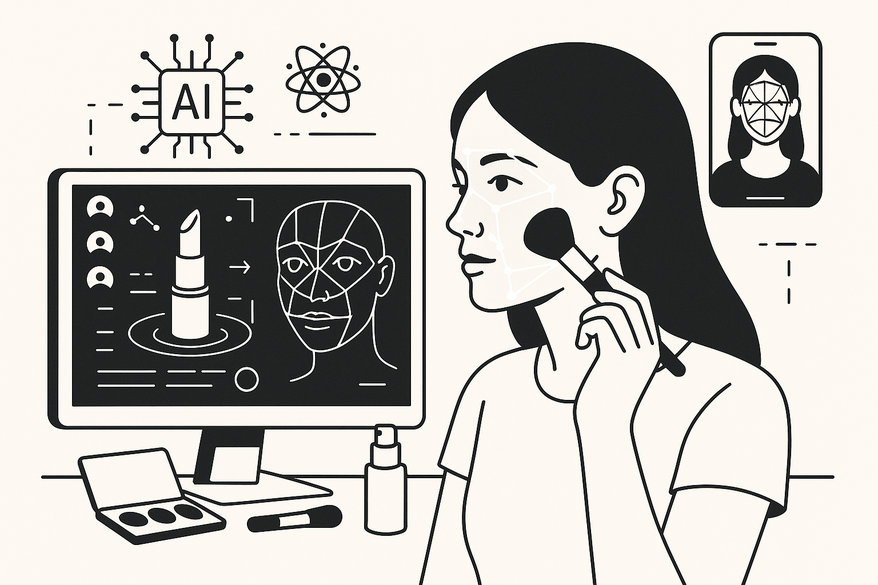
- Facial-landmark detection maps over 100 points on the face
- Real-time rendering simulates powders, creams, and finishes as you move
- Lighting-aware shaders and occlusion detection create lifelike previews
For a deeper dive into virtual try-on, see our post on AR try-on technology.
Professional Lab Equipment
- Mini-batch mixers let chemists test small formula runs for viscosity and spread
- Roller mills disperse pigments uniformly at controlled pressures
- Powder blending rooms and pneumatic presses convert blends into pressed shadows and blushes with consistent density
Chemistry Innovations
- Microencapsulation locks in antioxidants, peptides, and vitamins for gradual release
- Emulsion technology balances oil-in-water or water-in-oil ratios for smooth application
- Carrier systems (silicones, emollients) optimize delivery of actives and pigments
Behind the Scenes Processes
This section walks through formulation, design, quality control, and e-commerce integration in modern cosmetic pipelines.
R&D Phase
- Concept definition: set target performance (matte finish, SPF boost, long-wear)
- Ingredient selection: actives (hyaluronic acid, niacinamide), pigments (iron oxides, ultramarines), carriers (silicones, emollients)
- Iterative formula trials: test viscosity, spreadability, color stability, sensory feel
- Safety and stability screening: microbial challenge tests and accelerated aging
Product Design & Scale-Up
- Mini-batch creation in the lab validates texture, scent, and pigment payoff
- Pilot production runs check pressability, drying times, pan adhesion, and hopper flow
- Packaging compatibility tests ensure formulas don’t bleed or separate in tubes and compacts
Quality Control
- Raw material inspection: particle size analysis, microbial assays, purity checks
- In-process checks: pH, viscosity, and weight monitoring at each mixing stage
- Final batch tests: spectrophotometer color consistency, wear-time panels on human volunteers
Marketing & E-commerce Integration
- AR try-on widgets on product pages boost engagement, dwell time, and AOV
- AI-driven personalization engines recommend shades based on uploaded selfies and skin-tone data (see AI makeup coaching)
- Data analytics track drop-off points and optimize conversion paths
Case Studies & Real-World Examples
- AR Try-On Platforms: 20–30% uplift in conversion rates with browser-based facial recognition
- Microencapsulation in Serums: Encapsulated vitamin C delivers active antioxidant over 24 hours
- Contract Manufacturing: Mini-batch lab → roller mill → pneumatic press workflow ensures consistency
- Film & Prosthetics: 3D scanning and printing produce lifelike prosthetic appliances
How It Enhances Applications & Experiences
- Consumers: Real-time virtual try-ons and AI shade matching reduce returns
- Artists & Brands: Stable actives and spectrophotometric checks guarantee performance
- Production Teams: Predictable lab-to-factory translation cuts go-to-market cycles
Future Trends in Behind the Scenes Makeup Tech
- Personalized Cosmetics: AI shade matching and on-demand 3D-printed components
- Next-Gen AR Realism: Occlusion and depth-aware simulations
- Smarter Formulation Platforms: Data-driven stability prediction and cloud-based sensory profiling
- Entertainment Pipelines: AI/ML texture blending and virtual production integration
- Industry Practices: Digital twins of manufacturing lines and AI-driven QC analytics
Conclusion: Behind the Scenes Makeup Tech
“Behind the scenes makeup tech” is central to how cosmetics are conceived, validated, manufactured, and experienced today. From lab formulation and precision pressing to real-time AR try-ons and AI personalization, this fusion of science and digital innovation elevates performance, consistency, and consumer confidence.
As you explore beauty’s future, watch how AR realism, AI-led customization, microencapsulation, and 3D printing redefine formulation, artistry, and customer experience across the industry.
FAQ
- Q: What is behind the scenes makeup tech?
A: It’s the suite of tools, processes, and R&D technologies powering modern cosmetics—from lab formulation and safety testing to digital imaging, AR try-ons, and AI personalization.
- Q: How does AR virtual try-on work?
A: Using facial-landmark detection, real-time rendering, and lighting-aware shaders, AR maps makeup onto your face for a lifelike preview before purchase.
- Q: What is microencapsulation in cosmetics?
A: A technology that locks actives like vitamin C or peptides in tiny shells, ensuring gradual release and improved stability over time.
- Q: How does AI personalize makeup recommendations?
A: AI analyzes a selfie, detects skin tone and facial features, and suggests shades and finishes tailored to individual profiles and preferences.
- Q: Which future trends will shape makeup tech?
A: Expect on-demand 3D-printed cosmetics, next-gen AR realism with occlusion, data-driven formulation platforms, and AI-powered QC analytics.